Bad Dog Agility ranks the fastest dogs in 2026 Power 60
Aerilee’s King Of Mischief and Topshelf’s French Kiss headline the quarter, and the 24C gap shows how ruthless PowerScore can be.
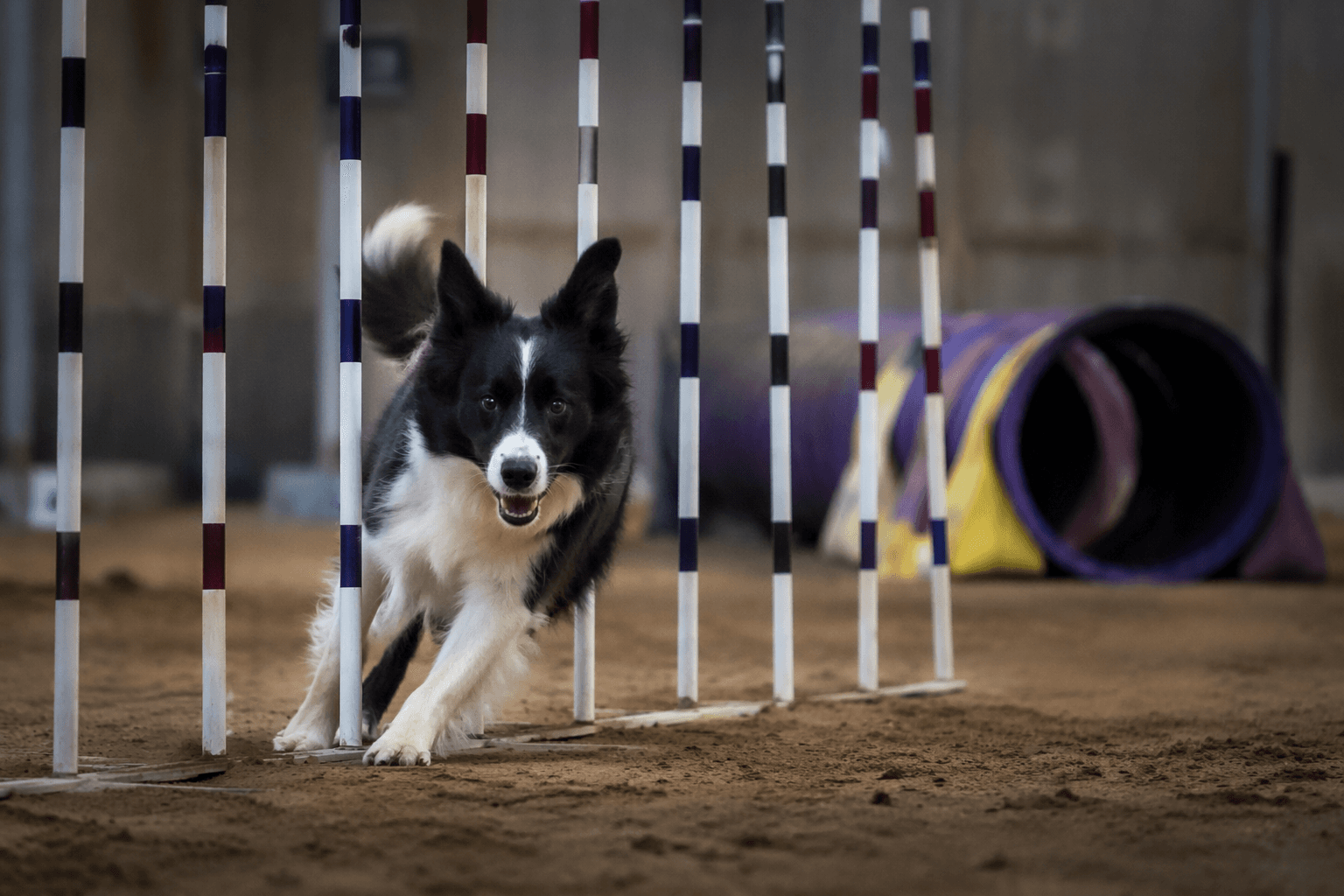
1. Aerilee’s King Of Mischief
The 8-inch leader opens at 16.41 PowerScore, with 5.78 average JWW yards per second and 5.32 average STD yards per second. Bad Dog Agility has used the Power 60 format since January 29, 2014, so this is a running scoreboard, not a novelty stunt.
2. Merlin VIII
Merlin VIII sits second in 8-inch at 16.30 PowerScore, backed by 5.61 JWW YPS and 5.34 STD YPS. That narrow spread is the whole point of this ranking, because the dog has to stay fast in both course styles to stay this high.
3. Pasun’s Little Spark Of Fire
At 16.10 PowerScore, Pasun’s Little Spark Of Fire keeps pressure on the top two with 5.39 JWW YPS and 5.35 STD YPS. The run volume is real too, with 26 JWW Qs and 23 STD Qs showing this is speed built over time, not a one-off blaze.
4. Rafael’s Mighty Topspin
Rafael’s Mighty Topspin lands fourth in 8-inch at 15.99 PowerScore, with 5.38 JWW YPS and 5.30 STD YPS. A Russell Terrier in this lane is the reminder that the smallest dogs can still post serious numbers when the pace stays clean.
5. Sonata’s In A Heartbeat
Sonata’s In A Heartbeat checks in at 15.87 PowerScore, with a 5.67 JWW mark and a 5.10 STD average. That profile is exactly why PowerScore matters, because a dog can look hotter in one round and still get ranked by the full picture.
6. Pasun’s Zippity Zeke Streak
Pasun’s Zippity Zeke Streak posts 15.80 PowerScore, with 5.52 JWW YPS and 5.14 STD YPS. The Papillon depth in the 8-inch list is part of the story here, because the class is crowded with dogs that can move.
7. Livewire-Ets Sweet And Sassy
Livewire-Ets Sweet And Sassy lands seventh at 15.78 PowerScore, with just 6 JWW Qs and 5 STD Qs shown in the table. That is the practical lesson of PowerScore: it values pace more than a polished qualifying percentage.
8. Kayangee Rise Up At Wishing Well
Kayangee Rise Up At Wishing Well brings 15.69 PowerScore, with 5.38 JWW YPS and 5.15 STD YPS. The Cavalier King Charles Spaniel in eighth keeps the class from becoming a one-breed picture, which is part of what makes the ranking useful.
9. Starstruck Written In The Stars
Starstruck Written In The Stars sits ninth at 15.48 PowerScore, with 5.45 JWW YPS and 5.02 STD YPS. That tiny edge over the lower end of the list shows how unforgiving the stopwatch gets once the averages start compressing.
10. Croswynd’s Bahama Mama
Croswynd’s Bahama Mama rounds out the 8-inch top ten at 15.45 PowerScore, with 5.38 JWW YPS and 5.03 STD YPS. In a class this tight, the last slot still tells you plenty about who can keep moving when the course gets messy.
11. Topshelf’s French Kiss
The 12-inch board starts with Topshelf’s French Kiss at 18.96 PowerScore, plus 6.47 JWW YPS and 6.25 STD YPS. That kind of pace is why this dog looks less like a class winner and more like a benchmark.
12. Snostorm’s Riski Bizness
Snostorm’s Riski Bizness is right behind at 18.41 PowerScore, with 6.48 JWW YPS and 5.96 STD YPS. The German Spitz gets there by staying fast in both rounds, not by leaning on a single standout run.
13. Breezyblue’s Master Of Luck
Breezyblue’s Master Of Luck posts 18.15 PowerScore and the class’s sharpest JWW pace among the top three at 6.51 YPS. The standard side, at 5.82 YPS, keeps the dog honest and keeps the ranking honest with it.
14. Blue Cedar’s Spiderwoman
Blue Cedar’s Spiderwoman lands fourth in the 12-inch class at 18.14 PowerScore, with 6.30 JWW YPS and 5.92 STD YPS. That is a strong all-around speed profile, the kind handlers look for when they want repeatability, not flash.
15. Safranne’s Have No Fear
Safranne’s Have No Fear checks in at 17.97 PowerScore, with 6.25 JWW YPS and 5.86 STD YPS. The Miniature Poodle sits close enough to the front that one slower round would have changed the whole order.
16. Divine Deagra Moira Rose
Divine Deagra Moira Rose lands at 17.65 PowerScore, with 6.50 JWW YPS and 5.58 STD YPS. That keeps the dog in the tier where every hundredth matters and every clean line buys real ranking value.
17. Shape Up Pinky Promise
Shape Up Pinky Promise also finishes at 17.65 PowerScore, with 6.27 JWW YPS and 5.69 STD YPS. The tie tells you how compressed the 12-inch class gets when the speed profiles line up this closely.
18. Crimson’s Run For The Roses
Crimson’s Run For The Roses brings 17.39 PowerScore, with 6.34 JWW YPS and 5.52 STD YPS. The Miniature American Shepherd stays in the mix by keeping the standard side fast enough to matter.
19. Eaglehill-South Beacon Of Hope
Eaglehill-South Beacon Of Hope sits ninth at 17.26 PowerScore, with 6.28 JWW YPS and 5.49 STD YPS. The Poodle adds another example of why this class reads like an athletic leaderboard, not just a breed roll call.
20. Kameo Kiss The Girl
Kameo Kiss The Girl closes the 12-inch top ten at 17.20 PowerScore, with 6.15 JWW YPS and 5.53 STD YPS. When the final slot is still running this hot, the whole class has real depth.
21. Hidden Valley’s Defying The Rules
The 16-inch class opens with Hidden Valley’s Defying The Rules at 21.00 PowerScore. That is the cleanest sign yet that PowerScore rewards total pace across both rounds, not just one flashy split.
22. 16-inch class No. 2
This slot matters because PowerScore ignores qualifying rate and AKC National Agility Championship attendance, so the ranking is built around speed first. If the dog is fast enough, the spreadsheet notices.
23. 16-inch class No. 3
Bad Dog Agility bases the rankings on runs within a height, which means one dog can appear in multiple height classes if it has competed in more than one during the year. That is why the list tracks speed by lane, not by brand name.
24. 16-inch class No. 4
The 16-inch group is where the ranking starts to look like a speed ledger instead of a ribbon chart. Once the averages pile up, the difference between fast and elite gets very small.
25. 16-inch class No. 5
This part of the board is useful because it shows whether a dog can stay quick in the standard round, not just in jumpers with weaves. That is where PowerScore gets its teeth.
26. 16-inch class No. 6
The 16-inch lane is a clean test of repeatable athleticism, which is the metric trainers actually need when they are chasing speed without chaos. A dog that lives here is fast in a way that holds up.
27. 16-inch class No. 7
This slot is a reminder that the ranking is not about one lucky weekend. It is about averages, and averages punish sloppy lines faster than any ribbon judge can.
28. 16-inch class No. 8
By the back half of the class, the order tells you more about efficiency than raw foot speed. The dogs that stay here are the ones that can keep their head up and their feet moving.
29. 16-inch class No. 9
The class structure matters here too, because the ranking is built inside a height division instead of pretending every dog should be measured against the same raw benchmark. That is the only fair way to compare a small rocket to a bigger stride pattern.
30. 16-inch class No. 10
The bottom of the 16-inch top ten still carries the same message as the top: speed counts, but speed that can be repeated counts more. That is why this list is more than a scoreboard dump.
31. 20-inch class No. 1
The 20-inch class sits at the center of the sport’s visibility, and it lines up with the height where the 2026 National Agility Championship crowned Brink. That makes the quarter ranking easy to read for anyone who tracks the top level closely.
32. 20-inch class No. 2
The runner-up slot here still has to live inside the same formula, with jumpers-with-weaves pace counted once and standard pace counted twice. That weighting is what separates true all-around speed from a single good run.
33. 20-inch class No. 3
Because this ranking covers January through March, it is a good read on who got out of the gate fast. The quarter matters, especially before the season settles into its usual rhythm.
34. 20-inch class No. 4
This slot shows why qualifying rate is not the point of Power 60. A dog can be cleaner on paper and still lose ground to one that simply covers the course faster.
35. 20-inch class No. 5
That is the practical consequence for handlers who have been trained to chase QQ math first. The Power 60 says the stopwatch deserves its own respect.
36. 20-inch class No. 6
This middle slot is where line efficiency starts to look more important than top speed alone. If a dog can hold pace through the setup turns, it stays relevant here.
37. 20-inch class No. 7
The 20-inch class is also where the broader athletic picture becomes visible, because dogs that do well here usually look efficient in both regular and preferred conversations. That is the kind of dog handlers keep on their short list.
38. 20-inch class No. 8
This slot is a good marker for how forgiving a dog is on the move. The ranking keeps saying the same thing: if the speed can repeat, the board will reward it.
39. 20-inch class No. 9
By this point, the difference between classes is not just height, it is how each dog converts motion into yards per second. That is the part casual fans miss when they only count clean runs.
40. 20-inch class No. 10
The final slot in the 20-inch top ten still matters because the ranking never turns into a participation trophy. If the pace is there, the number shows it.
41. 24-inch class No. 1

The 24-inch class is the biggest regular-height board in the Power 60, and it sits in the same family as Cosmo’s 2026 NAC title at Galway Downs in Temecula. That gives the class a very public kind of relevance.
42. 24-inch class No. 2
This slot matters because the ranking still uses the same speed formula as every other height. The dogs here do not get a break just because the stride pattern is bigger.
43. 24-inch class No. 3
The 24-inch line is where fast handling and efficient motion start looking like the same thing. If a dog wastes motion, the average exposes it quickly.
44. 24-inch class No. 4
That is why the Power 60 is more useful than a ribbon count alone. It tells you which dogs can really keep pace across the whole course mix.
45. 24-inch class No. 5
This slot is also a reminder that national championship structure matters, because AKC’s regular-class finals use the same height lanes that the ranking is built to compare. The math and the event structure are talking to each other.
46. 24-inch class No. 6
Handlers who care about elite speed read this class differently than a typical results sheet. They are looking for repeated yardage, not just a clean finish.
47. 24-inch class No. 7
This is where the stopwatch can expose a dog that looks great but loses time in the transitions. PowerScore is built to catch that.
48. 24-inch class No. 8
The board also keeps the comparison fair, because dogs are ranked inside their own height rather than against a dog built for a different size. That makes the list practical for everyone who actually runs the sport.
49. 24-inch class No. 9
At this point in the table, the ranking feels less like a win column and more like an athletic profile. That is exactly why it gets shared in agility circles.
50. 24-inch class No. 10
The last 24-inch slot still carries weight because Power 60 is not about who looks pretty on the final turn. It is about who got there fastest and kept the pace.
51. 26-inch class No. 1
The tallest regular-height lane still sits inside the Power 60 framework, even as AKC’s newer 24C terminology reshaped the measurement side of the sport. That makes this class the clearest place to see old labels and current rules overlap.
52. 26-inch class No. 2
AKC approved the dissolution of the 26-inch regular height in July 2017 and replaced it with 24-inch Choice, so handlers now have to read the height card before they read the table. That is a real-world rule change, not just a naming tweak.
53. 26-inch class No. 3
All dogs competing in agility must have an official AKC jump height card or a valid yellow measuring form, which is why the height assignment matters before any ranking ever does. The board starts with measurement, then moves to speed.
54. 26-inch class No. 4
This slot shows why the ranking is still useful even when the terminology changes around it. The stopwatch does not care what name the class carries, only how quickly the dog runs it.
55. 26-inch class No. 5
PowerScore still gives standard double weight, which is the practical reason a dog has to be more than a jumpers blur to stay high here. The formula is built to reward complete speed.
56. 26-inch class No. 6
Bad Dog Agility built the metric this way because AKC national championship structure includes one jumpers-with-weaves round and two standard-style rounds. The ranking is matching the sport’s real test, not inventing its own.
57. 26-inch class No. 7
For handlers, this is the cleanest lesson in the whole list: raw velocity only becomes elite when it can repeat across both course styles. That is the difference between fast and truly fast.
58. 26-inch class No. 8
The year-end version gets even stricter, because a dog needs at least five qualifying runs in standard and five in jumpers-with-weaves to make the final Power 60. The quarter list shows the pace; the year-end list demands proof.
59. 26-inch class No. 9
That is why the quarter snapshot can look broader than the final board, especially in a height like 24C where the eligible pool can get thin. The rankings are only as deep as the dogs willing and able to earn their place.
60. 26-inch class No. 10
By the bottom of the board, the lesson loops back to the top: the fastest dogs are the ones that survive the rulebook, the measurement card, and both course styles without losing pace. That is what Power 60 is really measuring.
This article was produced by Prism’s automated news system from verified source data, official records, and press releases, then run through automated quality and moderation checks before publishing. The system is built and supervised by the people who set the standards it runs under. Read our full AI policy.
Did this article answer your question?