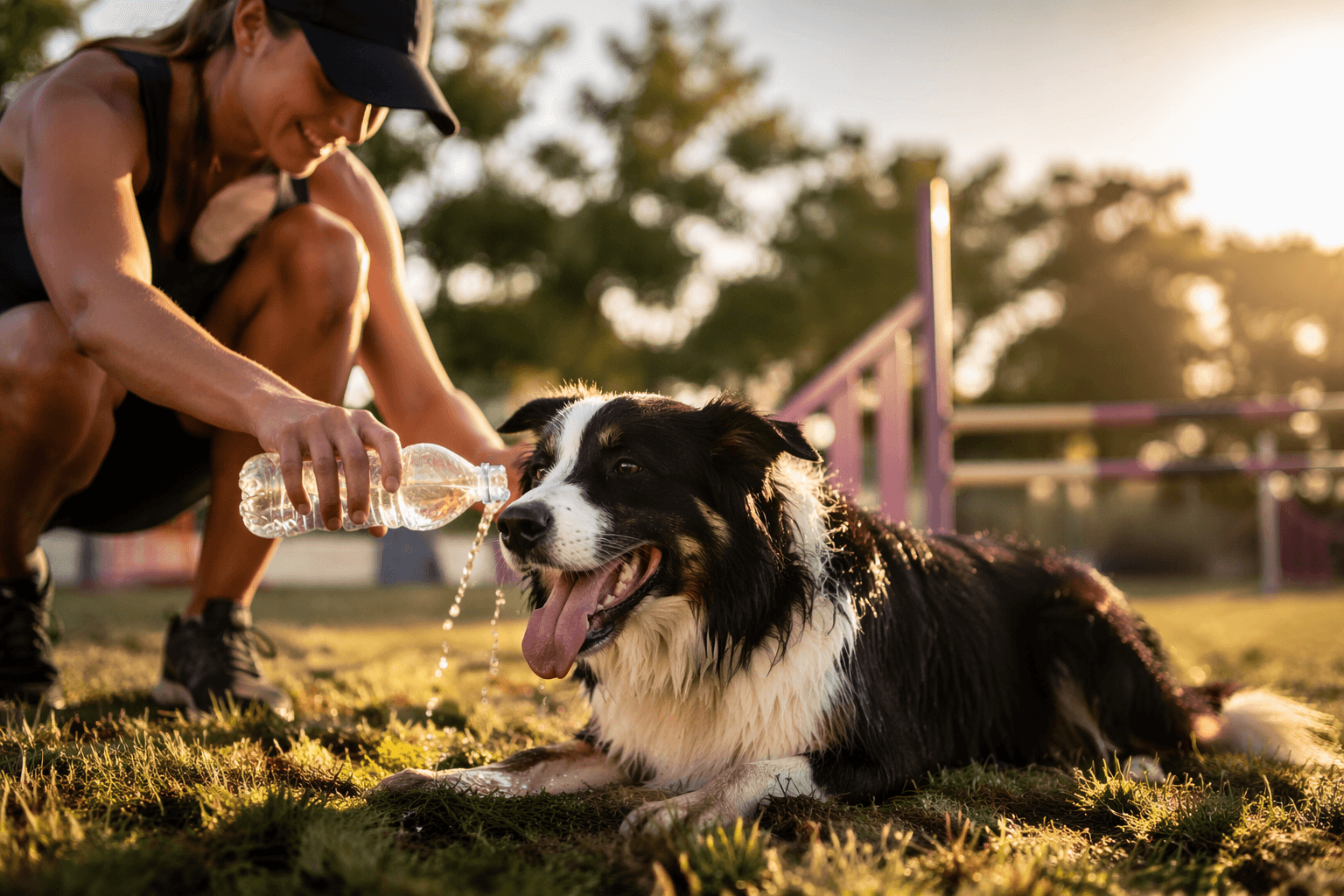
DogClub spotlights border collies and other high-energy breeds
Border Collies, Australian Cattle Dogs and Belgian Malinois are daily workload breeds, not casual-walk dogs. The real test is whether your household can pay their energy bill every day.

The first question is not “How smart is the dog?”
It is whether your household can realistically satisfy its energy budget every single day. DogClub’s breed roundup, published May 28, 2026, makes that point with almost no warm-up: some dogs are not looking for a stroll, they are looking for a job, a plan and a human who will not run out of ideas first.
That framing matters because the breeds highlighted here are not high-energy in the same way. Border Collies want distance, focus and a task to solve. Australian Cattle Dogs want work that has structure and a purpose. Belgian Malinois want constant engagement, precision and training that stays ahead of their drive. If you are choosing among them, the real question is simple: could your home keep pace when the dog’s day is not optional?
Border Collies need distance, decisions and a real assignment
Border Collies are the clearest example of a dog that can look like a hobby and live like a full-time project. The American Kennel Club calls the breed a “remarkably bright workaholic” and warns it may be too much for owners without the time, energy or means to keep it occupied. That is not branding fluff. The breed standard describes a body that conveys “endless endurance” and calls the dog “extremely intelligent,” which is exactly why a Border Collie bored with suburban routine can become a far better manager of your day than you are of its own.
The history backs up the temperament. The AKC says Border Collies developed through British sheepdog traditions and held their first official sheepdog trial in 1922. Britannica adds that the breed has been used along the English-Scottish border for about 300 years and excels in agility competitions. That background explains the practical reality: a Border Collie is at its best when the work is layered, with puzzle toys, advanced obedience, long fetch sessions and actual jobs, not just one quick burst around the block.
If you want a Border Collie to fit your life, think in terms of sustained effort. This is the dog for households that can give it motion plus mental problem-solving, not one or the other. A long walk helps; a structured game, a training sequence and a clear purpose help more.
Australian Cattle Dogs are built for task-based play
If the Border Collie is the endurance-minded strategist, the Australian Cattle Dog is the compact specialist. AKC’s standard says the breed has the “ability and willingness to carry out” its task “however arduous,” and should convey “great agility, strength and endurance.” That is the language of a dog made for difficult work, not casual entertainment. AKC also notes that the breed is related to Australia’s dingo and is known as the Blue Heeler, Red Heeler or Queensland Heeler.
The daily workload here is less about endless motion and more about purposeful action. These dogs do well when the day includes structured tasks, cardio, agility and scent games. In practice, that means they are happiest when exercise has a job attached to it, whether that is a training pattern, a search game or a physical challenge with clear rules.
That is why Australian Cattle Dogs often feel easier once they have a routine. They are not looking for random chaos, they are looking for a sequence they can master. Give them a task, and the same grit that once pushed livestock all day becomes an asset instead of a headache.
Belgian Malinois demand constant training engagement
The Belgian Malinois is the dog on this list that can outpace sloppy handling the fastest. AKC describes the breed as strong, agile, well-muscled, alert and “full of life,” and says the best fit is an active family prepared to commit to training a high-energy, athletic dog. AKC also warns that Malinois require significant daily exercise and can chase children, cars or other animals if that drive is not redirected early.
That is the key distinction with a Malinois: exercise alone is not enough. This is a breed that thrives on detection work, protection sports, advanced obedience, tug, tracking, sprinting and complex marker training. If the Border Collie asks for a job and the cattle dog asks for a task, the Malinois asks for a training program that never gets lazy.
For many households, that makes the Malinois less of a pet choice and more of a commitment to an athletic lifestyle. If you are not ready to redirect drive from the start, the dog will find its own outlets, and they are usually the wrong ones. If you are ready, the breed can become an extraordinary partner because the same intensity that causes problems in the wrong home becomes precision in the right one.
The training rule that keeps these dogs workable
The behavior science here is not mysterious. The American Veterinary Society of Animal Behavior says its mission is to improve animals’ lives through understanding behavior, and its position is clear: reward-based training methods should be used for all dog training, including behavior problems. That matters with high-energy breeds because force rarely solves a dog that is already wired to go, go, go. Structure works better than confrontation.
Veterinary Partner, a Veterinary Information Network resource, adds a practical piece that owners often underestimate: enrichment can be tiring. Sniff walks, scent work and pattern games are not just cute add-ons, they are useful outlets that can mentally stimulate a dog and wear it down in a healthy way. It also emphasizes that, when safe, dogs should be allowed to use their noses and choose their pace on sniff walks. For hyperenergetic dogs, that nose-led time is often more valuable than a forced march.
This is where a lot of households misread the problem. They assume a tired dog means a longer run. Sometimes it does, but often it means better variety. A dog that gets to think, search, track, tug and solve can be calmer than a dog that only gets miles.
The bigger ownership reality is bigger than breed
All of this sits inside a wider pet-ownership picture. The World Small Animal Veterinary Association says pet obesity is a growing problem in some parts of the world, which is a blunt reminder that exercise is not only about temperament. It is part of keeping dogs healthy, especially when their natural drive is high and their bodies are built for work.
The American Veterinary Medical Association adds scale to that conversation. Its 2023 U.S. pet-owner attitude survey drew from 1,000 respondents, and its 2025 Pet Ownership and Demographics Sourcebook is a 46-page report on U.S. pet populations, ownership trends, veterinary visits and spending habits. In other words, breed-energy advice is not just about personality matching, it is part of how people budget time, money and attention for the lives they choose.
That is the real takeaway from DogClub’s roundup. Border Collies, Australian Cattle Dogs and Belgian Malinois are brilliant when the day gives them something to do, and exhausting when it does not. The dog is not the problem; the mismatch is. If your household can meet that energy budget with work, structure and training, these breeds become extraordinary partners. If not, they will keep asking for more until the question answers itself.
This article was produced by Prism’s automated news system from verified source data, official records, and press releases, then run through automated quality and moderation checks before publishing. The system is built and supervised by the people who set the standards it runs under. Read our full AI policy.
Did this article answer your question?