Grand Canyon uses conservation K-9 Blue to reduce wildlife conflicts
Blue, a Catahoula Leopard Dog, started work on the South Rim to push habituated elk and bighorn sheep back from crowded visitor spaces.
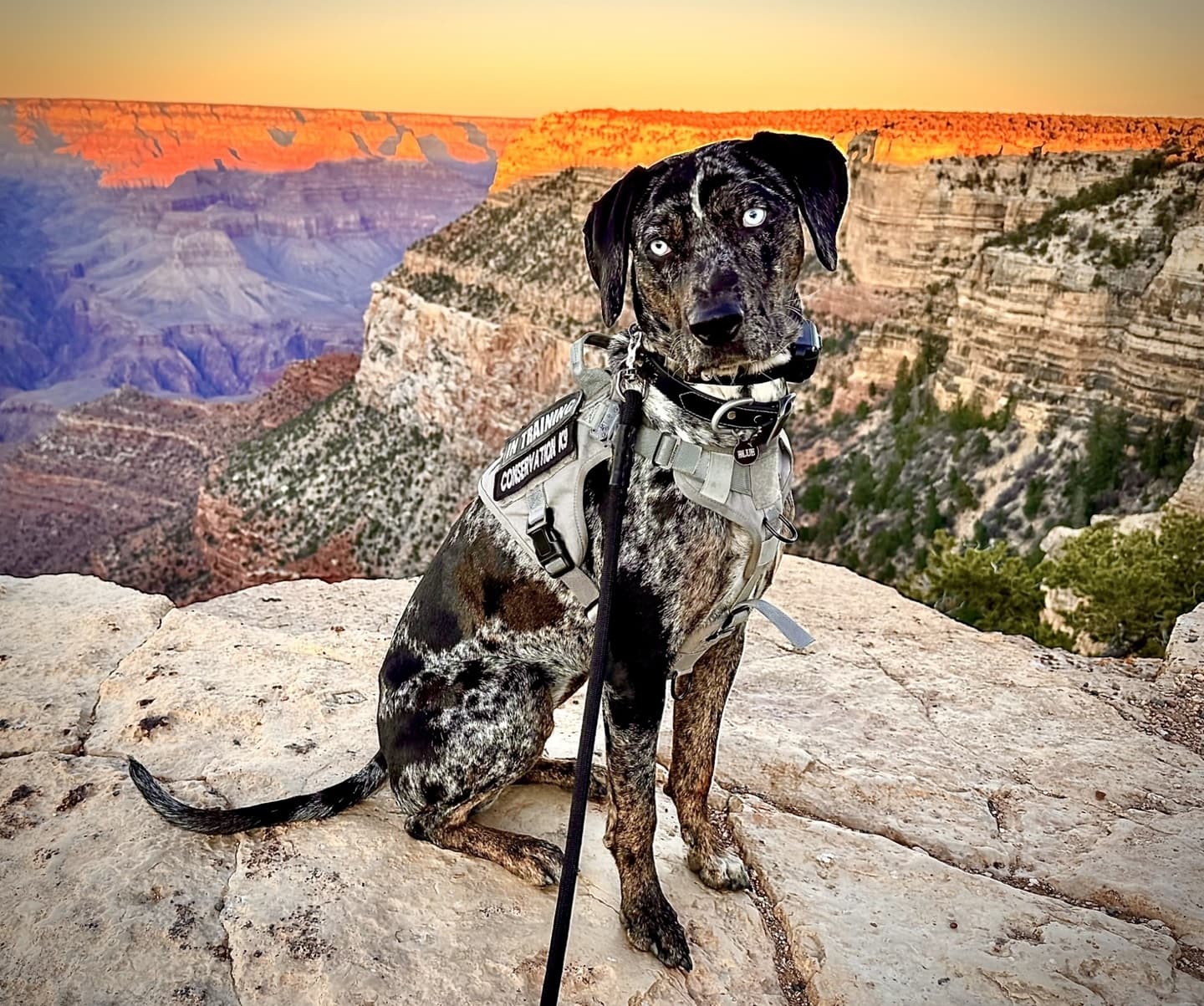
Blue went to work on Grand Canyon National Park’s South Rim in May 2026 with a clear assignment: push habituated elk and bighorn sheep out of hotel courtyards, roadways and other developed spaces before those animals and people collided. The National Park Service and Grand Canyon Conservancy launched the Conservation K-9 Pilot Project as a three-year wildlife-management effort built around safe, humane aversive conditioning, a tool meant to restore a healthier boundary between wildlife and human use areas.
The dog at the center of the program is Blue, a specially trained Catahoula Leopard Dog. The work is not about novelty or chase scenes. It is meant to reduce human-wildlife conflicts, keep visitors and staff safer, and give animals a reason to move back toward more natural behavior and habitat. The long-term goal is practical: cut down on aggressive wildlife encounters, roadway blockages and the chance that park managers will need lethal wildlife management actions.

That pressure is real on the South Rim. Grand Canyon elk can reach up to 700 pounds, and the park has said they are not native to northern Arizona, which leaves them less adapted to the region’s dry climate. Elk are also a common sight along roads and have become accustomed to people and cars, a combination that can turn a busy visitor corridor into a bad place for both an animal and a driver. Park safety guidance says visitors should stay at least 100 feet from elk and bighorn sheep.
The program landed in one of the most complicated wildlife settings in the country. Grand Canyon National Park covers 1,218,375 acres, or 1,904 square miles, and stretches across 278 river miles of the Colorado River. Its wildlife biology program says the park supports 355 bird species, 89 mammal species and 56 reptile and amphibian species. The scale matters, because even one dog working a targeted management role can help in a park that drew 419,360 total visits in April 2026 and 1,173,182 visits through the end of that month.

Grand Canyon Conservancy, the park’s official philanthropic and collaborative partner, is backing the pilot and says the K-9 work depends on support for Blue’s specialized training and handler operations. In a park where a paved road or a hotel courtyard can become the wrong kind of meeting ground, Blue’s job is simple and sharp: use a well-trained dog to give elk and bighorn sheep room to act wild again.
This article was produced by Prism’s automated news system from verified source data, official records, and press releases, then run through automated quality and moderation checks before publishing. The system is built and supervised by the people who set the standards it runs under. Read our full AI policy.
Did this article answer your question?