Moose Jaw K9 handler says police dogs are true partners on patrol
Moose Jaw’s K9 teams run on discipline, not hype. Casey Lea and Mace show how a working dog’s day builds focus, stamina, and a real bond.
A patrol dog is not a prop
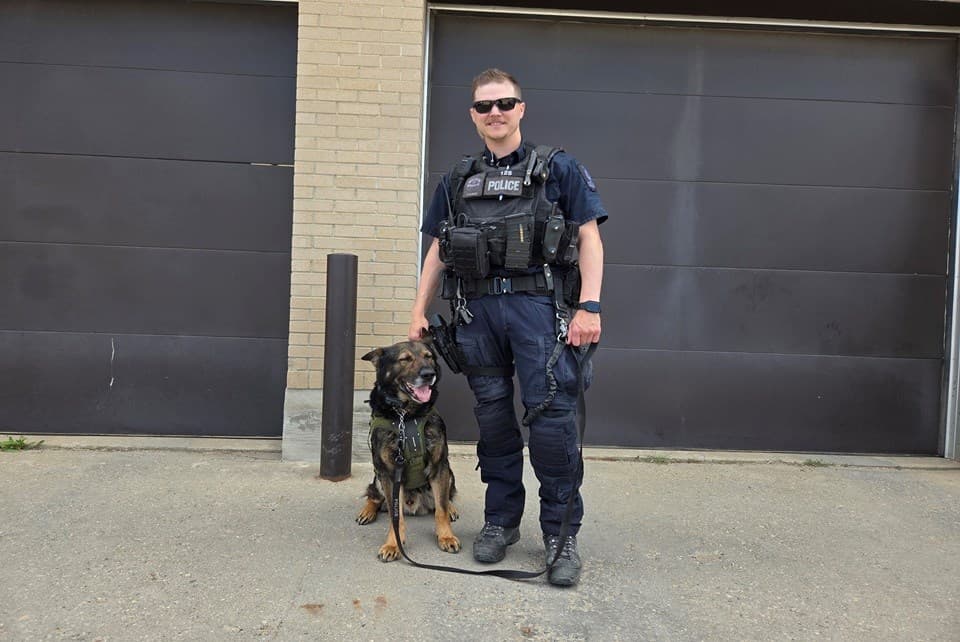
Const. Casey Lea and his German shepherd cross, Mace, make the case for K9 work in the plainest way possible: on solo patrol, one dog can change the whole pace of a call. Lea treats Mace as a partner, not a tool or a vehicle asset, and that distinction matters when you are trying to cover ground, search cluttered spaces, or push into situations that would otherwise take more time, more people, and more risk.
That is the part high-energy dog owners can borrow from the police side of the house. A dog with serious drive does not need random chaos. It needs a job, a pattern, and a handler who knows when to ask for intensity and when to shut it off. Moose Jaw’s K9 setup is built around that balance, and it is why the story lands as more than a profile of a local unit.
How a K9 team is built
Getting into canine work is not a matter of volunteering for the fun assignment. Officers first spend time in general duty patrol, then go through an application process that includes an interview, high-stress shooting drills, a physical test, and a psychological evaluation. That alone tells you the service is selecting for judgment, stamina, and the ability to keep functioning when the pressure spikes.
Lea and Mace then spent a summer embedded with the Regina Police Service canine team before returning to Moose Jaw fully accredited and ready for street duty. Regina’s canine unit says basic training for an inexperienced dog and handler lasts 16 to 18 weeks, ends with qualification to the Saskatchewan Provincial Standard for Police Dogs, and requires annual re-qualification. The dogs also go home with their handlers at the end of each shift, which is a small detail with a big lesson: the job does not stop at the kennel door.
For a high-drive dog at home, the parallel is obvious. Skill does not come from tiring the dog out until it collapses. Skill comes from repeated, structured work that the dog can understand and improve at. A dog that lives for motion still needs rules, clarity, and a predictable off-switch.
What the dog is actually doing on patrol
Police dogs are valued because they are built for tasks people are bad at doing quickly and reliably. They are trained to detect fresh human scent and locate objects or people hidden in clutter, which makes them useful for tracking fleeing suspects, finding missing persons, and uncovering evidence in difficult environments. Lea gave the practical example that sticks with you: a dog can move through debris, ignore the junk, and still find a small item carrying human scent.
That kind of work is a reminder that drive without focus is just noise. Mace is not being asked to run around for entertainment. He is being asked to sort signal from distraction, hold a line through chaos, and stay locked on the task until the search is done. That is the real blueprint for channeling extreme energy in any dog: build an outlet that rewards concentration, not just speed.
Borrow that structure at home by thinking in terms of working sessions instead of aimless play.
- Send-and-search games are better than endless fetch because they ask the dog to think.
- Short tracking-style exercises in grass, brush, or around safe obstacles build problem-solving.
- Calm repetition beats overloading the dog with new toys that only raise arousal.
- End every session with a clear off-ramp so the dog learns how to settle after drive.
Why the partnership matters
Moose Jaw now has two active canine teams: Lea with Mace, and Curtis Amiot with Draco. A third dog recently entered retirement, which is a quiet but important reminder that these partnerships have a shelf life and a history. The bond runs through the whole unit, from the street work to the handoff into retirement, because these dogs are not rotating equipment. They are long-term partners with a defined career arc.
That is exactly why Lea’s view of the canine position reads as genuine rather than sentimental. He described it as the coolest and most rewarding role in the service, but the appeal is not just that the dog is impressive. It is that the handler gets to work in a partnership where the dog adds capability, confidence, and reach in the moments that matter most.
The Moose Jaw Police Service’s own history gives that bond some context. The service says policing in the city stretches back 130 years, and the current K9 unit is part of that longer evolution, not a novelty bolted onto it. In a service with that kind of institutional memory, the dogs are not decoration. They are part of how modern policing actually works.
What retirement looks like in a working-dog unit
The recent retirement of Police Service Dog True shows the other side of the same story. True, a Belgian Malinois, finished her final shift on May 24, 2026, after beginning service in 2019 and retiring at age 8 following a decorated career assisting with arrests and critical incidents. That matters because it shows the unit is thinking in terms of years, not weekends, and careers, not bursts of excitement.
Mace’s own service timeline adds another layer. Moose Jaw Police Service said he has been part of the K-9 unit since 2021 and turned 5, which suggests a dog still in the middle of his working life. Between an active dog in his prime and a seasoned dog stepping into retirement, you can see the whole cycle of the job: selection, conditioning, deployment, and eventually release from service.
For owners of high-energy dogs, that cycle is useful to copy in miniature. Young dogs need structure that channels ambition. Adult dogs need enough work to stay sharp without getting overstimulated. Even the best dogs need recovery, because drive only stays useful when it is managed.
The legal and scientific backdrop
There is also a reason the law treats police dogs as more than property. The Canadian Criminal Code makes it an offence to wilfully injure or kill a law enforcement animal while it is aiding an officer. That recognition reflects what handlers already know: a K9 is part of the response, not an accessory to it.
At the same time, the broader science around scent work has not always been simple. Justice Canada has reviewed dogs’ roles in the justice system and points to both the benefits dogs can bring and the research gaps that still exist. A peer-reviewed article on tracking and man-trailing evidence says courtroom use of scent-tracking results has been debated for decades because of concerns about odor individuality and stability. In other words, the work is respected because it is powerful, but it is also scrutinized because it has to hold up under pressure.
That tension is what makes the Moose Jaw story so useful for anyone living with a hyperenergetic dog. The best working dogs are not celebrated because they are wild. They are valued because someone built enough discipline around that energy to make it reliable. Lea and Mace are proof that the real trick is not having a dog with drive. It is shaping that drive until it can walk a track, ignore the junk, and do the job when the pressure is on.
This article was produced by Prism’s automated news system from verified source data, official records, and press releases, then run through automated quality and moderation checks before publishing. The system is built and supervised by the people who set the standards it runs under. Read our full AI policy.
Did this article answer your question?