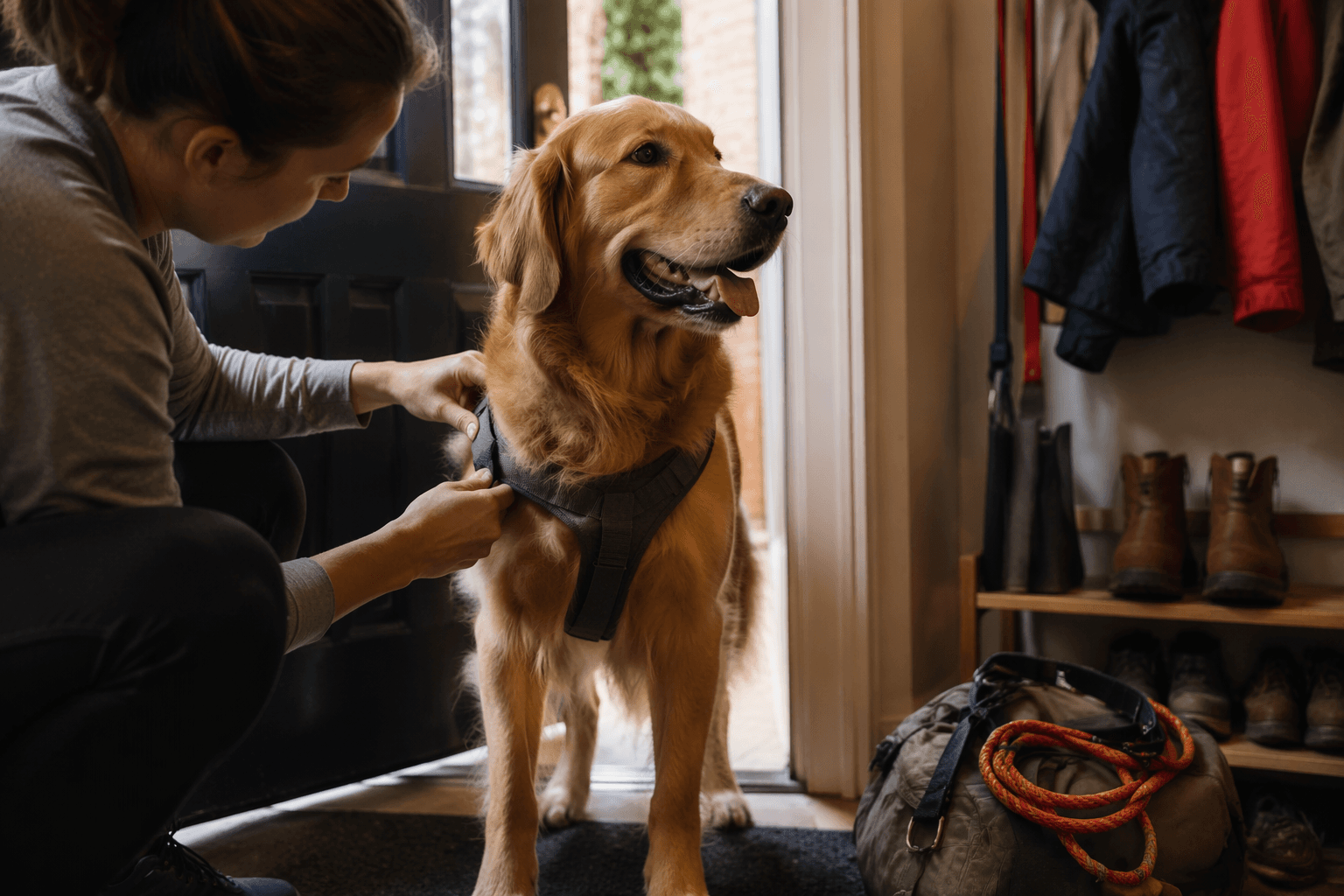
Pasadena Humane advises quiet time for newly adopted dogs to settle in
The first 72 hours after adoption are for decompression, not big adventures. Pasadena Humane says a quiet setup, routine, and limited introductions help excitable dogs settle.

The first 72 hours with a newly adopted dog are not the time to prove you have a future marathon buddy. Pasadena Humane’s advice is simpler, and smarter: keep the world small, keep the house calm, and let the dog learn that your home is safe before you ask for much of anything. For a high-energy dog, that quiet start can be the difference between settling in and spinning up.
Start with decompression, not excitement
In Pasadena Humane’s column, written by Chris Ramon with practical guidance from Tiffany McKillop, the shelter’s adoptions manager and a certified dog trainer, the message is plain. A new dog is not reading your excitement as a green light for instant bonding or big adventures. The dog is learning the layout of the home, the rhythm of the family, and whether it can finally let its shoulders drop.
That matters even more with the kind of dog this community knows well, the one that arrives with a full battery and a big personality. Hyperactivity can look like confidence, but in a strange home it is often just overload. A dog that is frantic, mouthy, pacing, or glued to every movement in the house usually needs structure first, not more stimulation.
Build one calm zone and protect it
McKillop’s first recommendation is to set up a quiet, comfortable sanctuary that belongs only to the dog. Pasadena Humane says that space should include a bed, soft blankets, water, and a favorite form of enrichment, such as a chew toy or treat puzzle. The key is not the accessories, though. It is the feeling that this spot is predictable, safe, and not part of the house’s constant traffic pattern.

A corner of the living room can work if it stays calm. A room can work better. Even in a small home, Pasadena Humane suggests using an open crate or baby gates to carve out a calmer zone, so the dog is not constantly bumped by people or exposed to too much activity.
- a bed or mat the dog can claim as its own
- water kept nearby and easy to access
- blankets or bedding that soften the space
- a chew toy or treat puzzle for quiet enrichment
- a crate or baby gate if you need to block off a busier area
A simple setup is usually enough:
The point is not to create a luxury suite. It is to prevent overstimulation before it starts.
Keep the first days predictable
Pasadena Humane also pushes routine, and this is where a lot of adopters get tripped up. Feeding, walking, and potty breaks should happen at roughly the same time each day so the dog begins to understand what comes next. Predictability lowers the pressure on a new dog, especially one that is already wound up and scanning every corner of the house.
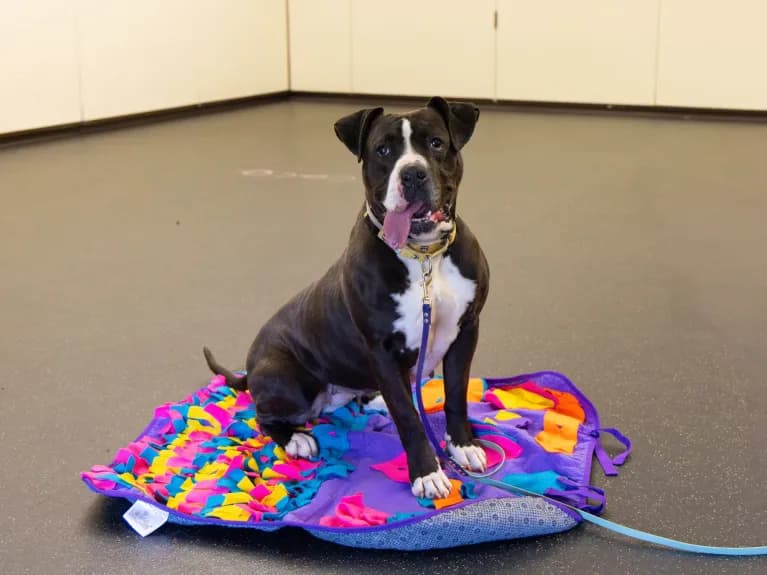
Just as important, the column urges owners to let the dog make choices instead of forcing interaction. If the dog wants to come closer, great. If not, give it space and let trust build gradually. That approach is especially useful in the first few days, when a pushy welcome can turn a merely alert dog into a shut-down one, or a happy one into a frantic one.
McKillop also recommends rewarding positive associations throughout the day with treats, while resisting the temptation to do too much too quickly. That is good shelter-to-home advice, and it lines up with guidance from the ASPCA and the American Kennel Club, which both say new dogs need time to acclimate and decompress in a new environment. The AKC goes further and notes that fearful or anxious dogs may take weeks or months to feel comfortable.
Why this works for hyperenergetic dogs
The reason this advice lands so well with high-drive dogs is that they are often the ones adopters misread. A dog that is social, bouncy, and eager can seem ready for anything, but a new home is still a huge sensory load. Quiet time does not mean shutting the dog down forever. It means giving that energy a chance to organize around a routine instead of exploding in every direction.
For this crowd, calm beginnings are not a compromise. They are the foundation for everything that comes later, whether that is loose-leash walks, house manners, or the ability to relax in the room without performing. A dog that learns to settle in the first 72 hours is far more likely to become a dog that can live inside the rhythm of the house instead of fighting it.

The shelter push behind the advice
Pasadena Humane’s guidance came amid a busy summer adoption push and a major statewide effort. California Adopt-a-Pet Day was scheduled for Saturday, June 6, 2026, with more than 150 shelters participating statewide and a goal of finding homes for 5,000 pets. Pasadena Humane said adoption fees would be waived from 10 a.m. to 4 p.m. for available dogs, cats, and critters, and the statewide shelter finder listed 148 animal shelters and more than 200 adoption sites taking part.
The scale of the event has grown fast. California Adopt-a-Pet Day launched in 2024, when 3,609 animals found homes, and the 2025 effort placed 4,979 animals. Pasadena Humane, a donor-supported nonprofit serving the Greater Los Angeles Area since 1903, also said it had nearly 70 dogs waiting for homes, which is exactly the kind of pressure that makes calm, successful transitions matter.
For a newly adopted dog, especially one with a motor that never seems to shut off, the goal is not to fill the calendar. It is to make the first home feel so steady, so quiet, and so predictable that the dog can finally stop bracing for the next thing.
This article was produced by Prism’s automated news system from verified source data, official records, and press releases, then run through automated quality and moderation checks before publishing. The system is built and supervised by the people who set the standards it runs under. Read our full AI policy.
Did this article answer your question?