Pentagon expands care research for wounded military working dogs
The Pentagon is funding canine medicine for blast injuries, toxic exposures and field blood transfusions, with four new projects due June 3.
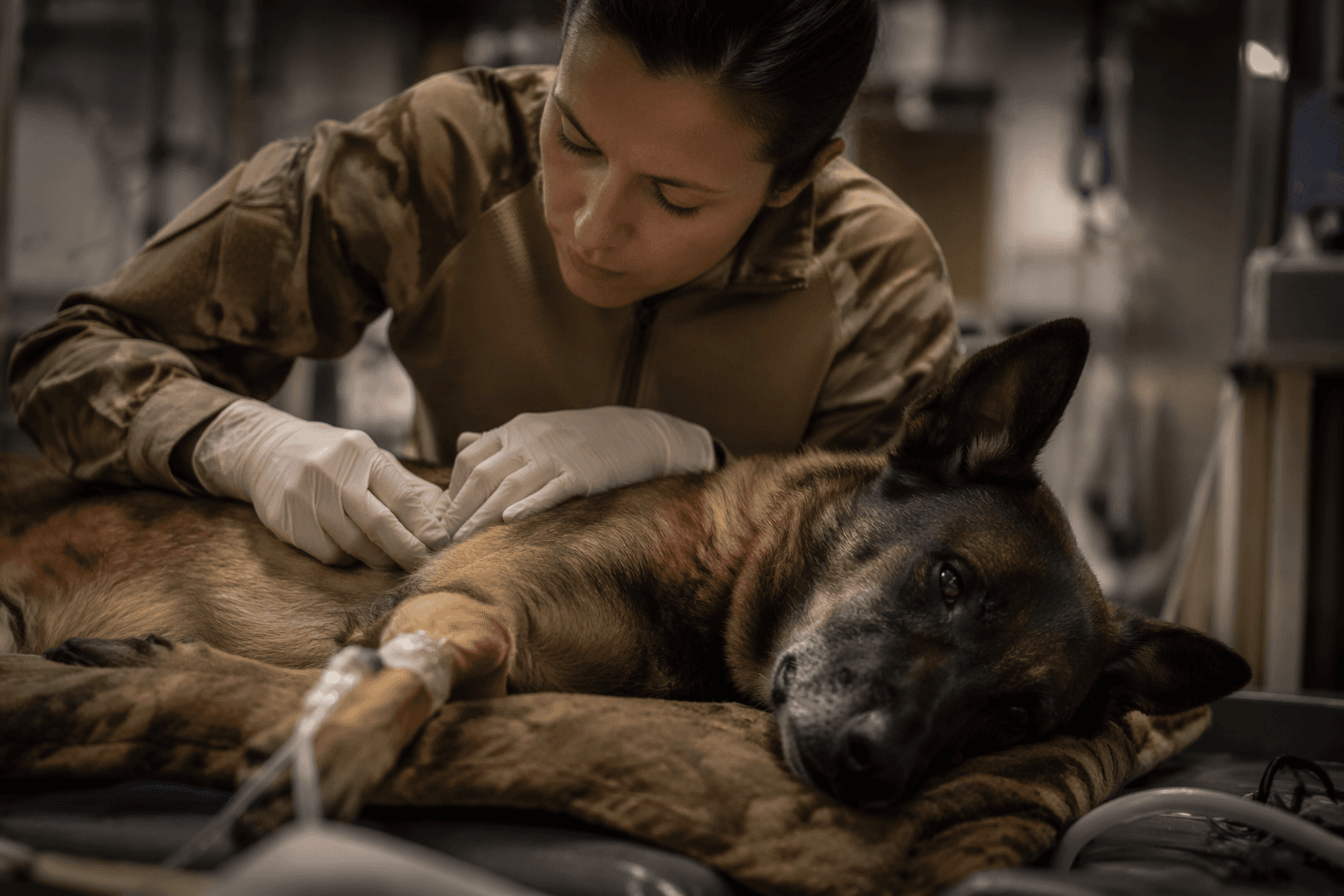
The Pentagon is widening research on wounded military working dogs with a blunt goal: keep blast-hit, bleeding, and chemically exposed dogs alive long enough to make it back from the field. The latest round of DoD Small Business Innovation Research solicitations includes four canine health projects, three from the Defense Health Agency and one from DARPA, all aimed at the kind of injuries that matter to explosive-detection dogs, base guards, and other high-drive working animals.
The biggest problem under the microscope is traumatic brain injury. The Defense Health Agency says severe TBI in military working dogs carries an extremely high mortality rate, and there is still limited data on what those injuries do to a dog’s long-term health and performance. That gap matters because dogs working around explosives and hostile environments face the same blast and head-trauma risks that have driven human military medicine for years, but with far less history to guide treatment.
The Joint Trauma System has already set a high bar for care, saying military working dogs are expected to receive the highest level of resuscitative care as far forward as possible, often without military veterinary personnel present. That makes field-ready tools especially important. One research thread is focused on shelf-stable whole blood products that can handle harsh temperatures and remain usable for more than three years. Another asks for better ways to decontaminate dogs exposed to toxic industrial chemicals or other hazardous materials, including systems that can identify exposure and remove toxins from the blood.
There is already a paper trail behind this push. The Joint Trauma System published a transfusion clinical practice guideline for military working dogs on Dec. 10, 2019, and the U.S. Army Veterinary Corps began building the Military Working Dog Trauma Registry in 2017. Data abstraction for that registry started in January 2022, with the goal of tracking demographics, injuries, treatments, and outcomes across the full care continuum. The Defense Health Agency followed with a DoD Working Dog Strategic Research Plan in June 2024, laying out priorities that include training, well-being, pain recognition, injury treatment, return-to-duty planning, and musculoskeletal risk.
The welfare side is getting harder to ignore. A 2022 Government Accountability Office report identified 18 issues important to working-dog health and welfare. Since then, Army Directive 2025-16 has pushed the Canine Holistic Health and Fitness Program and the Partner and Wellness Program, while the Department of the Air Force has updated welfare guidance and barred abandoning military working dogs overseas.

For police K-9s, sport dogs, and other hard-charging breeds, the lesson is clear. The military is building a more formal medical system around dogs that live at the edge of injury, and the next standard of care may start with the same problems now being tested for the dogs closest to the blast.
This article was produced by Prism’s automated news system from verified source data, official records, and press releases, then run through automated quality and moderation checks before publishing. The system is built and supervised by the people who set the standards it runs under. Read our full AI policy.
Did this article answer your question?