Shelby StMary turns early agility disappointment into steady success
Shelby StMary’s rough first ring run became a steady junior agility path, with Tesla and a family-built routine turning disappointment into confidence.
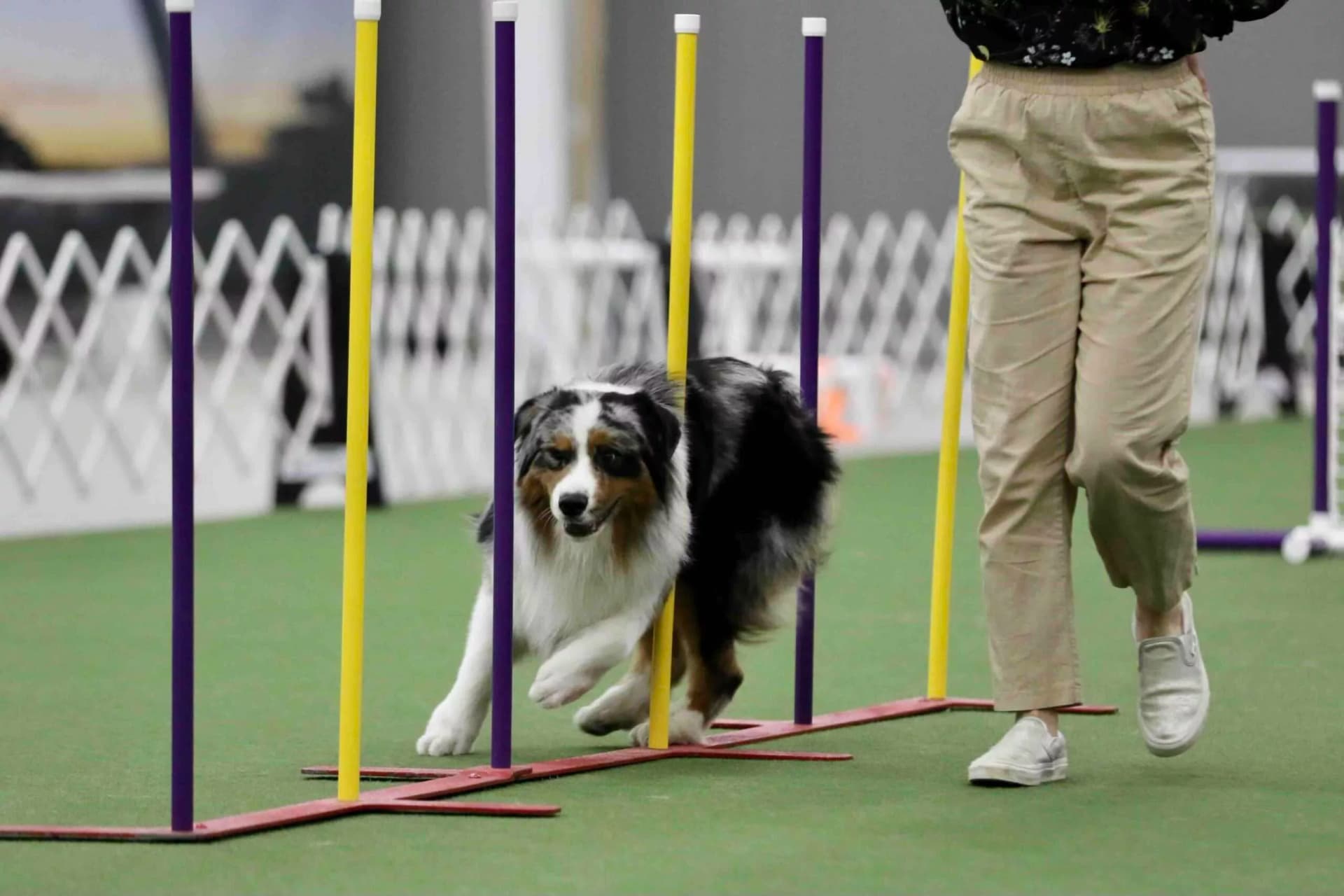
Shelby StMary sits at a trial with yarn in her hands and a crochet hook nearby, then shifts instantly into work mode when she and her Pug Tesla head for the start line. That quick change from calm routine to focused handling is the heart of her story: an 11-year-old from Marlborough, Connecticut, who learned that early disappointment in agility does not have to be the end of the road.
From a rocky first run to a repeatable routine
Shelby’s first try in the ring came with her mother Heather Ciribassi’s Papillon, Camber, and it did not go as planned. For a younger child, that kind of debut can be enough to walk away from the sport altogether, especially when the first experience is more frustration than fun. Shelby did the opposite. She went back to a backyard agility course, practiced, and turned that early miss into a working understanding of how to handle a dog on course.
That detail matters because agility rewards repetition as much as enthusiasm. Shelby did not stumble into success by accident; she built it at home, then carried it into trial settings where the pressure is real and the pace is fast. The story lands because the improvement is concrete: first a rough ring experience, then a practiced handler who knows how to reset and try again.
The right dog makes the work click
Tesla, the pink-collar Pug breeder Patricia Manney matched with Shelby, is not just a cute side note. The pairing works because the dog’s personality and the handler’s energy fit the job. AKC describes agility as a fast-paced obstacle course that uses a dog’s energy, intelligence, enthusiasm, and bond with its owner, and Tesla gives Shelby a place to direct all of that in a structured way.
What makes the scene so satisfying is the contrast. Shelby can be sitting still with yarn and a crochet hook one minute, then running a dog at the start line the next. That switch only works when the dog is ready for the job and the handler has the discipline to meet the moment. In Shelby and Tesla’s case, the pairing turns raw excitement into something cleaner and more reliable: a working routine.
Responsibility comes before the run
Shelby did not get her own dog without proving she could handle the day-to-day side of dog ownership. She took on chores such as picking up poop, feeding the dogs, and making sure water bowls were filled. That is the part families often miss when they see the ribbon photos and the flyover speed: the sport only works when the handler is already dependable at home.
Heather Ciribassi had been around dog sports for years, competing with family dogs and even carrying Shelby on her shoulders during course walks when she was little. That early exposure gave Shelby a front-row seat to the rhythm of the sport, but it did not replace responsibility. It simply set the stage for her to grow into the role when the time came.
Where junior handling fits in the sport
Shelby’s story also points to a much larger pathway. AKC says its juniors program is for handlers ages 17 and younger, and juniors can compete in companion events including obedience, agility, rally, and tracking. AKC’s junior-focused events are meant to promote participation in agility, obedience, rally, and junior showmanship, which gives young handlers more than one doorway into dog sports.
The organization also lays out a clear development ladder. AKC Junior Showmanship offers children from 9 to under 18 years old a chance to build handling skills, and that makes Shelby’s progress feel less like an isolated success and more like part of a system that can actually carry a young person forward. For families with energetic dogs, that structure is the real value: there is a place where drive, practice, and patience can be turned into routine.
A real outlet for high-drive dogs
The calendar shows that this is not a side project. The AKC Junior Agility Competition was scheduled for December 11, 2026, in Orlando, Florida, followed by the AKC Agility Invitational on December 12-13, 2026, also in Orlando. Those dates make junior agility look like what it is: a formal, continuing part of the sport, not a novelty for kids who happen to like dogs.
That is why Shelby’s path resonates beyond one family. A child who starts with a setback, a parent who knows the sport, a breeder who matches the right dog, and a junior program that keeps the doors open, that is the real pipeline. Shelby and Tesla show what happens when a high-energy dog gets a serious outlet and a young handler is given the chance to earn the partnership one practice, one trial, and one clean run at a time.
This article was produced by Prism’s automated news system from verified source data, official records, and press releases, then run through automated quality and moderation checks before publishing. The system is built and supervised by the people who set the standards it runs under. Read our full AI policy.
Did this article answer your question?