Magnet fishing finds need sorting, recycling, and safe disposal
The real magnet-fishing job starts after the pull: sort scrap, isolate sharps, and clear dangerous finds before they turn into bank-side litter.
The Canal & River Trust’s waterways draw millions of visitors, but the trust still clears hundreds of tonnes of floating litter, towpath litter, fly-tipped waste, hazardous waste and pollution each year and spends just under £1.2 million on bins and skips. For magnet fishing to look like recovery instead of dumping, the post-haul sort matters as much as the pull.
Start with the sorting pile, not the boot
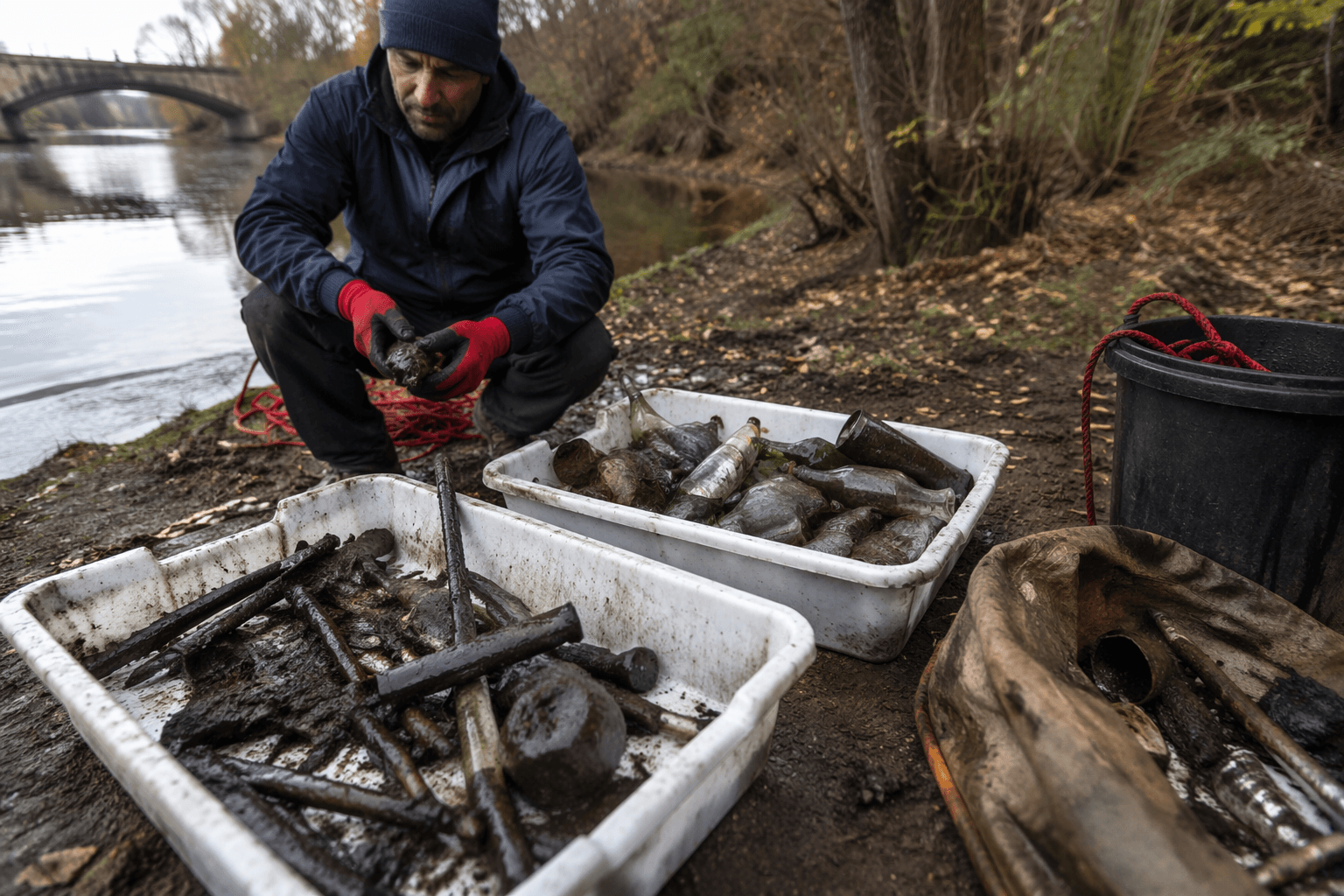
The moment the magnet comes up, treat the session like a waste-sorting job. A mixed bucket of rusty metal, sharp edges, mystery objects and oversized junk is exactly how a quick outing turns into a mess that nobody wants to handle later. Separate the haul on the spot so you are not carrying loose hazards home, back to the car, or onto the next bank you fish.
The practical split is straightforward:
- obvious scrap metal
- bulky items that need special handling
- sharps and puncture risks
- possible historical or illegal finds
- true rubbish that belongs in regular waste, if local rules allow it
Scrap metal goes to recycling, but bulky pieces need a plan
The U.S. EPA classifies scrap metal as one of the major secondary materials that can be recycled. The obvious ferrous haul, the bolts, plates, brackets and other metal pieces that pile up in a magnet bucket, should be routed into the metal recycling stream whenever the local facility accepts them. Not every rusted lump belongs in the same container, though, and not every recycler wants the same load.
Large objects often need special collection or drop-off because they do not fit regular curbside systems. That is where magnet fishing finds like bike frames, metal furniture and broken hardware can get awkward fast. If a piece is too large, too tangled or too dirty for the normal metal bin, it needs a specific drop-off point or a bulky-waste route, not a shove into the nearest public trash can.
The rule of thumb is simple: if it is clearly scrap and your local recycling setup takes it, recycle it. If it is oversized, bent out of shape or mixed with other junk, check the local bulky-waste or scrap-metal route instead of guessing.
Sharps are the line you do not cross
Used needles and other sharps are the finds that change the tone of a session immediately. Sharps can injure waste workers if they are handled improperly, and the FDA recommends a sharps container or, if needed, an opaque rigid plastic bottle with a secure lid. That is not the category for a loose bucket, a glove compartment, or a recycling tote.
If the magnet brings up a needle, blade, broken hook or anything that can puncture skin, isolate it right away. Keep it contained, keep it upright, and keep it away from hands that are sorting the rest of the haul. Then follow the local disposal rules for sharps, because the whole point is to stop one hidden object from turning into an injury for you, a hauler or a sanitation worker.
If it could be historical or illegal, stop treating it like junk
Magnet fishing is not allowed on Canal & River Trust waterways because retrieved items can be sharp, heavy or dangerous, and the trust points to cases including a WWII hand grenade. Once a pull crosses into ordnance, suspicious hardware or anything that could be tied to a crime, it stops being a souvenir hunt.
That is the point where you do not keep sorting as if it were ordinary scrap. Put distance between yourself and the object, keep other people clear and contact the relevant authorities or land manager. A find that looks old, military or suspicious should be handled as a report, not a trophy.
That same logic applies to anything that seems illegal to possess or move. The moment the object starts feeling less like river junk and more like evidence, the safest move is to stop and let the professionals decide what it is.
What never stays on the bank
The bank is not a holding pen. What you leave behind becomes somebody else’s cleanup, whether it is a crushed can, a jagged piece of metal, a suspicious package or a pile of scrap that looked too annoying to haul out. Leaving your own pile behind puts magnet fishing on the same side of the ledger as the litter it claims to remove.
So the final check is simple: if it is scrap, route it to recycling; if it is bulky, take it to the proper drop-off or collection point; if it is sharp, contain it safely; if it is suspicious, stop and report it. Nothing gets abandoned on the bank just because the session is over.
This article was produced by Prism’s automated news system from verified source data, official records, and press releases, then run through automated quality and moderation checks before publishing. The system is built and supervised by the people who set the standards it runs under. Read our full AI policy.
Did this article answer your question?