What to look for in a magnet fishing kit and rope setup
A magnet fishing kit only works if the rope, threadlocker, gloves, and rescue tools are built in. Miss one piece and the water keeps your gear, your hands, or your find.

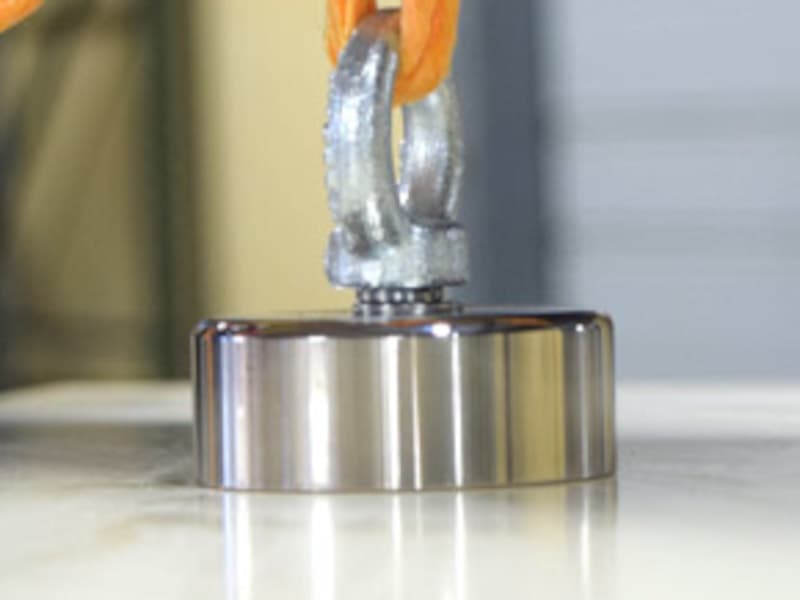
A loose eyebolt can dump a catch halfway through the pull. In magnet fishing, the failures happen at the connection points, not the pull force: a rope that is too short, bare hands on rusted scrap, or no way to pry free a stuck catch. Brute Magnetics sells a starter kit that bundles the magnet, storage case, rope, gloves, carabiner, and threadlocker so the setup works as a system, not as a single hunk of neodymium.
Start with a kit that solves beginner mistakes
Horizon Magnetics defines a magnet fishing kit as a full set of tools and necessary accessories, which matters when you do not yet know what to buy separately. Brute Magnetics sells starter kits and bundles built on the same approach. The smart part is not just convenience, it is sequence. You need the magnet, yes, but you also need the line that keeps it attached, the hardware that keeps it from backing out, and the gloves that let you haul a rusty chain without paying for it in cuts.
That is why magnet strength should not be chosen in a vacuum. The decision depends on where you plan to fish, how experienced you are, and how much you want to spend. A 575 lb pull bundle is marketed as a beginner and children’s option, which tells you the market is already built around different levels of confidence, not one universal setup.
What a real starter bundle should include
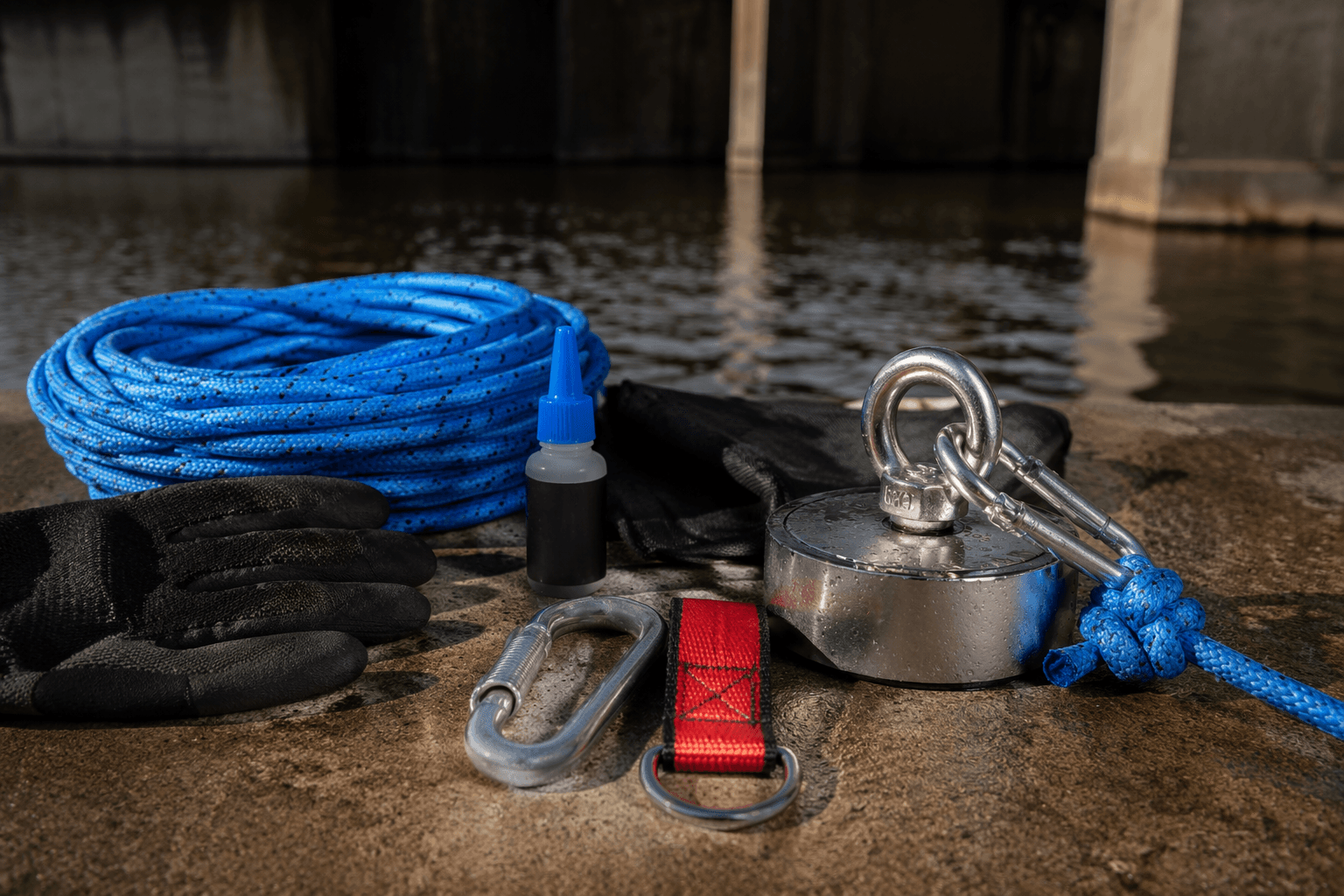
When you are comparing kits, the useful checklist is simple:
- A strong neodymium magnet
- A storage case for keeping wet gear and loose hardware contained
- Rope with enough strength and length for the spots you actually fish
- Gloves that can handle rust, glass, and rope burn
- A locking carabiner or similarly secure attachment point
- Threadlocker for the eyebolt, so the magnet does not work itself loose
Brute sells both kits and bundles. A kit comes with a magnet, case, rope, gloves, and threadlocker. A bundle includes the same pieces except the case. That difference matters more than it sounds like, because magnet fishing gear gets wet, dirty, and sharp very quickly. A hard case keeps the line, carabiner, and spare bits from turning into a tangled mess in the car.
Rope and attachment hardware are where most setups win or lose
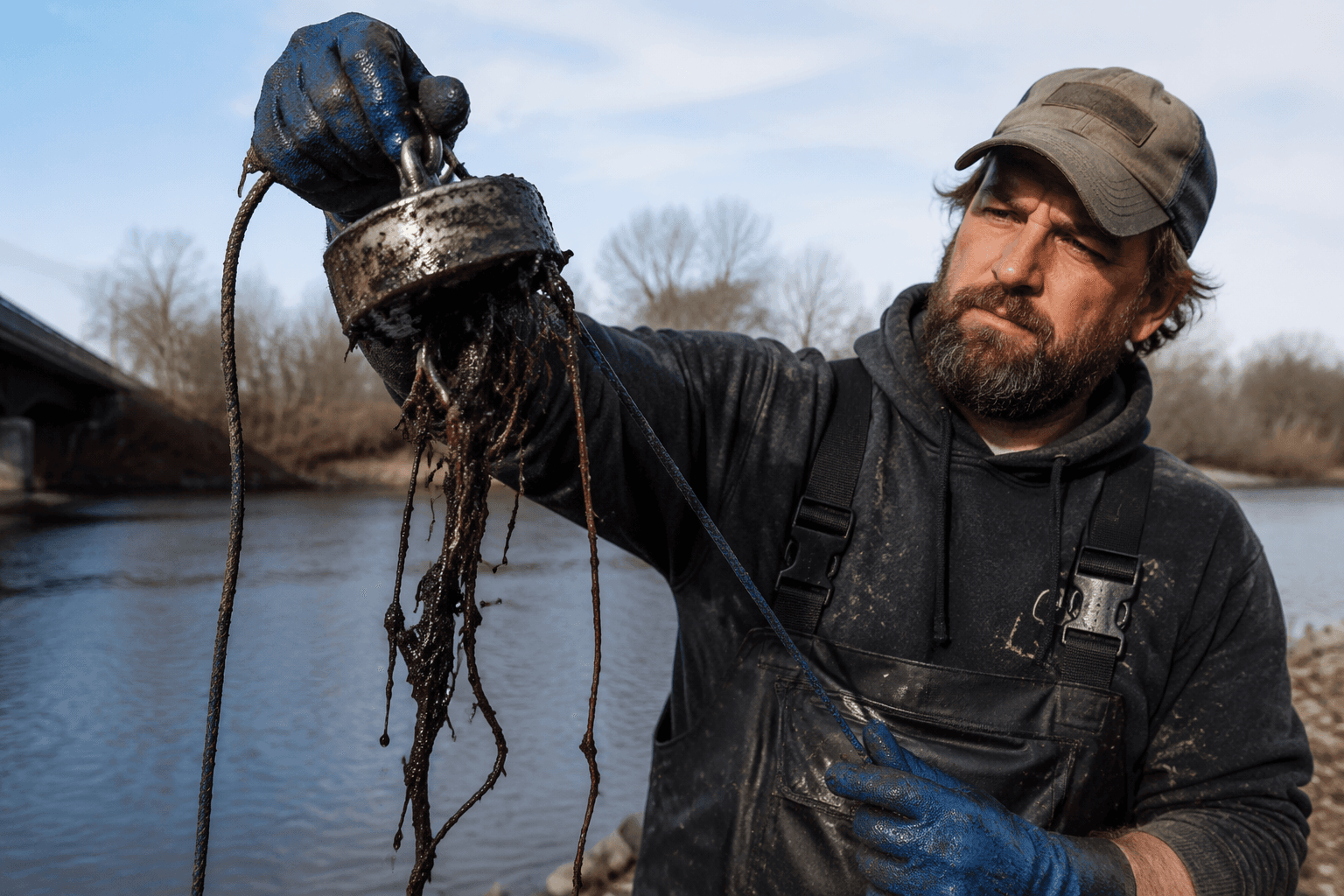
The rope is not an accessory. It is the part that decides whether your magnet comes back with the find or leaves it in the water. Brute’s 1/4-inch double-braided rope has eight inner strands and a breaking strength of 1,680 lb, which gives you a concrete reason to take line quality seriously. The rope comes looped and sewn with a plastic thimble, heat-shrink covering the stitching, and a locking carabiner, all details that reduce the odds of abrasion and failure at the attachment point.
Length matters just as much. Brute also offers a 100-foot, 1/3-inch double-braided rope. A 6 mm by 10 m nylon rope suits many spots, while high bridges, wells, and ocean boat use may call for more line. If you fish a shallow dock, you do not need the same setup as someone reaching out from a bridge railing.
The small steps that stop big losses
The most common avoidable mistake is skipping the threadlocker. Brute instructs users to put 1 or 2 drops on the eyebolt and let it cure for 24 hours before use. That is the kind of boring step that saves you from watching a promising catch disappear because the magnet unscrewed itself halfway through the pull. The other small habit matters too, securing the free end of the line to a railing, post, or other fixed object, so a slip does not become a full-loss event.
Portsmouth City Council lists health and safety considerations for magnet fishing, and the Broads Authority warns that sharp pieces of metal left on riverbanks can endanger other visitors, including dogs.
The accessories that save your hands, your catch, and your magnet
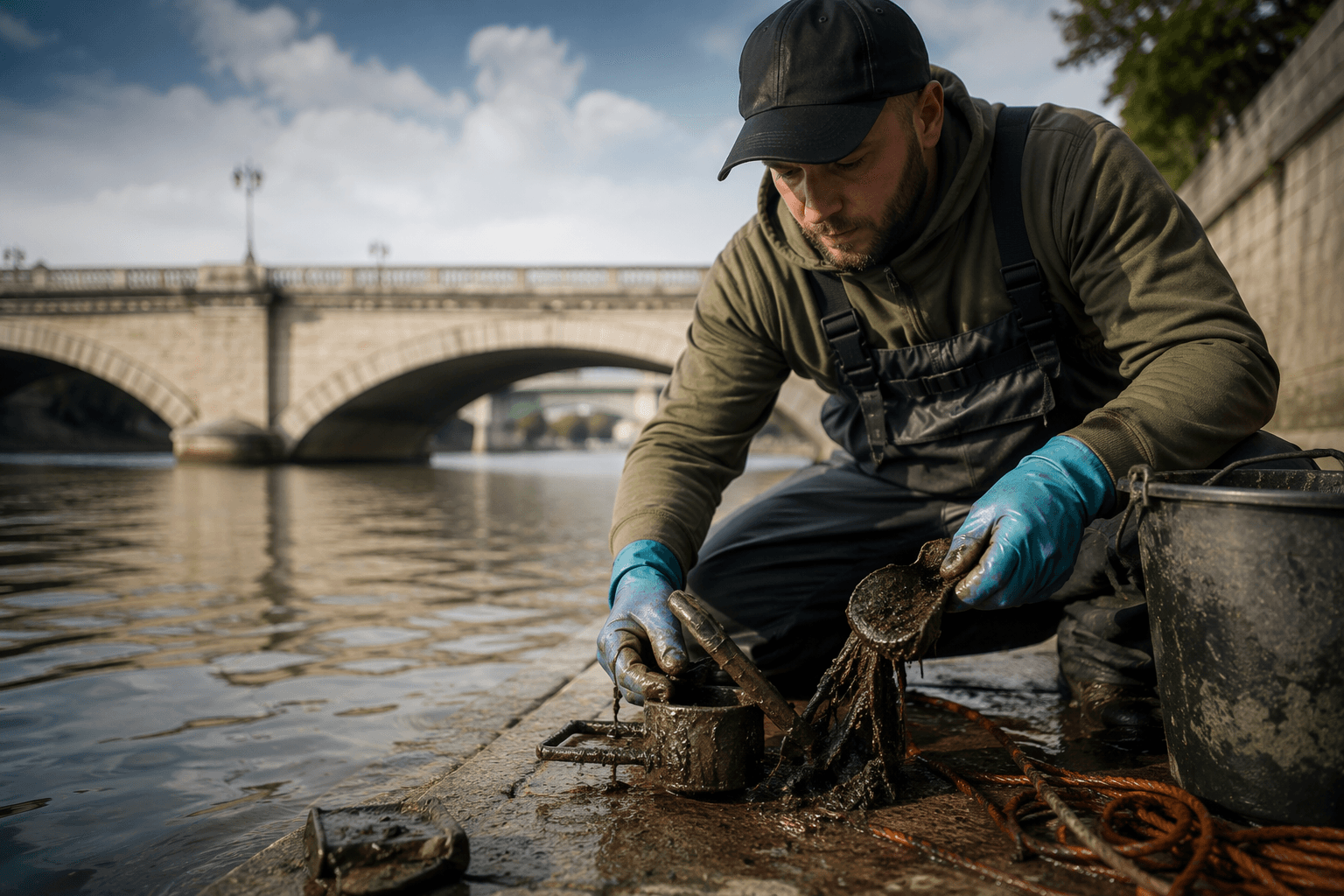
Gloves are not padding, they are damage control. Brute’s cut-resistant gloves use HPPE fabric, nitrile coating, and ANSI Level 5 cut resistance, which is exactly the sort of protection you want when the line is wet, the metal is rusted, and the edge you just pulled up is sharper than it looked underwater. They help against rope burns too, which is the injury new magnet fishers usually underestimate until the line gets tight.
The grappling hook earns its place for a different reason. Brute’s version uses serrated saw-tooth prongs and foldable SUS304 stainless spring steel claws, so you can grab odd-shaped objects the magnet misses or work a stuck magnet loose from another angle. That matters when you hook something awkward, like a bicycle frame or bent scrap that the magnet cannot hold cleanly.
Know where you can fish before you load the car
The Broads Authority defines magnet fishing as using high-powered magnets attached to rope to retrieve metal objects from waterways, and South Downs National Park identifies ecological cleanup and the chance of finding historic artefacts as common draws. Those two motives explain the appeal, but they do not override land rules.
Portsmouth City Council’s 2024 policy states that magnet fishing on council-owned, managed, or tenanted land is generally not permitted and may be considered case by case. It also reserves ownership of archaeological objects found on its land for its historic collections. The Broads Authority requires permission from landowners on private land.
A 2017 Belgium incident, cited in the hobby’s public record, involved enthusiasts finding firearms and ammunition linked to the Brabant killers.
This article was produced by Prism’s automated news system from verified source data, official records, and press releases, then run through automated quality and moderation checks before publishing. The system is built and supervised by the people who set the standards it runs under. Read our full AI policy.
Did this article answer your question?