Meshtastic proposes board-specific TFT drivers for more reliable color screens
Meshtastic’s latest TFTDisplay pull request could cut misrendered text, wrong touch behavior, and awkward refresh on color screens. For T-Deck owners, it points to fewer calibration headaches.

A Meshtastic firmware pull request opened July 3, 2026 to add board-specific driver support for TFTDisplay, and that small-looking change could remove some of the nastiest color-screen quirks on handhelds like the LILYGO T-Deck. The pull request, #10827, was opened by jp-bennett, and it lands in a part of Meshtastic that has always lived or died on getting the right hardware path for the right board.
That matters because Meshtastic’s display stack is not one thing. It spans OLED, e-ink, and TFT panels, and the wrong assumption in the display code can show up fast: text rendered badly, colors or polarity handled incorrectly, touch input feeling off, or screens refreshing in a way that looks laggy and broken. A board-specific TFT layer gives the firmware a better shot at picking the right display behavior before users ever notice a problem.
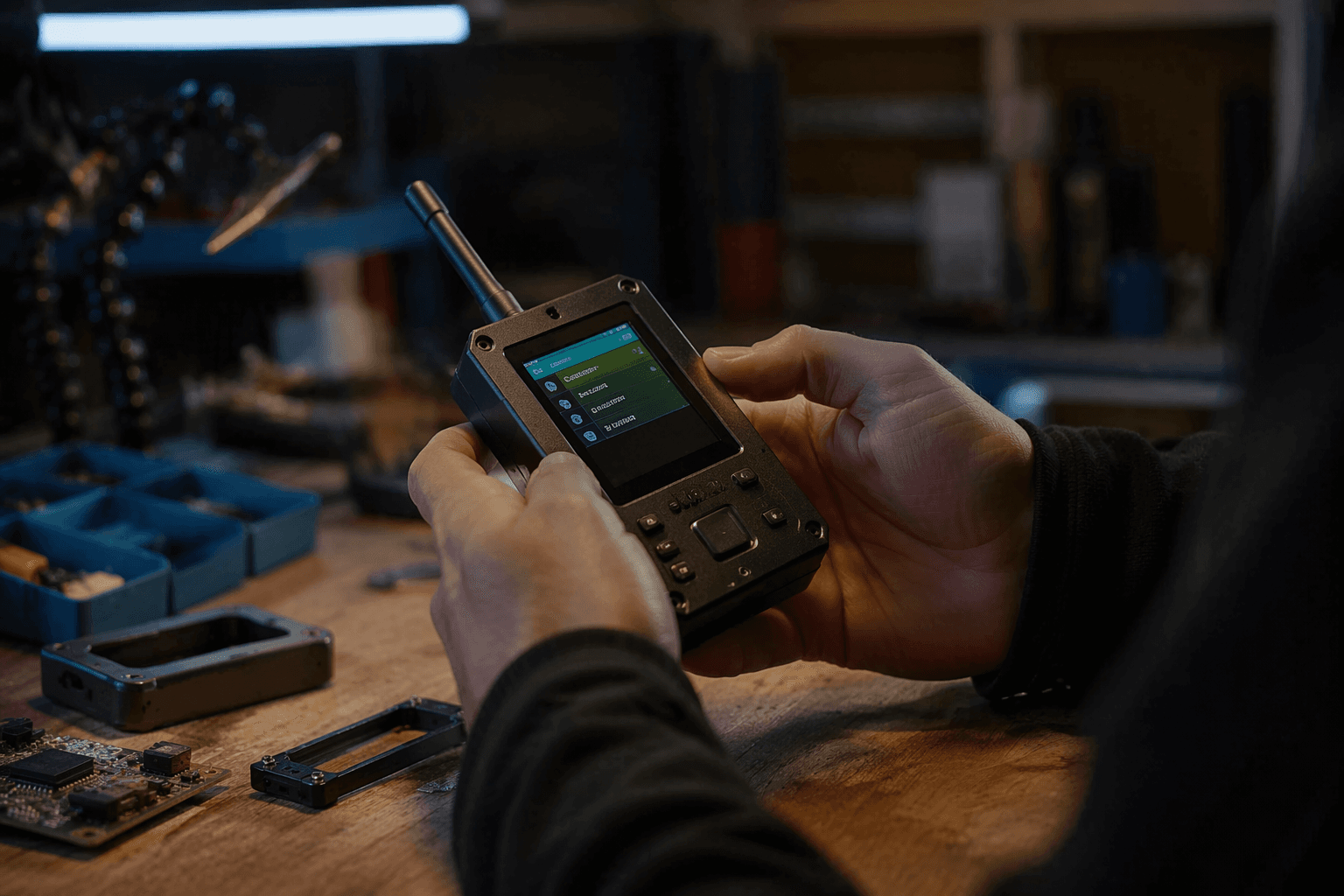
The payoff is clearest on devices meant to stand on their own without a phone glued to the workflow. Meshtastic UI, or MUI, is built as an independent interface for supported devices so users can handle basic settings directly on the mesh. Meshtastic’s 2.7 preview added a redesigned standard UI, Linux-native joystick support, and the ability to switch between BaseUI and MUI on supported TFT screens. A board-aware driver makes that stack less generic and more likely to match the hardware actually under the hood.
Meshtastic has already been signaling that this kind of hardware-specific branching is necessary. Its display configuration docs include explicit OLED driver choices such as OLED_AUTO, OLED_SSD1306, OLED_SH1106, and OLED_SH1107, along with display-mode settings and wake-on-tap or motion behavior. Its release notes for firmware 2.7.26.54e0d8d also warn that if a T-Deck shows touch accuracy issues, users should run screen calibration in MUI tools. That is not the language of a platform pretending all displays behave the same.
The T-Deck family shows why this work is practical rather than academic. Meshtastic’s device docs describe the LILYGO lineup as compact handheld keyboard devices with different touchscreen displays, including the original LCD T-Deck and T-Deck Plus, plus the T-Deck Pro e-ink model. GitHub discussions around Meshtastic have already covered TFT rotation handling, touch lag and unresponsiveness on the T-Deck Plus, and switching T-Deck touch handling to I2C polling. One report said the polling method fixed all touch-failure devices in factory testing.
For current owners, that means this kind of driver work can quietly turn a finicky color screen into one that just behaves. For new buyers, it is still worth waiting for the software to catch up with the hardware instead of assuming every TFT board will feel equally polished on day one. Board-specific support does not erase the quirks of a messy screen ecosystem, but it is exactly the kind of plumbing Meshtastic needs if standalone displays are going to feel dependable instead of experimental.
This article was produced by Prism’s automated news system from verified source data, official records, and press releases, then run through automated quality and moderation checks before publishing. The system is built and supervised by the people who set the standards it runs under. Read our full AI policy.
Did this article answer your question?