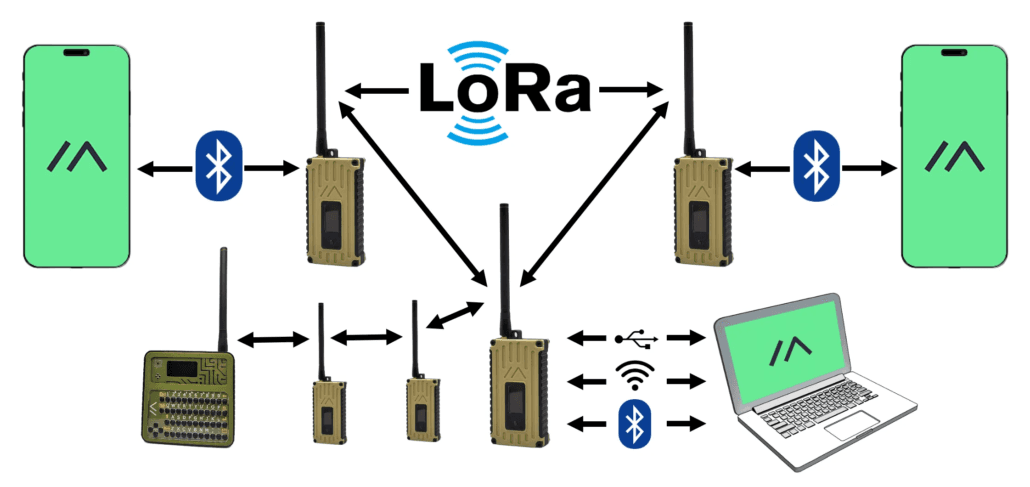
ZA Mesh dashboard maps 84 active South African Meshtastic nodes
84 active nodes is a real mesh, not a demo. ZA Mesh also showed how South Africa’s community is using MQTT and weekly activity to turn coverage into something measurable.

ZA Mesh’s latest snapshot put 84 active nodes on the South African Meshtastic map, a count that says the network has moved well past proof of concept. The page was last updated at 2026-05-05 13:11:32, and that timestamp matters as much as the total, because a mesh only earns trust when it can be watched as a living system, not just a static list of radios.
What makes the dashboard useful is not only the number at the top. ZA Mesh exposed live-style views for Chat, Graph, Map, Nodes, Neighbors, Telemetry, Traceroutes, Logs and Tools, which is exactly the right toolkit for reading a country-scale mesh. With Meshtastic, messages are broadcast and rebroadcast when needed, and matching channel names are required for devices to talk on the same channel. That means the real story is density and path quality: where nodes cluster, where hops are clean, and where the network still falls apart into isolated pockets.
A snapshot with 84 actives suggests a community that is mature enough to show structure, but not yet dense enough to assume blanket coverage. In practical terms, that usually means stronger pockets around better-sited stations, with quieter gaps between them where a relay, higher antenna placement or a better channel discipline could make a big difference. The value of a map like this is that it turns those weak spots into something you can actually see instead of guessing about.
The South African scene is also building habits around participation, not just hardware. ZA Mesh points users to MeshInfo-Lite on GitHub and the original MeshInfo by Kevin Elliott, tying the local effort into a broader open-source stack. MeshInfo-Lite is a customized Python web UI that connects to an MQTT server carrying Meshtastic traffic and uses MariaDB to store and visualize it. That is a serious backend for a hobby network, and it explains why the dashboard can do more than count nodes.
#MeshtasticMonday pushes that idea further. The weekly event asks users to enable OK to MQTT and send a message with the hashtag on the default LongFast channel, creating a repeatable marker of network activity. A MyBroadband Forum post described the wider South African effort as community driven and open source, and that description fits the rest of the tooling: this is a mesh that is being measured, discussed and improved in public.
The active-node count is also a reminder that this is a snapshot, not a fixed census. A separate ZA Mesh page showed 105 active nodes three weeks earlier, while another nodes page showed 87 active out of 893 total nodes. Those numbers point to filtering, crawl time and activity windows rather than a single hard total, which is exactly why the dashboard matters. It shows South African Meshtastic as something in motion, with enough density to map, enough gaps to chase, and enough community energy to keep expanding.
This article was produced by Prism’s automated news system from verified source data, official records, and press releases, then run through automated quality and moderation checks before publishing. The system is built and supervised by the people who set the standards it runs under. Read our full AI policy.
Did this article answer your question?