American Council on Science and Health Urges Rigorous Measurement in Meditation Research
ACSH's long-form commentary flags measurable neural changes in meditation - "signal complexity increased" - and urges more rigorous methods to translate contemplative practice into research.

A long-form commentary titled "The Measurable Mind: Eastern Practice Meets Western Science" presses for tighter methods to link meditation practice with measurable brain changes, and includes a fragmentary report that "signal complexity increased" during meditation. The piece frames its work around methodological challenges and opportunities in translating contemplative practices into measurable research, positioning measurement as central to future study design.
The American Council on Science and Health is named as the publisher of the commentary, which the supplied notes record as dated February 18, 2026 and described as a long-form review of current methodological hurdles and opportunities. The notes extract the commentary's stated aim as a review of "current methodological challenges and opportunities in translating contemplative practices into measurable research," making methodological clarity a stated priority of the document.
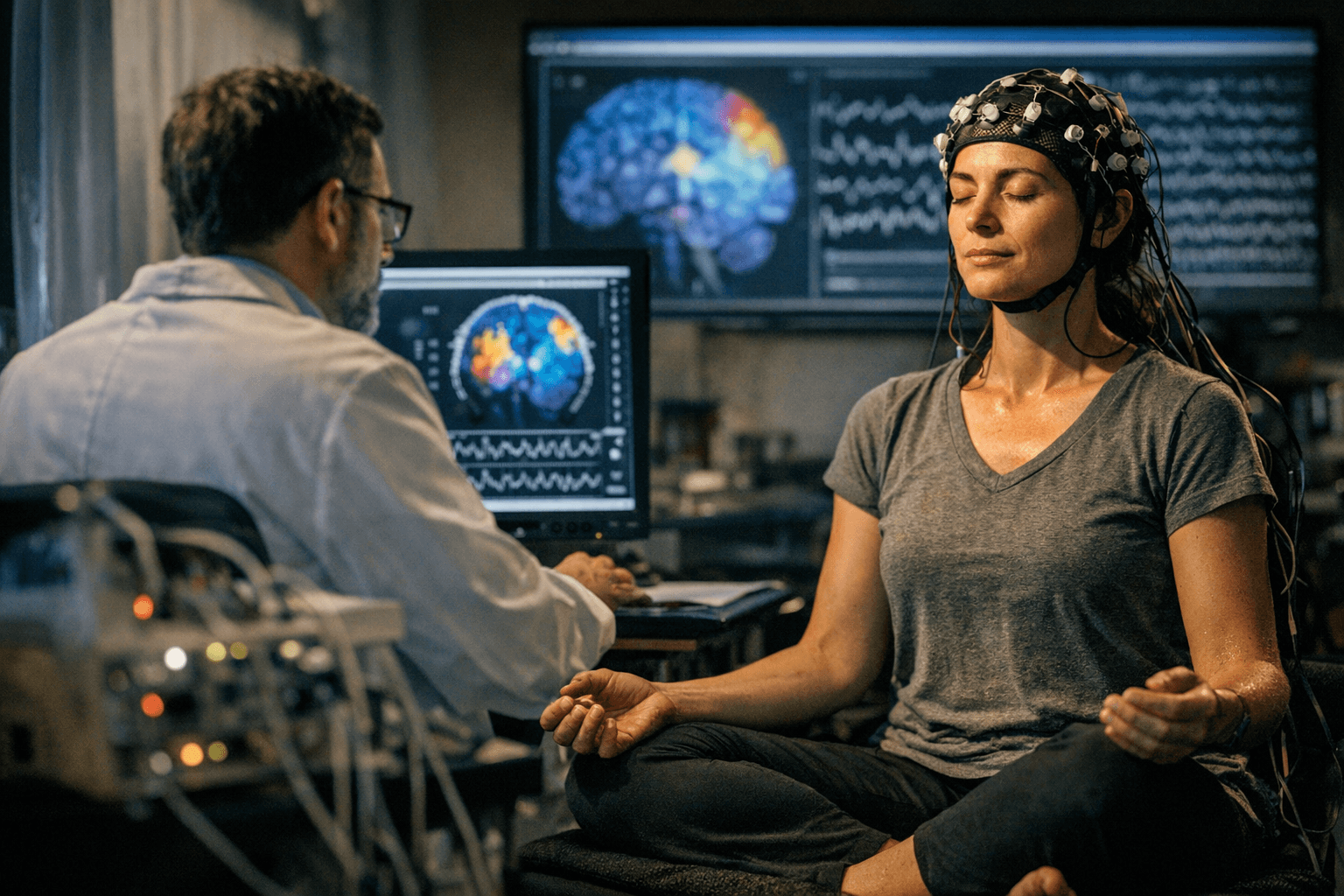
The supplied ACSH excerpt contains a neuroscience fragment: "The results revealed distinct shifts in neural dynamics during meditation. Signal complexity increased, suggesting that brain activity became" - the fragment ends mid-phrase. That wording indicates a reported shift in neural dynamics and an increase in signal complexity, but the commentary text available in these notes omits critical details such as whether the claim derives from original data or a synthesis of prior studies, which neuroimaging modality was used, sample size, and the precise characterization of how brain activity "became" different.
A separate Medium excerpt in the materials situates the measurement push in cultural context by contrasting Western and Eastern approaches to mindfulness. The Medium fragment asserts that "West utilizes a measurable, goal oriented approach to the practice that eastern mindfulness lacks" and argues that "This one track approach doesn’t always allow the mediator to experience the multitude of life changing benefits." That excerpt names Raphael (2017) for the phrase "true self, also known as spirit," Shonin (2015) for the claim that "Mindfulness is one of the fastest growing areas of Psychological research in the west," and professor Eifring (2013) for the observation that Western religions emphasize a personal relationship with God in ways Buddhism does not.
The reporting gaps are specific and actionable: the ACSH fragment truncates the neural finding and omits methods and citations; the Medium excerpt is heavily excerpted with bracketed ellipses and an unnamed author, and its claims about the "scientific aspect of Mindfulness" in the East require primary-source confirmation. Next reporting steps should include obtaining the full ACSH commentary and its author list, locating any underlying empirical studies cited for the neural dynamics claim, and retrieving the full Medium article plus the original works by Raphael 2017, Shonin 2015, and Eifring 2013 for context.
Verify sources: obtain the complete ACSH text and the underlying neuroscience studies before treating the "signal complexity increased" line as a definitive finding, and consult the named academics for clarification on East-West conceptual differences. If you want, I can attempt to retrieve the full ACSH commentary and the Medium piece and extract the missing methodological and bibliographic details.
Know something we missed? Have a correction or additional information?
Submit a Tip