Analog Hobbies Rise as People Seek Relief from Digital Overload
People are rediscovering attention through paint, paper, and silence. The real test is whether an analog habit deepens focus or just looks off-grid.
The appeal is not nostalgia. It is relief.
Walk into a room where paint is drying, bristles are scraping canvas, and no one is checking a phone, and the whole argument for analog hobbies becomes obvious fast. That is the feeling Shamash Alidina leans on in his Mindful essay: the physical act of making something by hand can quiet the background static that screen life keeps pouring into the mind. The smell of turpentine, the drag of a brush, the pause before the next stroke, all of it turns attention into something you can feel in your body.
That matters because mindfulness has always been about more than sitting still on a cushion. The point is to notice, stay present, and stop feeding every impulse that flashes across consciousness. In that sense, handwriting in a journal, walking without earbuds, reading a paper book, or spending an hour at a watercolor table can do real work. These habits are not a substitute for meditation, but they can train the same muscles: patience, sensory awareness, and the ability to remain with one thing long enough to let your nervous system settle.
Why analog feels different now
The digital overload backdrop is not subtle. Pew Research Center reported on January 8, 2026, that nine-in-ten U.S. adults use the internet daily and 41% say they are online almost constantly. Pew also says Americans are increasingly connected through smartphones, and YouTube and Facebook remain the most widely used social platforms among U.S. adults. That means the average person is not just using a screen now and then. The screen is ambient, portable, and always ready to interrupt.
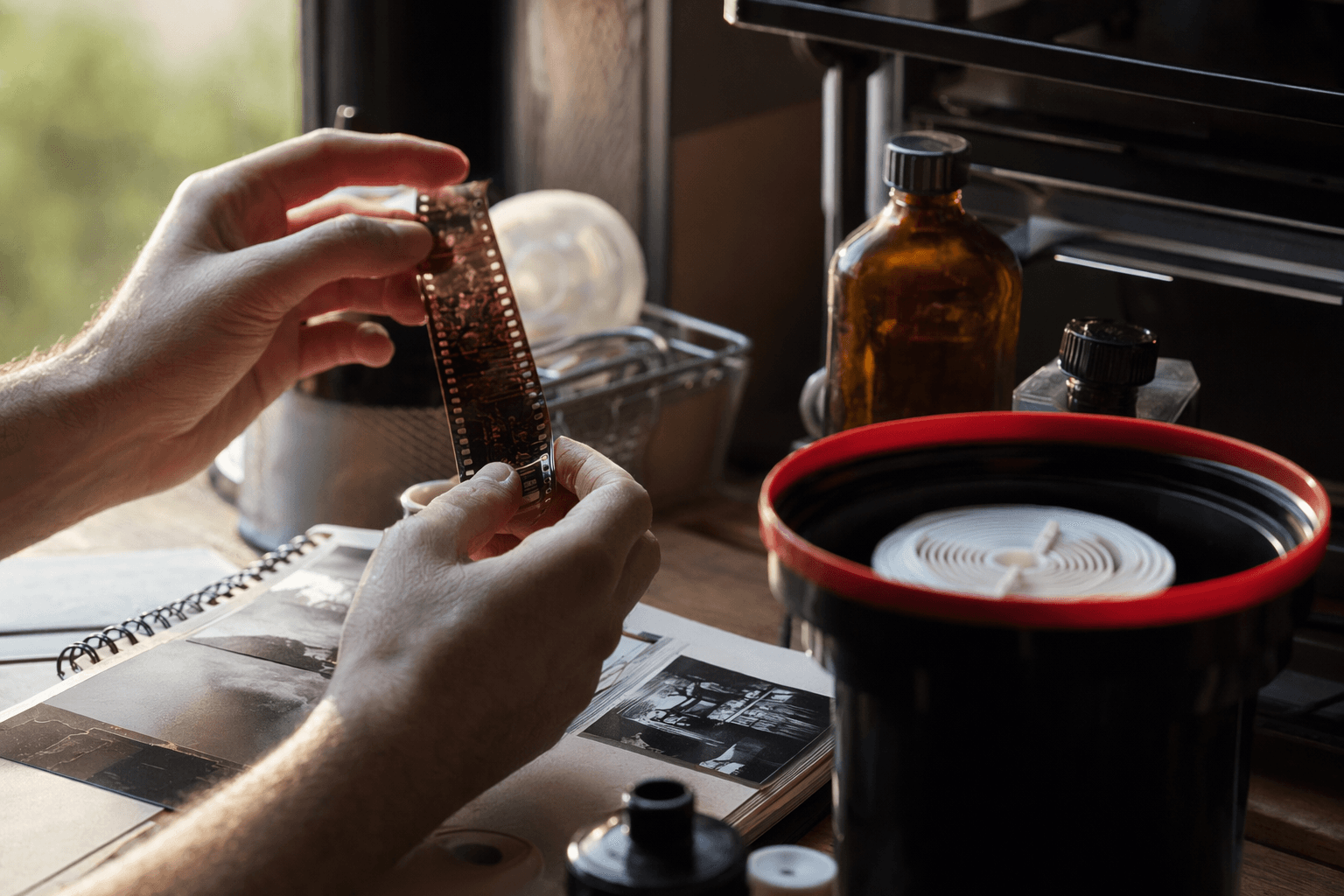
That is part of why the analog turn has gained traction. People are buying journals, puzzle books, film cameras, knitting supplies, watercolor sets, and even Polaroid cameras. The viral “Analog Bag” trend, tied to Sierra Campbell’s 2025 TikTok video, made the idea easy to copy: carry offline activities instead of defaulting to your phone. Marie Claire described the trend as a screen-reduction habit, and Reader’s Digest noted that Campbell’s bag included knitting materials, crossword puzzles, a watercolor set, and a Polaroid camera. It is not especially complicated. That is why it spreads.
Alidina also frames this shift as a kind of “brain wealth.” The phrase fits because the payoffs of these activities are slow and cumulative. Reading, writing by hand, drawing, sewing, or assembling a puzzle may not look efficient, but they build tolerance for depth, one of the scarcest mental resources in a high-notification world.
Which analog hobbies actually deepen attention
This is where the trend needs a little honesty. Not every off-screen hobby is automatically mindful, and not every “digital detox” product deserves the label. If the ritual only works because it photographs well, it is probably branding. If it helps you settle into the moment without demanding performance, it is probably doing real mindfulness-adjacent work.
The best analog practices have a few things in common:
- They give your hands something precise to do.
- They create a small container for attention, like a sketchbook page, a walking route, or a crossword grid.
- They are repeatable enough to become a routine, not an event.
- They are absorbing without being overstimulating.
That is why abstract painting in Alidina’s story matters. It is not about becoming an artist. It is about using one tactile activity to interrupt the loop of checking, swiping, and reacting. The same logic applies to journaling by hand, especially if you keep it simple: three lines on how you feel, one thing you noticed, one thing you want to leave alone. It also applies to a device-free walk, where the goal is not exercise data but sensory contact with the route itself.
The mindfulness angle is practical, not mystical
The National Center for Complementary and Integrative Health says mindfulness-based programs often combine meditation with other strategies for applying attention to stressful experiences. That is the key bridge here. Analog hobbies work best when they are treated as attention training, not as a lifestyle costume. You are not escaping reality by making a paper collage or spending 20 minutes with a puzzle book. You are giving the mind a place to land without forcing it through more stimulation.
There is real support for keeping the bar low and the practice short. A 2024 multi-site randomized study reported that four self-administered mindfulness exercises reduced short-term self-reported stress across 37 sites and 2,239 participants. The point is not that every small practice is magical. It is that brief, repeatable, low-barrier exercises can matter. That is exactly the kind of frame that makes analog hobbies useful: small doses, done consistently, with no drama attached.
Why the broader health picture makes this feel urgent
The cultural appetite for analog routines also makes sense against the health data. The Centers for Disease Control and Prevention says the latest 2024 National Health Interview Survey estimates show 12.1% of U.S. adults regularly felt worry, nervousness, or anxiety, and 4.8% regularly felt depression. The CDC also reported in 2025 that teenagers with higher non-school screen time were more likely to have depression symptoms, anxiety symptoms, irregular sleep, and weaker social and emotional support.
This is the part that turns the analog trend from cute to consequential. A phone is not the only cause of stress, but it can make recovery harder by filling every pause. When a habit like knitting, pottery, journaling, or reading gives the mind a place to slow down, it can become a pressure valve instead of another self-improvement performance.
That is also why the interest has spread beyond hobby circles. Google Trends remains the public tool people use to track search interest over time and by location, and the broader rise in searches for analog hobbies suggests this is not just a niche aesthetic. It is a social response to saturation.
What the skeptics get right
Still, there is a trap here. Putting a camera on a table or buying a leather notebook does not automatically make anyone calmer. James Danckert of the University of Waterloo put it plainly when CBC Kids News asked about the analog bag trend: mindfulness is “quite a wonderful thing” to practice, but it takes time and dedication. That is the right warning label.
If you want the practice to stick, make it ordinary. Keep the watercolor set where you will actually use it. Leave the crossword book on the kitchen counter. Set a 15-minute walk with no audio. Use a pen that feels good in your hand so writing does not become another chore. The goal is not to become the sort of person who owns the perfect analog setup. The goal is to create a few reliable moments in the day when your attention is no longer being auctioned off.
That is the real shift Alidina is pointing to: mindfulness is moving off the cushion and into daily life through concrete, tactile habits. The strongest analog practices are not the prettiest ones. They are the ones that make your mind quieter, your hands busier, and your next hour a little more your own.
Know something we missed? Have a correction or additional information?
Submit a Tip