Boston Study Adapts Mindfulness Therapy for Older Black Adults in Pain
Boston researchers asked older Black adults with pain and depression how mindfulness should change. The answer: adapt it around faith, respect, and real-life schedules.
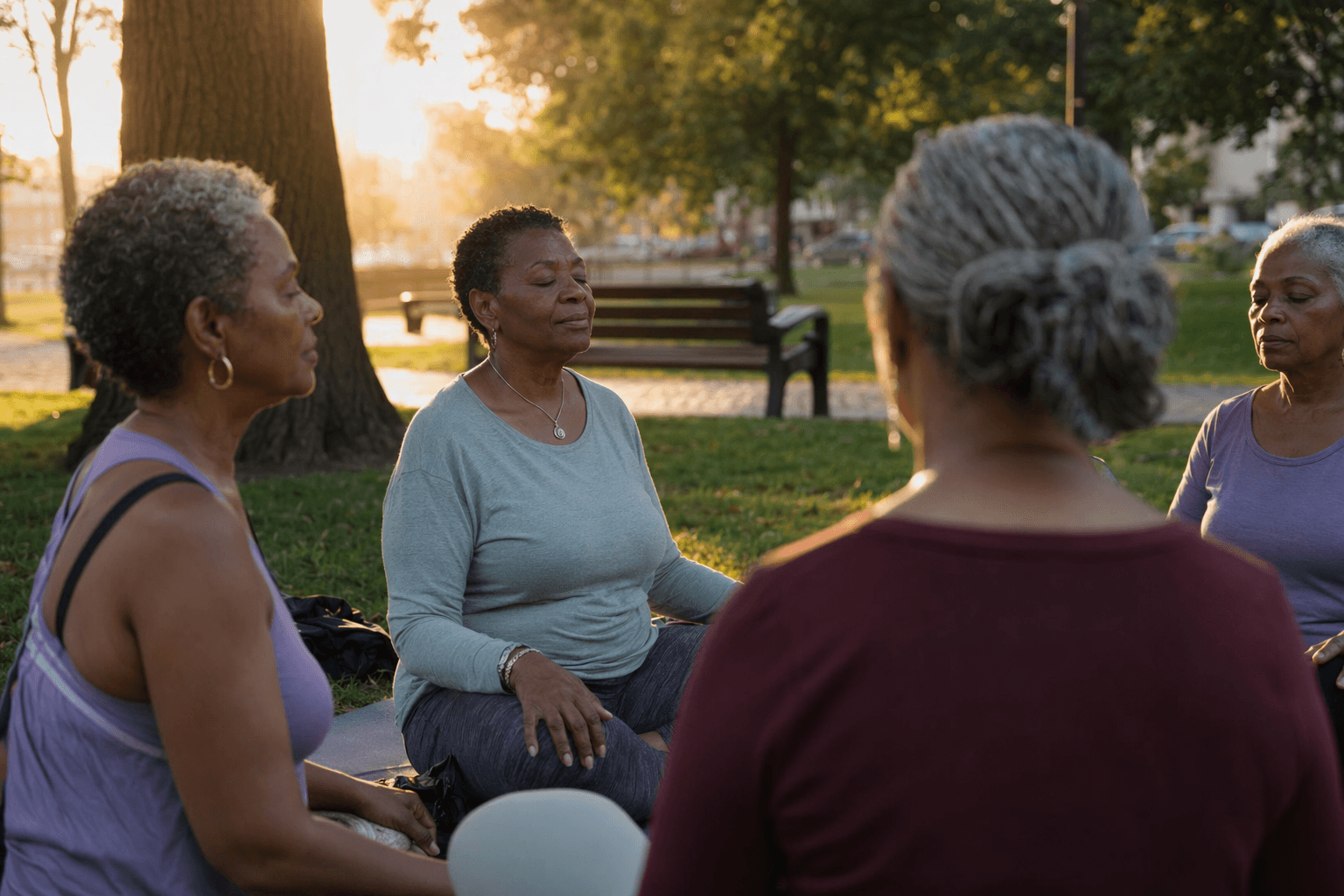
A study built around fit, not applause
Four Community Engagement Studios in Boston turned mindfulness-based cognitive therapy into something more useful than a standard protocol: a design conversation with 20 older Black adults ages 51 to 84, all of whom had lived with chronic pain for at least three months. The point was not to ask whether MBCT works in the abstract. It was to find out what it would take for the practice to feel credible, usable, and worth showing up for when pain and depressive symptoms are already shaping daily life.
That matters because this is not a niche problem. The Centers for Disease Control and Prevention reported in 2023 that 24.3% of U.S. adults had chronic pain and 8.5% had high-impact chronic pain, and CDC reporting has linked chronic pain with lower quality of life and poor mental health. The National Institute of Mental Health also notes that depression often co-occurs with chronic pain and other chronic illnesses, and that each can worsen the other. In other words, the Boston study is aimed squarely at a real overlap, not a theoretical one.
Why the adaptation question is the whole story
Mindfulness-based cognitive therapy already has a place in the evidence base as a group intervention for depression, and it has emerging promise for chronic pain. But a program that works on paper can still miss the mark in practice if it arrives with the wrong language, the wrong pacing, or the wrong assumptions about what participants can tolerate. That is especially true for older Black adults, who have faced a disproportionate pain burden and pain-related disability in prior research.
One large pain-disparities analysis found that African Americans with chronic pain reported more pain-related disability across activity domains, even when overall prevalence differences were not always significant. A 2024 analysis also found that non-Hispanic Black middle-aged and older adults had a higher unadjusted prevalence of severe and high-impact chronic pain than non-Hispanic White adults, alongside more everyday discrimination. The lesson is blunt: if a mindfulness program is not adapted with those realities in mind, it risks becoming another intervention that asks people to fit themselves into the program rather than the other way around.
What the studios revealed
The published abstract says participants reviewed MBCT content and talked through cultural relevance, barriers, and facilitators. From those conversations, three themes emerged, and each one points to a different kind of change that matters in real life.
Faith, language, and physical limits are not side notes
Participants were more open to mindfulness when the program was adapted to faith traditions, physical limitations, and language. That is a practical distinction, not a cosmetic one. It means the intervention needs to sound and move like something people can recognize as respectful, rather than something imported wholesale and renamed for a new audience.
For older adults living with chronic pain, physical limitations shape what sitting, breathing, and movement even mean from day to day. For many Black communities, faith is not an accessory to healing but part of how suffering, endurance, and care are already understood. The study’s participants were telling the researchers that mindfulness lands better when it speaks to those realities directly.
Respect in the room matters as much as the curriculum
The second theme was the importance of instructors grounded in respect and shared cultural context. That finding goes beyond interpersonal warmth. It suggests that trust is part of the treatment itself, especially in a population that has reason to be cautious about programs that appear generic, clinical, or detached from lived experience.
In practice, that means the person leading MBCT cannot be treated as interchangeable. Participants were signaling that who delivers the intervention changes how it is received. A mindful pause, a body scan, or a cognitive exercise may only feel safe enough to use when the instructor understands the room, the history, and the kinds of skepticism that come with being asked to join another health program.
Flexibility is not a luxury
The third theme was a preference for flexible, sustainable delivery, especially community-based or hybrid options and shorter sessions. That is a major clue for anyone trying to build trustworthy mindfulness care. If the format assumes long clinic visits, rigid scheduling, or repeated travel, it may be inaccessible before the first practice even begins.
Participants were not asking for a watered-down version of MBCT. They were asking for a version that can survive contact with everyday life. Shorter sessions, community settings, and hybrid options are not conveniences here. They are the infrastructure that makes participation possible for people managing pain, fatigue, and depressive symptoms at the same time.
What this says about mindfulness delivery now
The study sits within a broader shift in mindfulness science toward specificity. The field is moving away from the question of whether mindfulness helps in general and toward sharper questions: which version, delivered by whom, for which group, under what conditions, and with what adaptations? That shift matters because older Black adults with chronic pain and depression do not need a generic wellness package. They need an intervention that understands burden, recognition, and fit.
Previous scholarship has already argued that mindfulness interventions for Black communities may be more acceptable when they account for social support, racial empowerment, and faith traditions. This Boston project gives that argument a concrete shape. It shows what community engagement looks like when it is more than a slogan: four studios, 20 participants, direct feedback on content, and a willingness to change the program based on what people said they needed.
The authorship reflects that same institutional seriousness. The paper brings together Tony V. Pham, Kozbi Bayne, Defne Yucebas, Nia Stewart, Denise Altagracia Taveras, Nomin Enkhtsetseg, Michael Kincade, and Ana-Maria Vranceanu, with ties to Massachusetts General Hospital and Harvard Medical School. Vranceanu is associated with the Integrated Brain Health Clinical and Research Program, and Pham with the Depression Clinical & Research Program. That kind of clinical and research backbone matters because adaptation only becomes meaningful when it is paired with a willingness to rebuild the delivery model, not just the brochure.
The clearest takeaway is also the most useful one: culturally responsive mindfulness is not a softer version of the original. It is a more exacting one, because it has to earn trust, accommodate pain, and fit the social world of the people it hopes to serve.
This article was produced by Prism’s automated news system from verified source data, official records, and press releases, then run through automated quality and moderation checks before publishing. The system is built and supervised by the people who set the standards it runs under. Read our full AI policy.
Did this article answer your question?


