Mindfulness, attachment, and alexithymia shape harmonious, obsessive passion in study
Some people never click with mindfulness because feelings stay fuzzy and closeness feels risky. This study shows how that can tilt practice toward strain instead of steady passion.
Why some people fall in love with mindfulness, and others never quite do
The awkward truth is that mindfulness does not land the same way for everyone. For some people, it becomes a clean, repeatable practice that feels stabilizing and worth showing up for. For others, it turns into another thing to force, monitor, or get right, which is exactly where emotional blindness, attachment style, and motivation start to matter.

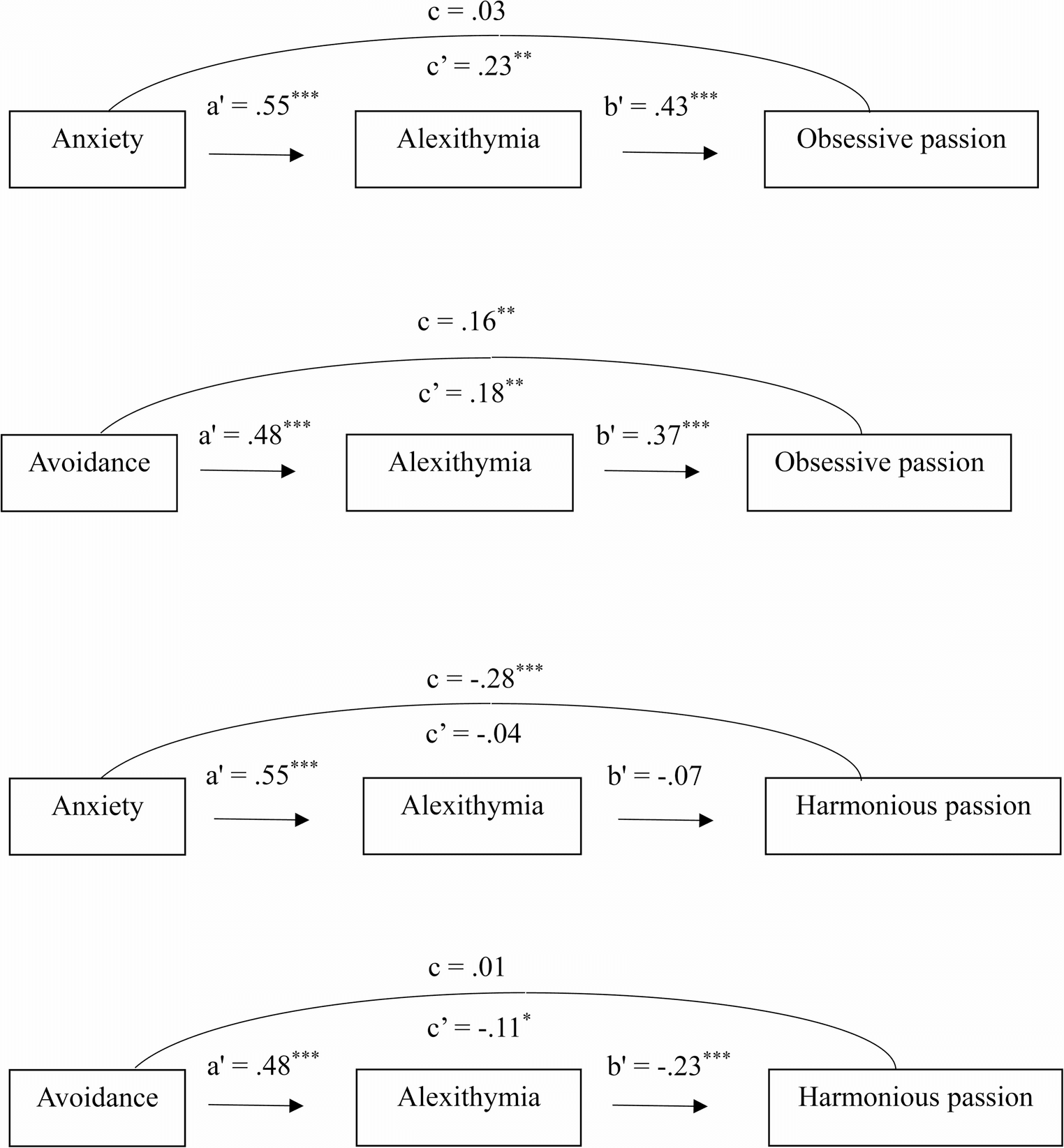
That is the real value of the paper by Idit Shalev and Erez Yaakobi: it treats mindfulness, alexithymia, and attachment orientation as one system, not three separate buzzwords. The question is not just whether people are mindful. It is whether they can notice what they feel, tolerate closeness, and convert effort into the kind of passion that stays healthy instead of hardening into obsession.
The three forces underneath the surface
Alexithymia is the first piece, and it is brutally practical. If you have trouble identifying and describing your emotions, then even a simple sitting practice can become muddy fast. You may sense tension, restlessness, or shutdown, but not have the words to catch it before it turns into avoidance, self-criticism, or overcontrol.
Mindfulness, in contrast, is the skill of paying attention to the present moment with less judgment and more clarity. In a good practice, that means you notice the wobble before you become the wobble. In a difficult practice, it can feel like staring at a blur and calling it insight.
Attachment orientation is the third piece, and it changes how you handle closeness, support, and emotional security. Adult attachment research usually centers on two insecurity dimensions: avoidance and anxiety. Avoidance is the uncomfortable one here, because it reflects discomfort with closeness and emotional intimacy. If that is your baseline, a meditation cushion can feel less like a refuge and more like a place where you are forced to meet yourself without the usual exits.
What the study was actually testing
The paper builds on Robert J. Vallerand’s Dualistic Model of Passion, which draws a sharp line between harmonious passion and obsessive passion. Harmonious passion is the good kind of intense commitment, the kind that gets integrated into your life because you want it there. Obsessive passion is more controlling, more brittle, and more likely to create conflict when the activity starts running you instead of the other way around.
That distinction matters in mindfulness circles because practice can become either a grounded habit or a badge of identity. The two cross-sectional mediation studies, with a combined sample of 648 participants, were designed to examine how alexithymia, attachment orientations, and mindfulness are associated with different forms of passion. That is a smarter question than simply asking whether mindfulness is “good,” because it asks what kind of emotional wiring helps it become sustainable.
The mediation part is the key move. These were not just correlation checks. The authors were looking at whether one psychological factor helps explain how another relates to passion. In plain English, they were asking whether emotional awareness and relational style help determine whether striving becomes harmonious or obsessive.
Why this hits close to home for meditators
This is where the study gets out of theory and into the room with real people. If you cannot easily name what you feel, then a meditation practice can become strangely flat. You may keep the schedule, keep the posture, keep the app timer, but never quite build the intimacy with experience that makes practice feel alive.
If you lean avoidant, you may also prefer self-reliance so strongly that mindfulness becomes another private project, not a relational one with yourself. That can look disciplined on the outside, but underneath it often produces distance. You are doing the reps, but not letting the practice touch you.
People with more harmonious passion tend to stay with meditation because it serves something larger than performance. They can miss sessions without spiraling, come back without shame, and treat practice as infrastructure rather than a referendum on who they are. People with obsessive passion often look committed, but the commitment is tighter, harsher, and more dependent on control.
Why mindfulness still matters for alexithymia
This is also where the evidence gets encouraging. A systematic review and meta-analysis by Lisa Marzano and colleagues found four randomized controlled trials of mindfulness-based interventions for alexithymia, with a combined total of 460 participants. The pooled result showed a statistically significant reduction in alexithymia at the end of the study period, with a mean difference of -5.28 on the Toronto Alexithymia Scale, and a 95 percent confidence interval from -9.28 to -1.28, p = 0.010.
That is not a miracle cure, and it is not a promise that every practitioner will suddenly become emotionally fluent. It does show something useful: mindfulness-based work can improve the ability to notice inner experience before it calcifies into avoidance or overidentification. For a lot of practitioners, that is the difference between a practice that feels abstract and a practice that starts to feel usable.
What teachers and practitioners can do differently
If this study has a real-world lesson, it is that mindfulness instruction should be matched to the person in front of you, not sold as one-size-fits-all enlightenment.
- Start with naming, not transcendence. For someone with alexithymia, asking for a clean emotional label can be more useful than asking for a deep insight.
- Keep the frame low-drama and repeatable. A 10 to 20 minute daily sit often works better than grand promises about transformation.
- Make room for avoidant styles. Some students need autonomy, privacy, and a slow build before they trust the practice enough to stay.
- Watch for obsessive passion. If a practitioner is measuring worth by streaks, intensity, or purity, the practice may be becoming controlling instead of nourishing.
- Treat mindfulness as a skill for emotional clarity, not just calm. The point is not to erase feeling. It is to recognize it early enough that it does not run the whole show.
That is the larger takeaway from Shalev and Yaakobi’s work. Mindfulness does not operate in a vacuum. It lands inside a person’s emotional vocabulary and attachment history, and that can push the practice toward either steady harmony or a more brittle, compulsive kind of striving. The best meditation teachers already know this intuitively, and now the research gives them a sharper map.
This article was produced by Prism’s automated news system from verified source data, official records, and press releases, then run through automated quality and moderation checks before publishing. The system is built and supervised by the people who set the standards it runs under. Read our full AI policy.
Know something we missed? Have a correction or additional information?
Submit a Tip