Breath Counting and 8-Week Mindfulness Reduce Left-Frontal Brain Connectivity
Breath counting and an eight-week mindfulness course reduced left-frontal brain connectivity, suggesting changes in approach-related emotion regulation.

Breath counting and longer mindfulness practice both produced measurable reductions in electrical connectivity in the left frontal brain, a region linked to approach-related emotion regulation. Two related EEG studies compared an 8-week training with brief breathing styles and found consistent left-frontal effects across different frequency bands.
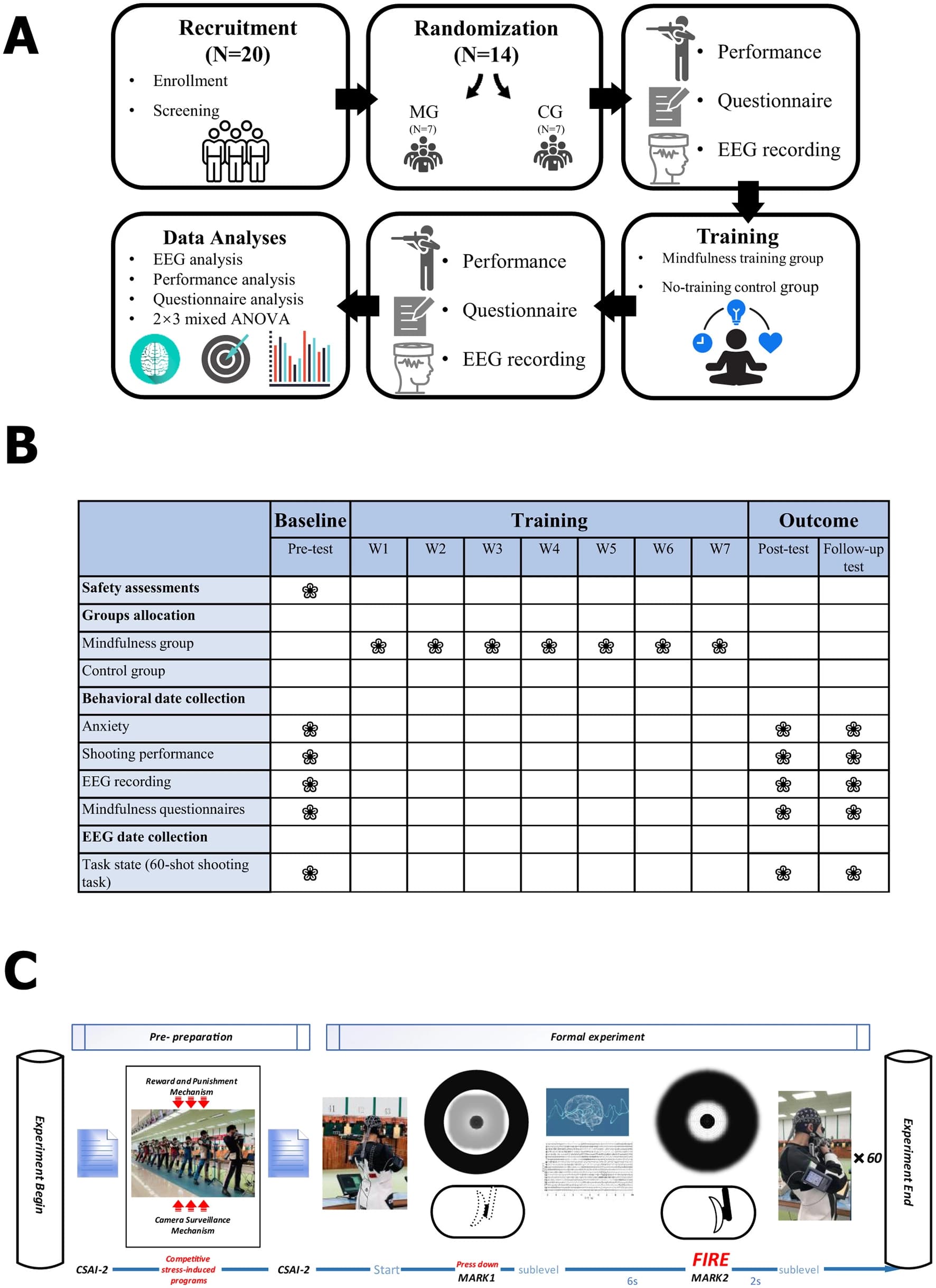
Study 1 evaluated long-term effects in 31 participants, with 17 in an eight-week mindfulness group and 14 in a control group. Researchers used electroencephalography to calculate atlas-based functional connectivity and spectral power. The mindfulness group showed significantly reduced delta and alpha functional connectivity predominantly in the left frontal region, indicating altered frontal asymmetry after the training period.
Study 2 focused on short-term breathing styles in 51 participants using a virtual reality platform. Participants practiced passive guided breathing or active breath counting while EEG monitored brain activity. The breath counting condition produced a significant reduction in gamma functional connectivity in the left frontal region. Together, the two studies point to left-frontal connectivity as a common neural signature when breathing practices shift emotion regulation toward changes in approach motivation.
For the mindfulness meditation community, the findings have practical value. Breath counting - an accessible, low-tech practice commonly taught in courses and apps - appears capable of producing measurable neural change even during brief sessions. The result supports using active counting techniques in teaching and app design when the aim is to target emotion regulation processes tied to approach motivation. The VR-based short-term study also highlights how digital platforms can deliver breathing interventions and be used for scalable, practical applications in classrooms, clinics, and community groups.
Context and caveats matter. Sample sizes were modest - 31 participants in the 8-week trial and 51 in the short-term experiment - and effects were identified through EEG connectivity and spectral power analyses. Frontal asymmetry is only one window into complex emotion regulation systems, and clinical or long-term behavioral outcomes were not detailed here. Still, the convergence of reduced left-frontal connectivity across delta, alpha, and gamma bands strengthens the case that breathing practices engage common neural pathways.
What this means for readers is straightforward: integrate breath counting as a deliberate, active practice when you want a compact tool for working with emotion regulation, and consider digital formats for remote or group delivery. Expect further research to refine dose, duration, and behavioral impact, but for teachers, app designers, and meditators, these results give a neural nudge to the value of counting breaths as part of a practical mindfulness toolkit.
Know something we missed? Have a correction or additional information?
Submit a Tip