CGC Landran Trains 100 Faculty in Mindfulness for Emotional Regulation
CGC Landran's IQAC brought 100 faculty into a hands-on mindfulness session with Dr. Nayanika Singh, delivering emotional regulation tools built for the pressures of academic life.
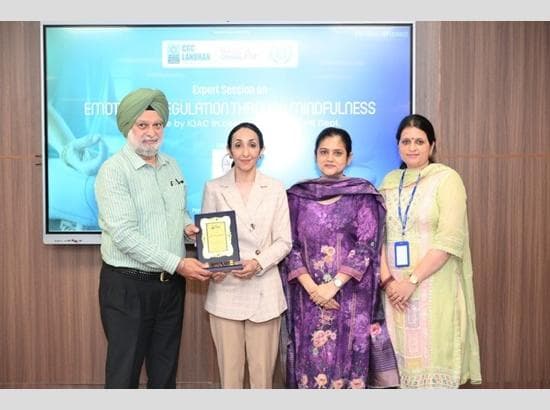
The Internal Quality Assurance Cell (IQAC) of CGC Landran, partnering with the college's HR department, drew roughly 100 faculty members into a session titled "Emotional Regulation through Mindfulness" on March 30. That kind of turnout at a single institution, for a practice-based workshop on emotional self-regulation, is rare in Indian higher education.
Dr. Nayanika Singh, a psychologist and corporate behavioural trainer with GQA Consultants Pvt. Ltd. in Mohali, led the Chandigarh event. Her dual background, clinical training and workplace behavioral work, shaped a format that skipped past theory and went straight to practice. Participants spent the session working through short guided meditations and real-time reflective exercises, experiencing each technique rather than being lectured about it.
Both formats are immediately deployable. In a guided meditation, the practitioner settles attention on the breath, notices when the mind moves toward a pressing stressor, and returns without self-criticism. The practice takes only a few minutes and sits naturally at the start of a teaching period or before a high-stakes administrative decision. Real-time reflective exercises work differently: they ask the practitioner to name exactly what emotional state they are carrying in a given moment and locate where it registers in the body. That somatic grounding, identifying tension in the chest or a clenched jaw rather than ruminating on its cause, interrupts the feedback loop that chronic workplace stress sustains.
For educators, the payoff is specific. Classroom presence, the ability to re-center during a derailed lecture or hold composure through a confrontational student interaction, depends on the same regulation circuitry these practices build. The IQAC framed the program as institutional infrastructure, not a one-off wellness event, situating it within a sustained effort to develop self-regulation capacity across the teaching staff as a whole.
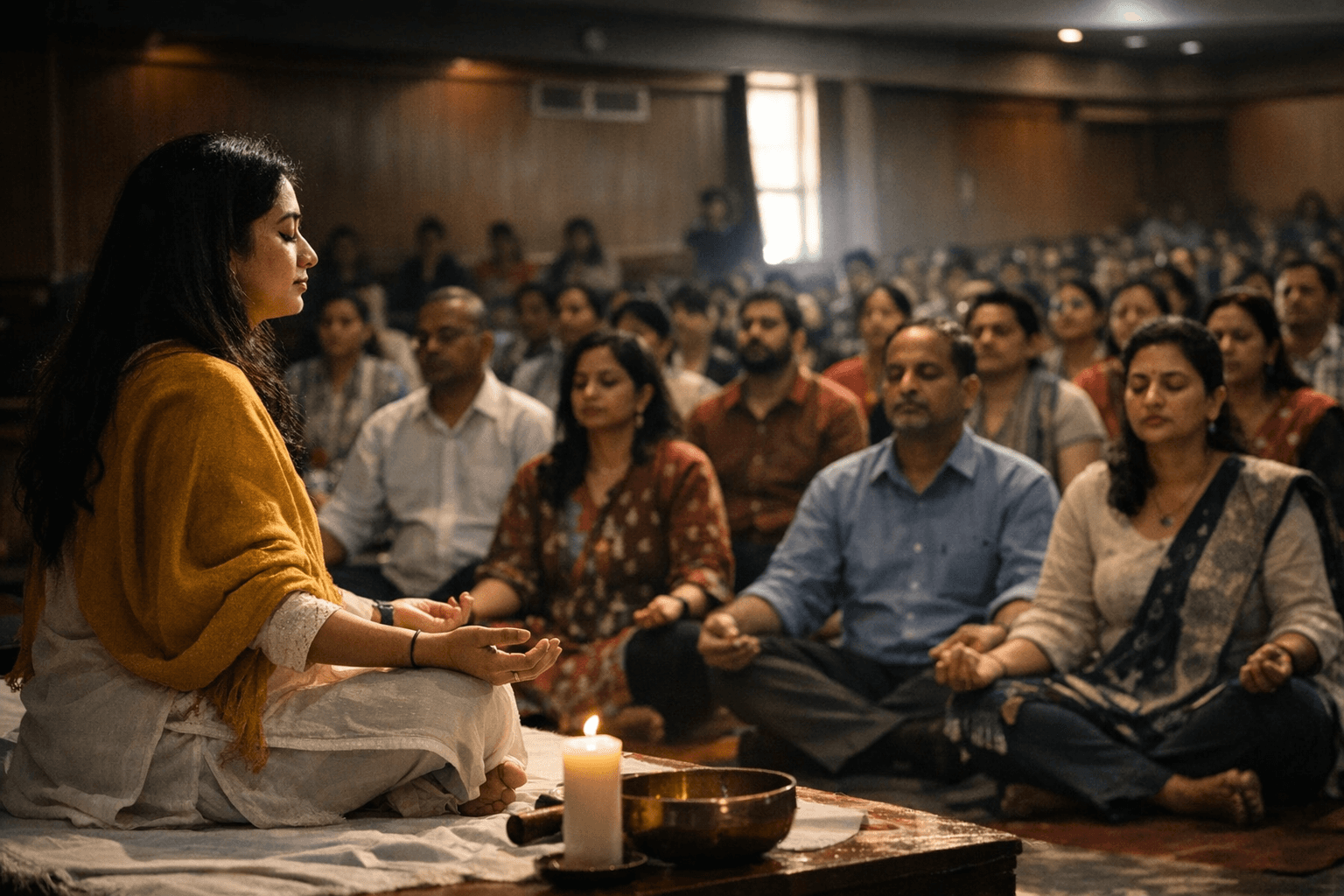
That framing is what makes the CGC Landran session a model worth examining. Voluntary drop-in meditation sessions rarely touch a hundred participants at once. By routing the program through IQAC coordination and HR infrastructure, the college converted mindfulness from opt-in enrichment to an institution-backed skill-building initiative, a structural shift that meaningfully increases the likelihood faculty will integrate these tools into working routines rather than treating the experience as a one-time check-in.
The session's emphasis on guidance for integrating practices into daily life, rather than simply introducing techniques in isolation, reflects something the mindfulness community already knows: what practitioners sustain is not the workshop high but the small, repeatable anchor that fits inside an ordinary day.
Know something we missed? Have a correction or additional information?
Submit a Tip