Culturally Adapted, Nurse-Led MBCT Improves Mood and Quality of Life After Stroke
Nurse-led MBCT reduced depression and improved quality of life for Thai post-stroke survivors, showing high feasibility and promise for community-based delivery.
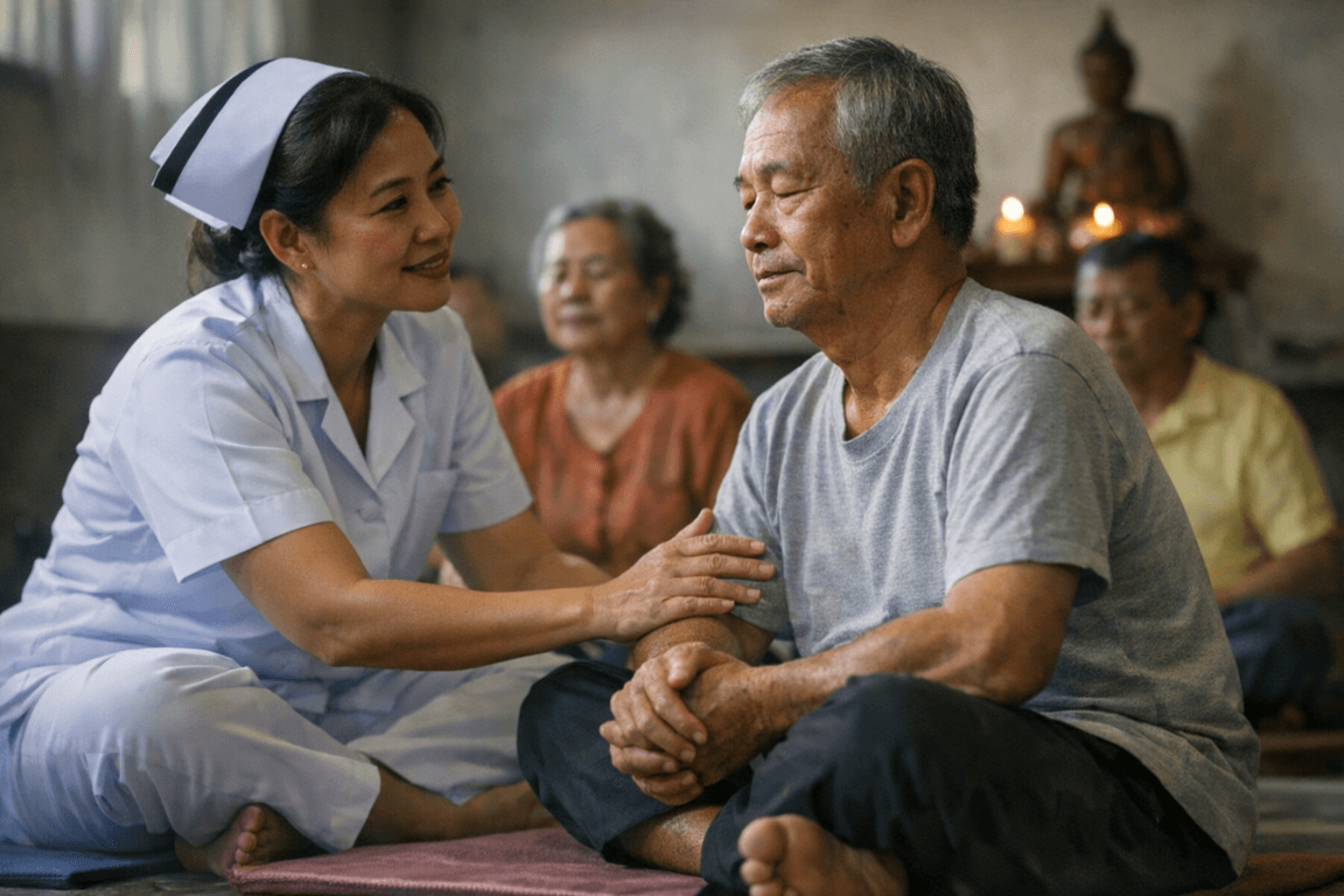
Post-stroke survivors who completed a five-week, one-on-one Mindfulness-Based Cognitive Therapy (MBCT) program delivered by a trained nurse experienced statistically significant improvements in mood, mindfulness, and quality of life. The two-phase pilot and feasibility study developed a culturally adapted MBCT for a Thai community and tested it in a mixed-methods single-group pre-post evaluation.
Phase 1 used focus groups with healthcare professionals, patients, and caregivers to adapt MBCT to local language, cultural norms, and common post-stroke concerns. Phase 2 enrolled 12 post-stroke survivors who received five weekly one-on-one sessions of 60-90 minutes with a trained nurse. Outcomes were measured with established instruments: the Patient Health Questionnaire-9 (PHQ-9) for depression, the Depression Anxiety Stress Scales-21 (DASS-21) for psychological distress, a rumination measure, the Mindfulness Assessment Scale, and the Stroke-Specific Quality of Life Scale 12-item version (SS-QoL-12). Post-intervention interviews captured participant experience and thematic change.
Feasibility was high, with 100% retention across the five sessions. Quantitative analysis showed statistically significant decreases in depression, psychological distress, and rumination (all p < 0.01), and significant increases in mindfulness (p < 0.05) and quality of life (p < 0.01). Qualitative themes highlighted participants’ transitions from feeling trapped to observing the mind, reconnecting with a changed body, cultivating acceptance and self-kindness, and identifying the nurse as an essential anchor in practice and recovery.
For mindfulness practitioners and community programs, the study offers practical lessons. Culturally informed adaptation matters: focus group input allowed content and examples to resonate with Thai survivors and caregivers, likely supporting engagement. Nurse-led delivery expands practical access in community and outpatient settings where psychologists or formal MBCT instructors may be scarce. One-on-one sessions of 60-90 minutes fit clinical schedules and can be integrated into rehabilitation follow-up visits or home-based care models.
Limitations are clear and affect how results should be used. The pilot involved only 12 participants and employed a single-group pre-post design without a randomized control arm, so observed changes are preliminary. A larger randomized controlled trial is needed to establish efficacy, determine durability of effects, and test scalability across diverse regions and health systems.
For meditators, clinicians, and stroke support networks, this study points to a viable pathway: train nurses in MBCT skills, adapt materials to local languages and cultural frames, and offer short, individualized programs as part of post-stroke rehabilitation. The early signal is encouraging for reducing rumination and improving emotional recovery while helping survivors reconnect with changing bodies. The next step is a larger trial to confirm these benefits and to map training resources for nurses who can become the community anchor for mindful recovery.
Know something we missed? Have a correction or additional information?
Submit a Tip