Digital mindfulness program cuts burnout in Taiwanese caregivers, trial finds
A five-week AIZEN trial in Taiwan cut personal and work burnout in 42 professional caregivers with 90-minute live sessions and 10-minute daily practice.
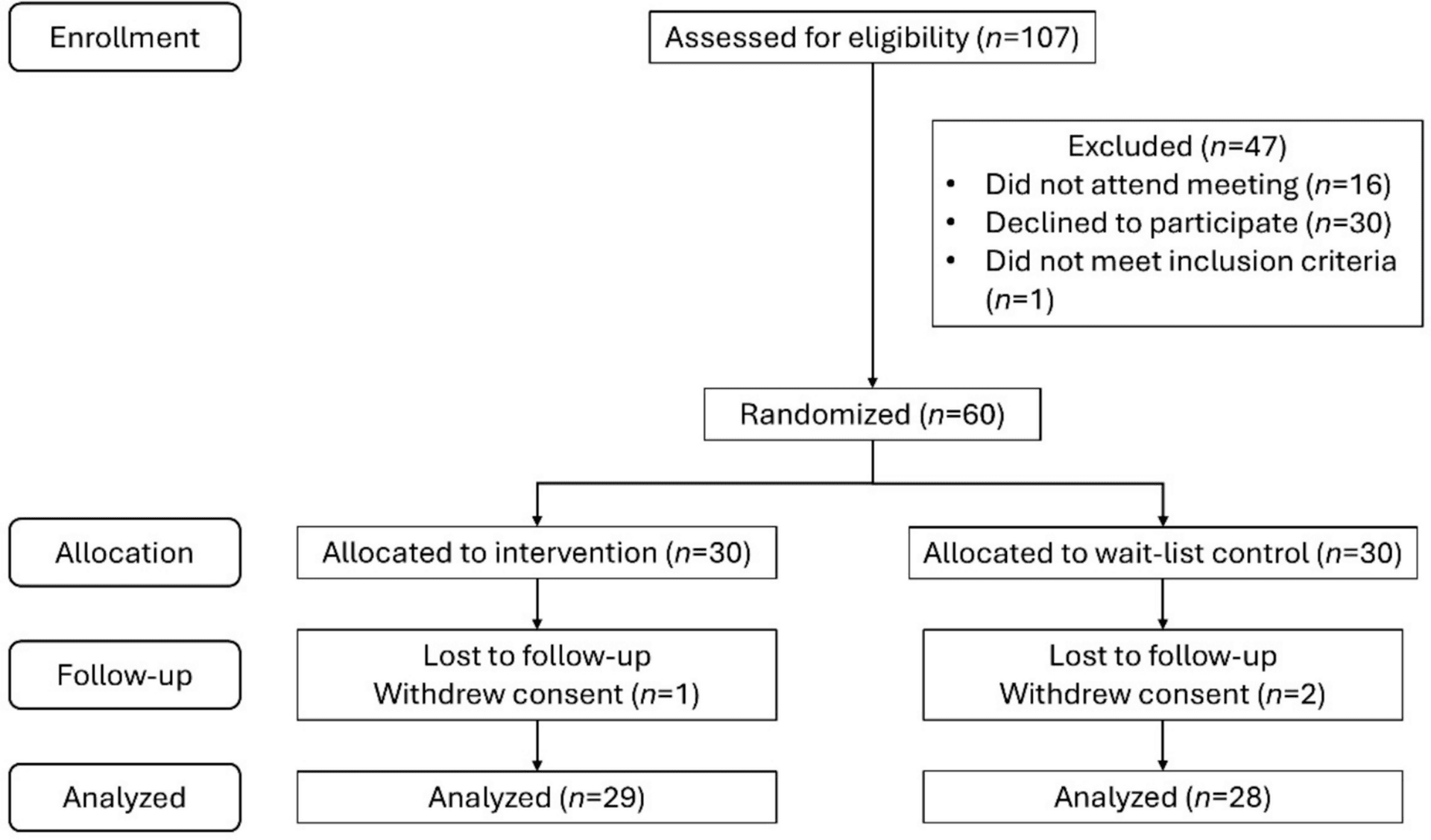
A five-week online meditation program gave Taiwanese caregivers a rare thing: a structure that fit between shifts, family duties, and the constant churn of burnout. In a randomized, stratified, wait-list-controlled pilot trial, Ying-Erh Chen and colleagues tested AIZEN in 57 meditation-naïve caregivers, and the immediate-intervention professional caregivers came away with lower personal burnout and work-related burnout.
The sample included 42 professional caregivers and 15 informal caregivers. Participants joined weekly 90-minute live, instructor-led online sessions, then practiced 10 minutes a day on the AIZEN digital platform. Automated reminders went out through LINE, the messaging service many people in Taiwan already use. Researchers measured outcomes at baseline, immediately after the five-week program, and again five weeks later. For professional caregivers, they tracked personal burnout, work-related burnout, and client-related burnout with the Copenhagen Burnout Inventory. For informal caregivers, they used the Zarit Burden Interview to measure burden.
The clearest gains showed up where caregiver stress is most visible on the job. Professional caregivers who received the intervention first had significantly greater reductions in personal burnout, with = 12.50 and p = 0.011, and in work-related burnout, with = 11.43 and p = 0.015, compared with the wait-list control group. The work-related burnout effect held at follow-up in the primary analysis, then lost significance in a sensitivity analysis. The study did not find significant effects for client-related burnout or for informal caregiver burden, which keeps the result grounded rather than inflated.

That nuance matters because the paper frames caregiver stress and burnout as a public health problem that can damage physical and psychological health, compromise patient safety, and drive staff turnover. It also says the burden is especially acute in Taiwan because of demographic and cultural factors, a pressure that sits behind the Ministry of Health and Welfare’s annual aging and long-term care reporting.
Preregistered as ClinicalTrials.gov NCT07188454 and sponsored by the National Health Research Institutes in Taiwan, the trial makes a practical case for digital mindfulness. It does not replace retreats or classes, but it does show how a short program can be built into hospital schedules, elder-care shifts, and family caregiving routines without asking people to find an extra hour they do not have.
This article was produced by Prism’s automated news system from verified source data, official records, and press releases, then run through automated quality and moderation checks before publishing. The system is built and supervised by the people who set the standards it runs under. Read our full AI policy.
Did this article answer your question?