Focused Breathing Boosts Alerting and Executive Attention, Body Scan Falls Short
Focused breathing sharpened alerting and executive attention over 4 weeks; body scan showed no gains vs. control, per a new EEG-backed RCT.
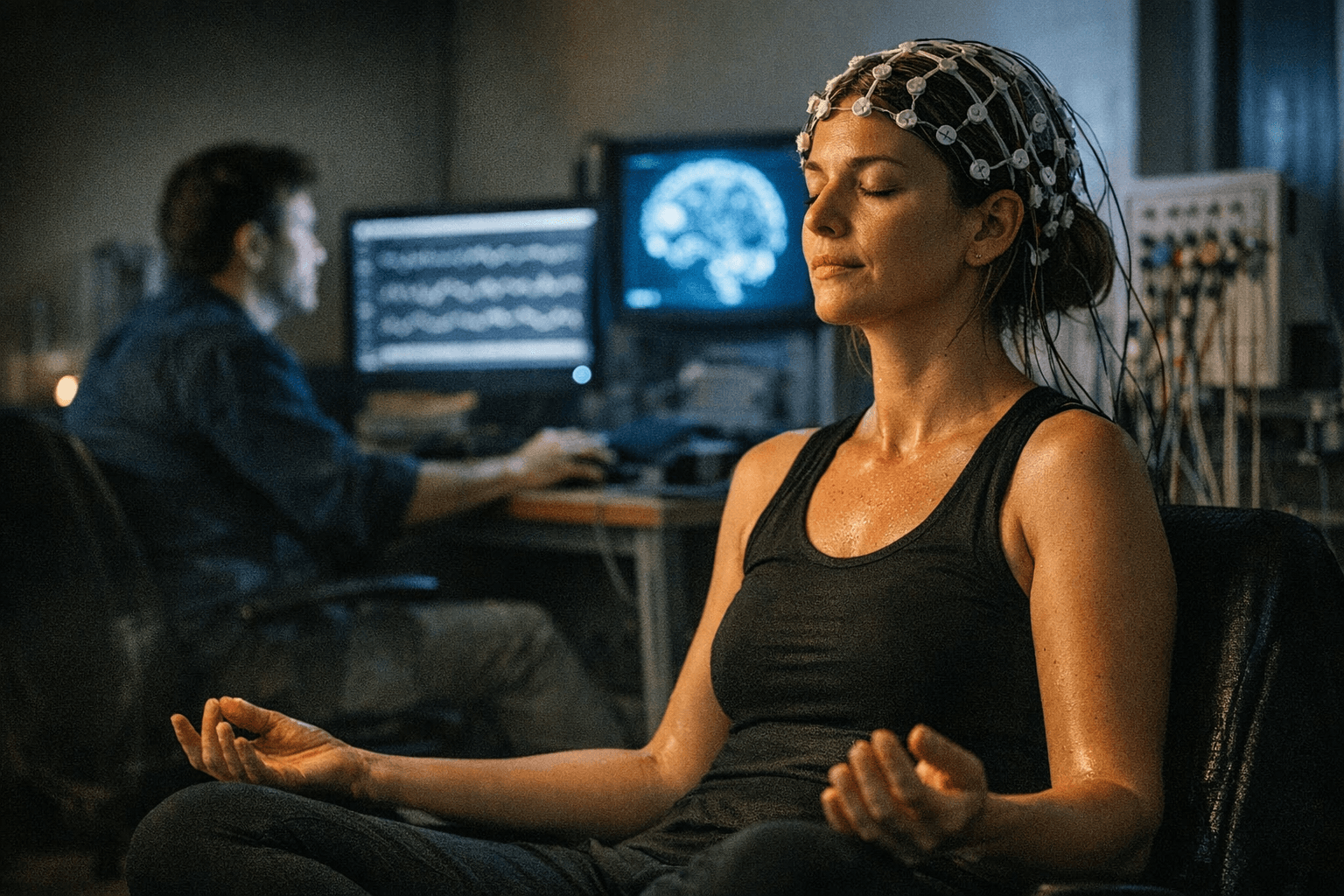
Not all mindfulness techniques work the same way on the brain, and a new randomized controlled trial has the data to prove it. Research published March 25 in the journal Mindfulness by Xiaoxue Wang, Qin Zhang, and Renlai Zhou found that four weeks of focused-breathing practice produced reliable improvements in alerting and executive control attention, while body-scan training delivered no significant changes on either measure relative to a wait-list control group.
The trial enrolled 72 participants divided evenly across three conditions: focused-breathing, body-scan, and a wait-list control, with 24 participants per group. Over four weeks, participants completed structured training sessions plus home practice, with pre- and post-assessments capturing both behavioral performance and EEG recordings. The three-network framework the researchers used maps onto alerting, orienting, and executive control, three functionally distinct subsystems that underpin how attention is deployed and regulated.
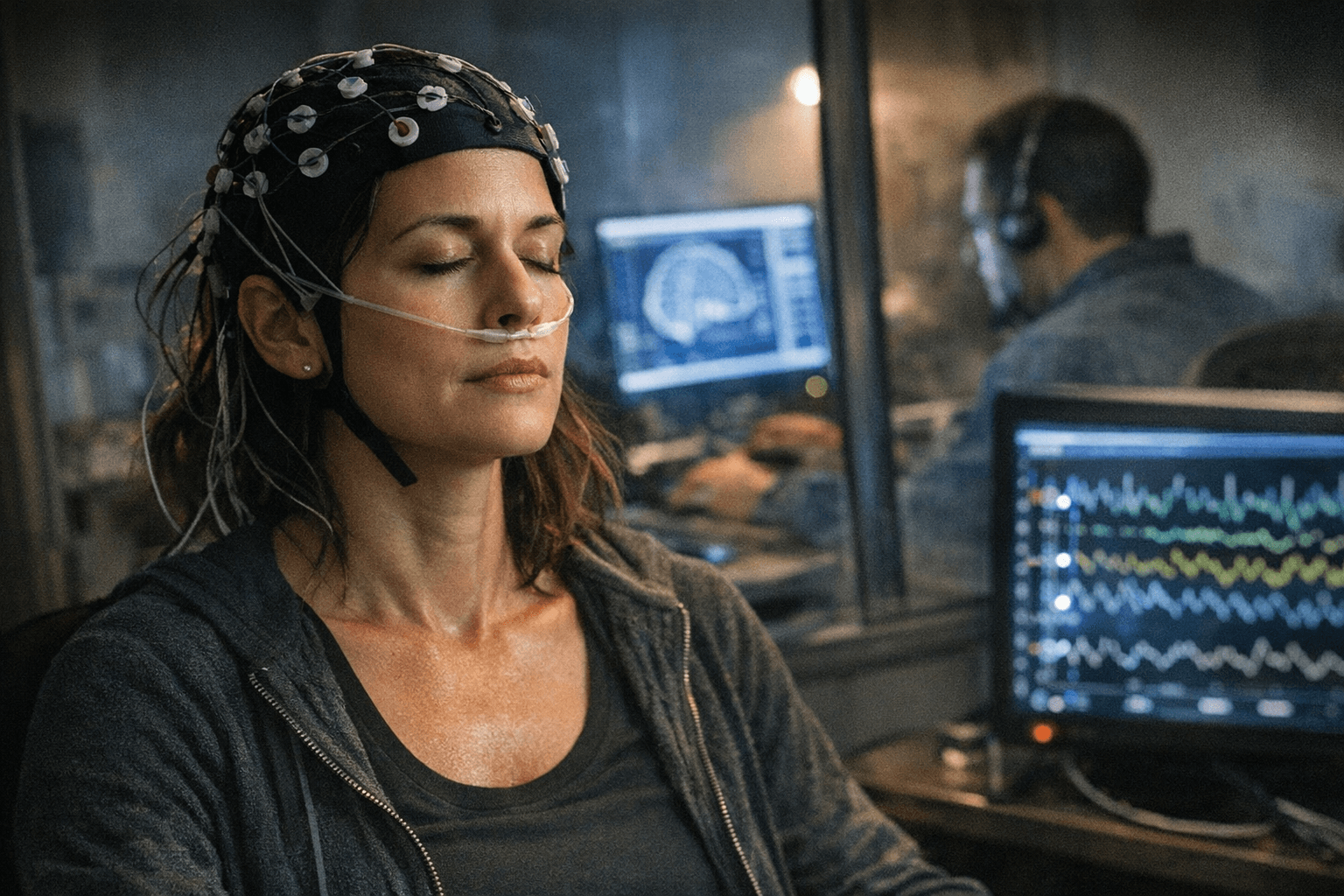
What set this study apart from most brief-intervention research was the electrophysiological layer. The focused-breathing group not only outperformed the others on behavioral attention tasks; their EEG data showed larger reductions in N2 amplitude, a signal the authors interpret as reflecting greater efficiency in conflict monitoring and cognitive control. In practical terms, the brain was doing more with less, resolving competing demands faster and with reduced neural cost. Neither the body-scan group nor the control group showed comparable N2 changes.
Orienting attention, the third network in the framework, showed no robust differences across any of the three groups, a null finding that itself sharpens the picture: focused breathing appears to act selectively on alerting and top-down control rather than producing a blanket attentional upgrade.
The implications for practitioners designing short-format programs are concrete. Workplace focus sessions, classroom interventions, and performance preparation protocols that explicitly target attentional control have a clearer evidence base for prioritizing focused-breathing exercises over body-scan sequences, at least within compressed training windows. Body-scan practices carry their own well-documented value in other domains, but this trial draws a firm line between what the two techniques demonstrably do to attention networks.
Wang, Zhang, and Zhou are candid about the study's scope. The four-week duration and moderate sample size call for replication across more diverse populations and with longer follow-up periods. They also flag the need for dose-comparison work, specifically contrasting 10 versus 20 minutes of daily practice, and hybrid formats that combine focused breathing with brief movement components. Those comparisons would move the field closer to something like an evidence-based prescription: the right technique, at the right dose, for the right attentional goal.
This article was produced by Prism’s automated news system from verified source data, official records, and press releases, then run through automated quality and moderation checks before publishing. The system is built and supervised by the people who set the standards it runs under. Read our full AI policy.
Did this article answer your question?