Four-week online mindfulness training raises HRV during lab stress-to-meditation sequence
A four-week online mindfulness program reportedly raised heart rate variability during a lab stress-to-meditation sequence; the randomized preprint used smartwatches and UTracker with 140 participants.

A four-week online mindfulness meditation program reportedly raised heart rate variability (HRV) during a standardized laboratory stress-to-meditation sequence, a medRxiv preprint posted August 19, 2025 reports. The trial randomized participants into three arms - meditation, running, and control - with 140 people enrolled at the start (meditation n = 23; running n = 57; control n = 60), and used wearable sensors and experience sampling to capture physiological and self-reported stress data.
Study procedures recorded physiological data from smartwatches, self-reported stress via the experience sampling method, and questionnaire responses using the research team’s UTracker app, which the preprint says leverages Garmin devices. The meditation group additionally had meditation start and end times logged; the preprint excerpt also notes selection criteria that included consuming alcohol fewer than four times per week and less than 100 grams per drink.
The authors present the primary physiological claim as measurable changes in autonomic regulation specifically in HRV during the lab stress-to-meditation protocol, but the supplied excerpt does not include numeric HRV effect sizes, p-values, or the HRV parameter breakdown. The preprint includes the cautionary medRxiv notice: “NOTE: This preprint reports new research that has not been certified by peer review and should not be used to guide clinical practice.” The medRxiv material also states the posting is under a CC-BY-NC-ND 4.0 International license and lists trial registration as “Not applicable” in the excerpt.
The preprint situates its findings amid a modest but growing HRV-mindfulness literature. The compiled notes cite Krygier et al. 2013, which found intensive Vipassana improved HRV during practice and at one-week post-retreat, and Kirk and Axelson 2020, a 10-day online intervention that reported enhanced HRV during mindfulness practice. Scholar Utc notes a four-week in-person intervention reported increased resting baseline HRV in Shearer et al., 2016. A literature search quoted from Ijpmbs found 59 PubMed papers in the past decade using the keywords mindfulness and heart rate variability, with 18 focused on HRV observations during or after mindfulness training, and indicates some long-term HRV studies reported significant pNN50 increases.
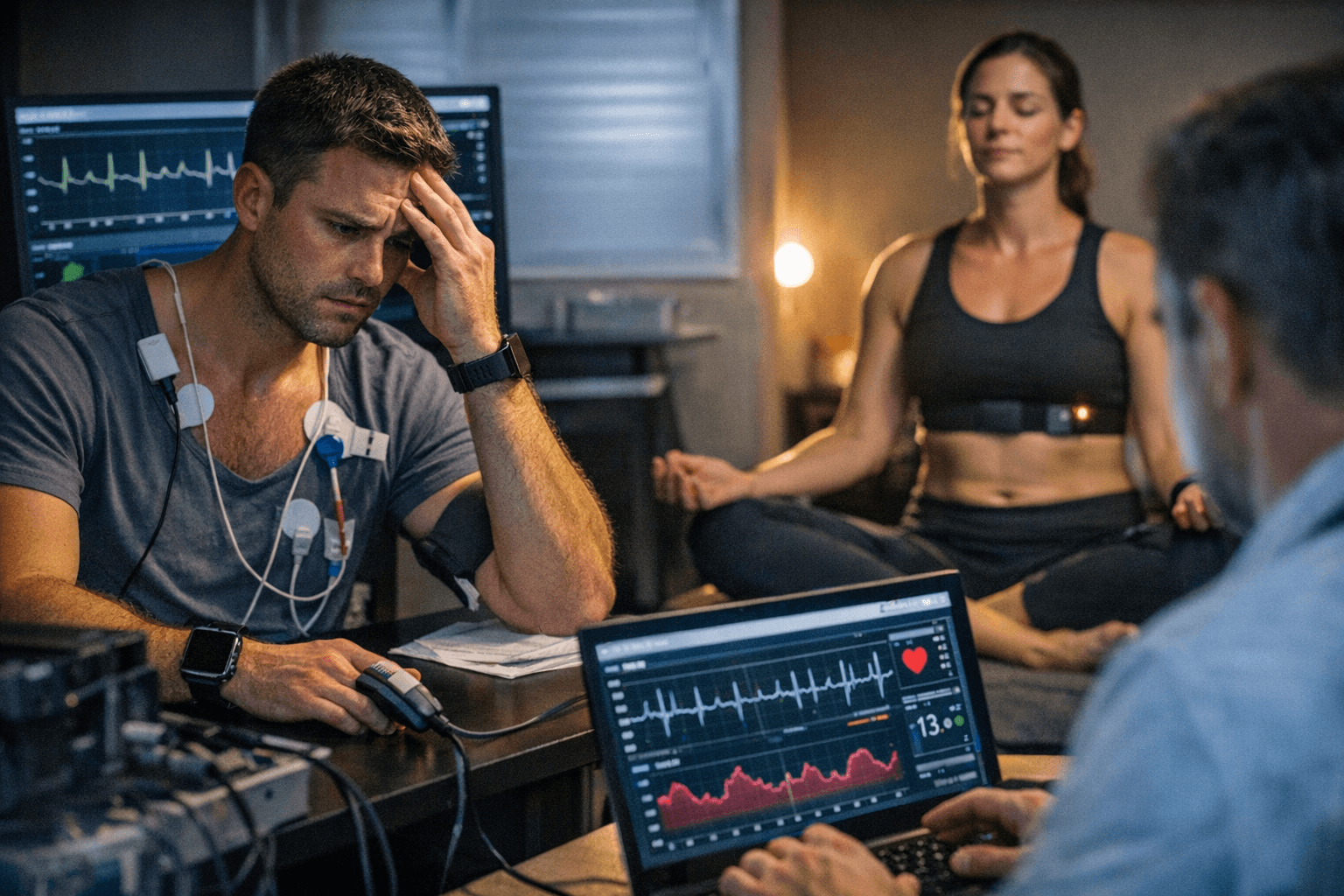
Key methodological details remain to be confirmed from the full preprint: the HRV acquisition method (ECG versus photoplethysmography from smartwatch), sampling rates and artifact correction, exact HRV metrics reported (RMSSD, SDNN, LF, HF, pNN50), the laboratory stress induction protocol, and dropout or adverse effect figures. The medRxiv excerpt includes a fragmented DOI string and truncated method text; obtaining the full medRxiv PDF is necessary to extract numeric results and the trial’s full methods and author affiliations.
For mindfulness practitioners and community teachers interested in physiological markers, this randomized online trial adds to prior signals that web-based programs can affect autonomic measures, but the preprint status and missing numeric details mean the result should be viewed as preliminary until peer review and full methods are available.
This article was produced by Prism’s automated news system from verified source data, official records, and press releases, then run through automated quality and moderation checks before publishing. The system is built and supervised by the people who set the standards it runs under. Read our full AI policy.
Did this article answer your question?