Free Daily Mindfulness Meditations Offer Live Support and Community
A live weekday Zoom sit gives you structure, guidance, and community for free, with no sign-up and beginner-friendly support.
A practice you can actually keep
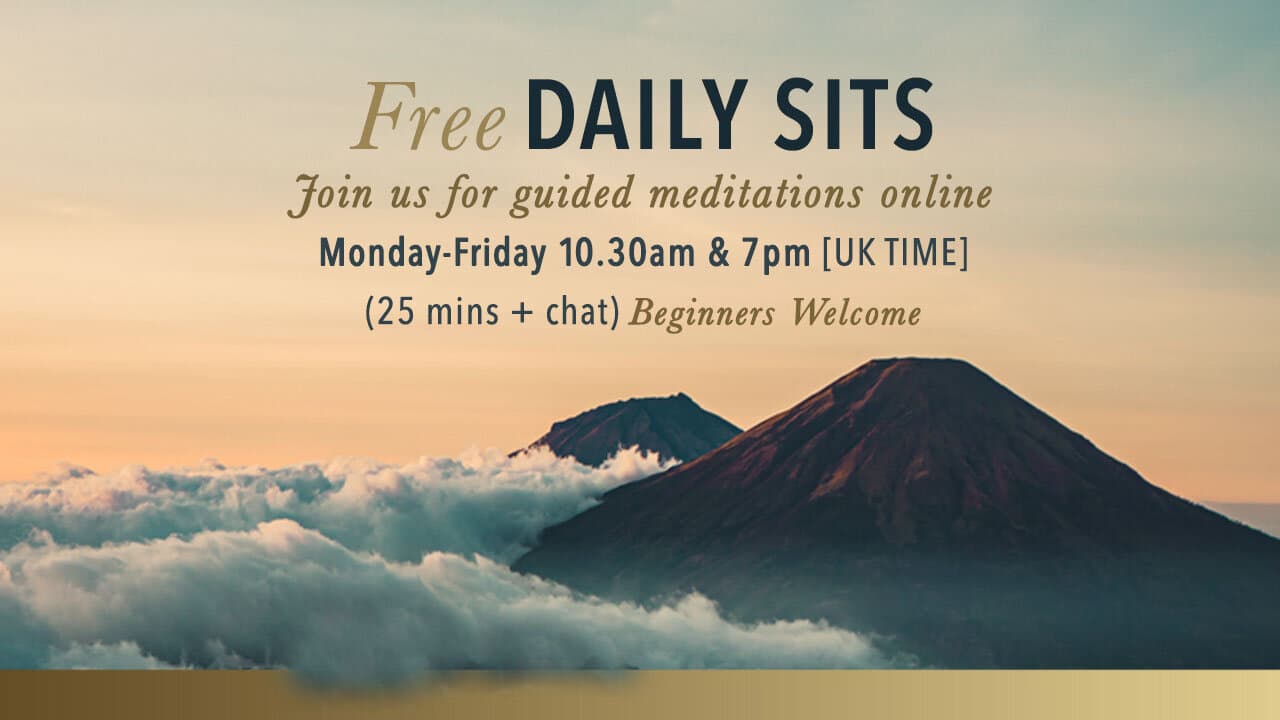
A free weekday Zoom sit can do more for consistency than another library of recorded bells and calm music. The Mindfulness Association runs live guided meditations Monday to Friday at 10:30 to 11:00 a.m. and 7:00 to 8:00 p.m. Greenwich Mean Time, with beginners explicitly welcome, no advance sign-up required, and safety information to read before joining. The evening session includes group sharing after the meditation, and the page says there is tea and company afterward, which gives the practice a social landing instead of a hard stop.
That structure matters. This is not just a page of content sitting on a website; it is a standing appointment that asks for very little and gives a lot back. The organization says the support continued after the pandemic because mindfulness is “for life,” and that line explains the whole model better than any polished wellness slogan ever could.
Why the live format beats passive content
The big difference here is rhythm. Static recordings can be useful, but they are easy to ignore, and once the novelty fades, the practice often slips behind work, family, and sheer inertia. A live weekday schedule creates a real container around the habit, with two fixed windows that make it easier to choose morning or evening and keep showing up.
The Mindfulness Association also folds in multiple entry points for different levels of comfort. Alongside the live sits, its free-resources hub includes guided meditations, recordings, teachings, and infographics, so a missed session does not mean falling off the map. For people who like a gentler on-ramp, that mix of live practice and backup material is exactly the kind of low-friction setup that helps meditation survive ordinary life.
Who gets the most from these sessions
Beginners may get the clearest benefit, because the offer lowers almost every barrier that usually gets in the way. There is no course fee, no need to build a private practice from scratch, and no awkward sign-up process before you even know whether the approach fits. The page also says participants can meet tutors and discover whether the style suits them, which makes the sessions feel more like a real introduction than a free sample.
Experienced meditators have plenty to gain too. If you already know the basics, the appeal is steadiness: a dependable place to sit, a live community, and a weekly rhythm that does not depend on your willpower being perfect. For anyone coming back after a gap, the combination of guidance, safety information, and familiar faces can make restarting feel less like beginning again and more like returning to something you already know.
How to use it as a habit anchor
If you want this to become part of your week, the structure is simple enough to work with:
1. Pick the morning or evening slot and keep it consistent.
2. Join via Zoom without overthinking it, since no advance sign-up is needed.
3. Read the safety information first, then show up and let the tutor-led session do the heavy lifting.
4. Stay for the evening sharing or the tea and company afterward if you can, because the social piece is part of what makes the practice stick.
That last detail is easy to overlook, but it matters. A meditation space that ends with connection gives you a reason to linger, ask questions, and feel part of a living community instead of just consuming another piece of mindfulness content alone on a screen.
The access model is the real story
The Mindfulness Association is not treating free access as a throwaway gesture. The tutor team leads the daily sits on a voluntary basis, and donations to the Everyone Project help support access for people who otherwise could not attend. That mix of free entry, voluntary teaching, and optional support is a concrete model for how a mindfulness community can stay inclusive without pretending teachers and infrastructure run on good intentions alone.
The Everyone Project sharpens the point further. It says it funds free mindfulness courses for underprivileged groups and is run entirely by volunteers, while also noting that the UK demographic engaging in mindfulness training is still overwhelmingly self-funding professionals. That is the tension these free daily sits start to address: mindfulness is widely talked about as universal, but in practice it is often easiest to reach people who can already pay for formal training.
Why the organization’s broader background matters
This is also a community with real institutional depth, not a pop-up offering. The Mindfulness Association says its tutors and teacher training comply with the UK Network for Mindfulness-Based Teacher Training Organisations, and it collaborates with the University of Aberdeen on an MSc in Studies in Mindfulness as well as with the University of the West of Scotland on a teaching mindfulness and compassion master’s programme. The organization says those programmes have taught over 500 students, which helps explain why the daily sits can be staffed by experienced tutors rather than casual hosts.
That depth shows up in the tutor lineage too. Fay Adams is described by the organization as having trained under Rob Nairn on Holy Isle off the west coast of Scotland and as now teaching on the University of Aberdeen MSc programme. Taken together, the free daily sits feel less like a promotional add-on and more like the public-facing edge of a much larger teaching culture based in Aberdeen, Newcastle upon Tyne, and beyond.
A free sit that offers more than a play button
What makes this offer stand out is how practical it is. It gives you a fixed time, a live teacher, beginner-friendly guidance, a way to meet other practitioners, and a path into a wider network of recordings, teachings, infographics, and structured learning. Most free mindfulness content stops at access. This one tries to build a habit, hold a community, and keep the door open for people who would otherwise be priced out.
For anyone trying to make mindfulness part of ordinary life, that is the valuable part. The sessions are not pitched as a quick fix or a polished product. They are a repeatable place to sit down, pay attention, and keep going.
This article was produced by Prism’s automated news system from verified source data, official records, and press releases, then run through automated quality and moderation checks before publishing. The system is built and supervised by the people who set the standards it runs under. Read our full AI policy.
Did this article answer your question?