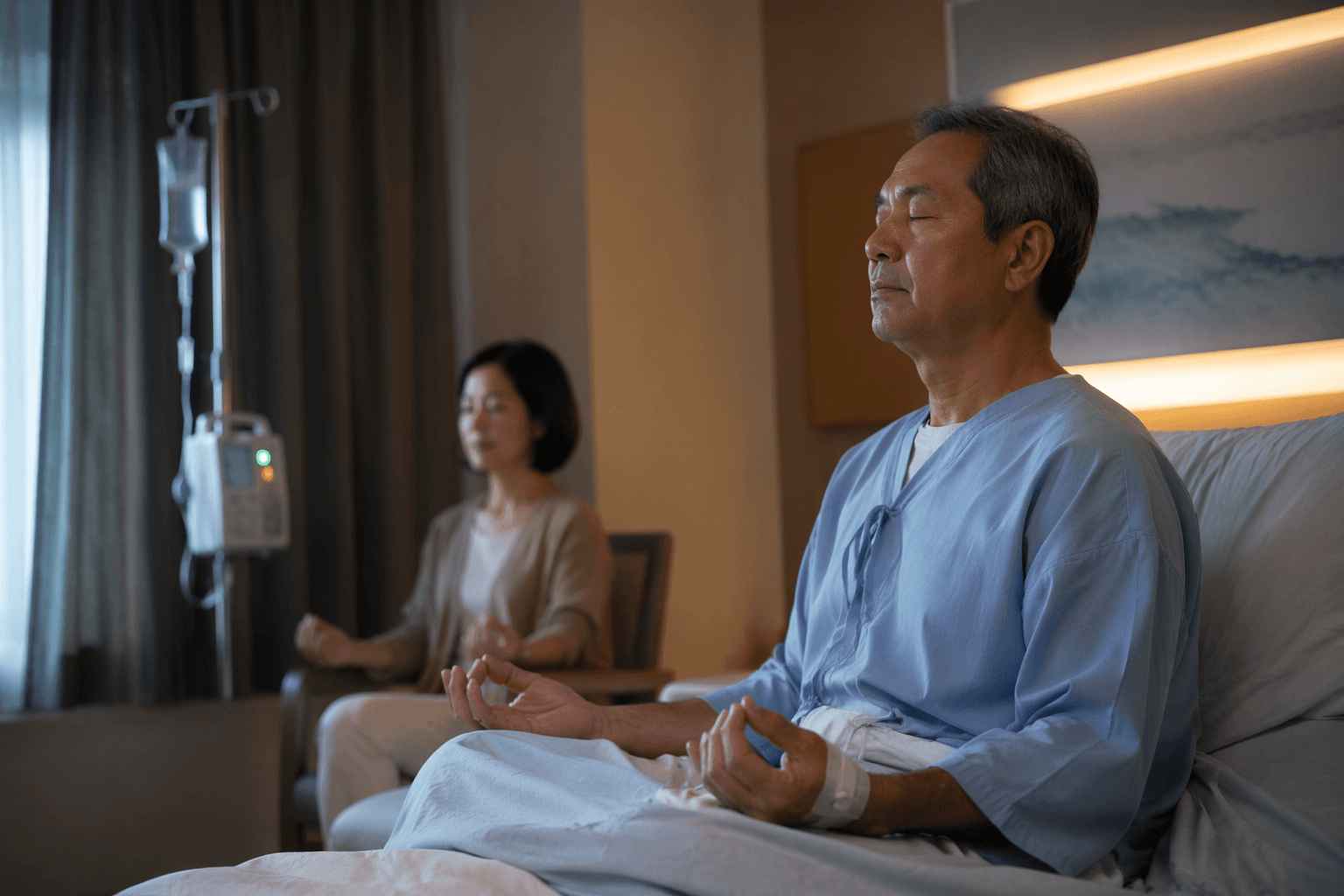
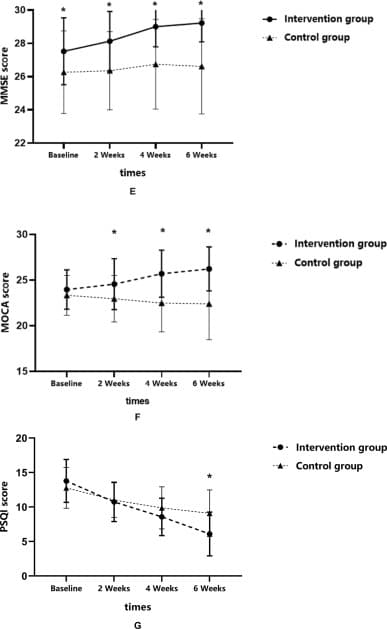
Large review finds Yoga Nidra may cut stress, anxiety, depression
A 73-study meta-analysis with 5,201 participants gives Yoga Nidra its biggest evidence base yet, with the strongest signal in anxiety relief.
A 73-study meta-analysis has given Yoga Nidra its biggest scientific footprint yet, pooling 5,201 participants and linking the guided practice to meaningful reductions in stress, anxiety and depression. The review, by Shashank Ghai, Pawel Odyniec and Ishan Ghai, screened 814 articles after searching seven databases and one trial database before settling on the studies that made the cut.
The effect sizes were not small. Against active comparators such as progressive muscle relaxation or standard counseling, the review reported Hedge’s g of -0.80 for stress, -1.35 for anxiety and -0.69 for depression. Compared with no treatment, the estimates were even larger for stress at -1.70 and remained strong for anxiety at -1.43 and depression at -0.92. The paper’s caution ran alongside the headline result: low methodological quality and variable delivery likely inflated some of those gains.
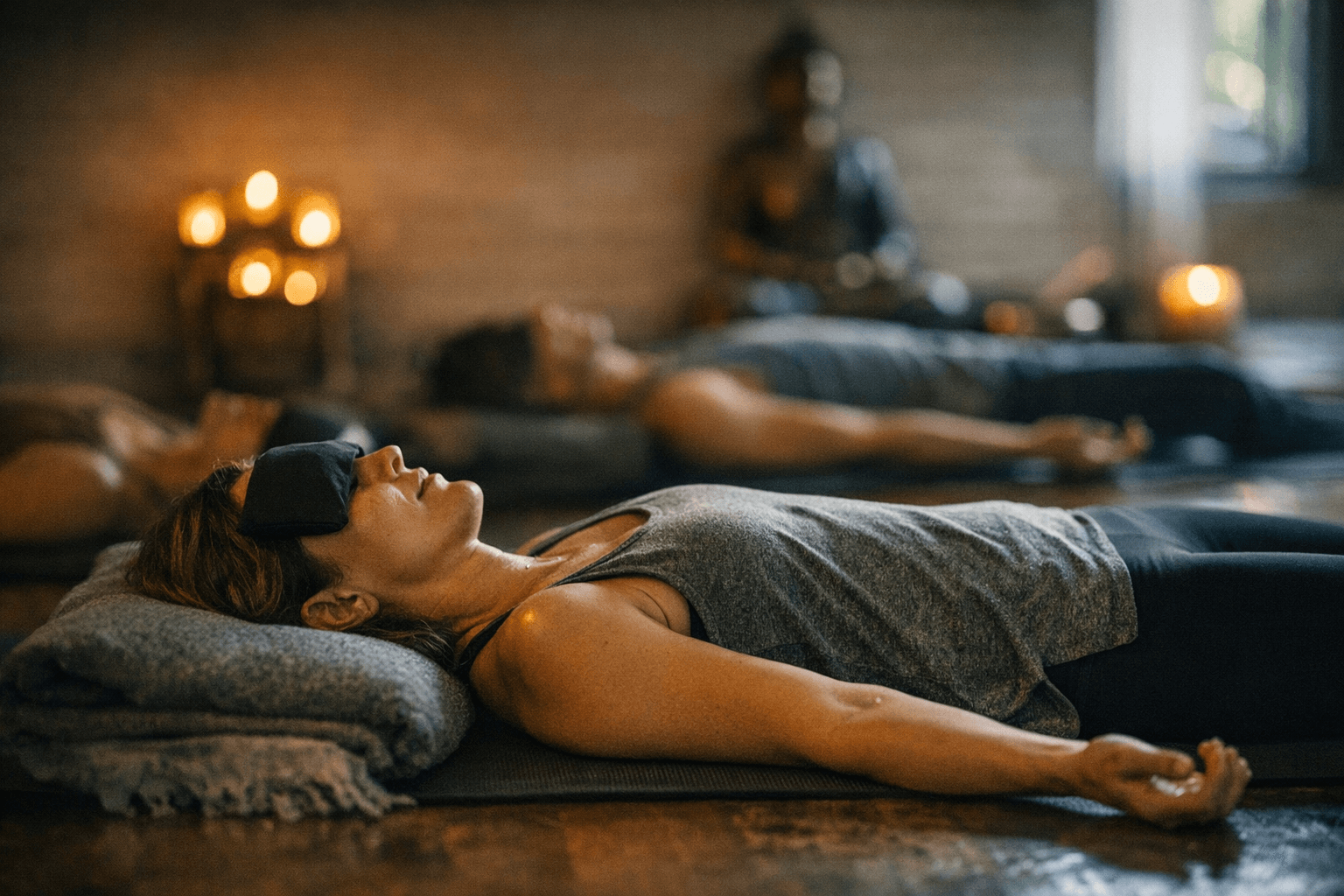
Yoga Nidra is part of the appeal. Unlike many mindfulness formats that ask people to sit upright and track the breath, this practice usually begins in Savasana, with the body lying flat while a guide leads a body scan, breath awareness, visualization and an intention-setting sequence. Sessions often run 20 to 45 minutes, and they require no special equipment, no flexibility and no prior yoga experience. That makes the practice especially relevant for people dealing with chronic pain, fatigue, mobility limits or the kind of stress that makes formal meditation feel like another chore.
The larger literature has been moving in the same direction, though not without the same unevenness. A 2023 integrative review found Yoga Nidra effective in most included studies, but noted substantial heterogeneity in sample populations and in session length, frequency and duration. ClinicalTrials.gov now lists an ongoing randomized feasibility study of virtual iRest Yoga Nidra for insomnia and posttraumatic stress symptoms, along with a remotely delivered program aimed at helping older adults reduce or stop benzodiazepine receptor agonists used for insomnia and anxiety.
The practice also keeps showing up in pain research. In one quasi-experimental study of adults with chronic musculoskeletal pain, a 45-minute Yoga Nidra session and a body scan both reduced pain intensity and pain-related anxiety. That kind of overlap matters because it suggests the value may not be tied to one exotic protocol, but to a usable resting state with structured attention.
Modern Yoga Nidra in the Satyananda tradition is commonly traced to Sri Swami Satyananda Saraswati and the Bihar School of Yoga in Munger, Bihar, India. That lineage helps explain why the language around the practice still sounds rooted in yoga rather than clinical psychology, even as the evidence base moves deeper into mainstream mental-health research. The new review does not make Yoga Nidra a finished answer, but it does make one thing clear: this is no longer just a wellness buzzword floating on the edge of meditation culture.
This article was produced by Prism’s automated news system from verified source data, official records, and press releases, then run through automated quality and moderation checks before publishing. The system is built and supervised by the people who set the standards it runs under. Read our full AI policy.
Did this article answer your question?