Mindfulness can strengthen family resilience, patience and communication at home
Mindfulness moves from solo calm to family repair, helping parents catch reactivity, ease bedtime friction and improve communication before tension hardens.
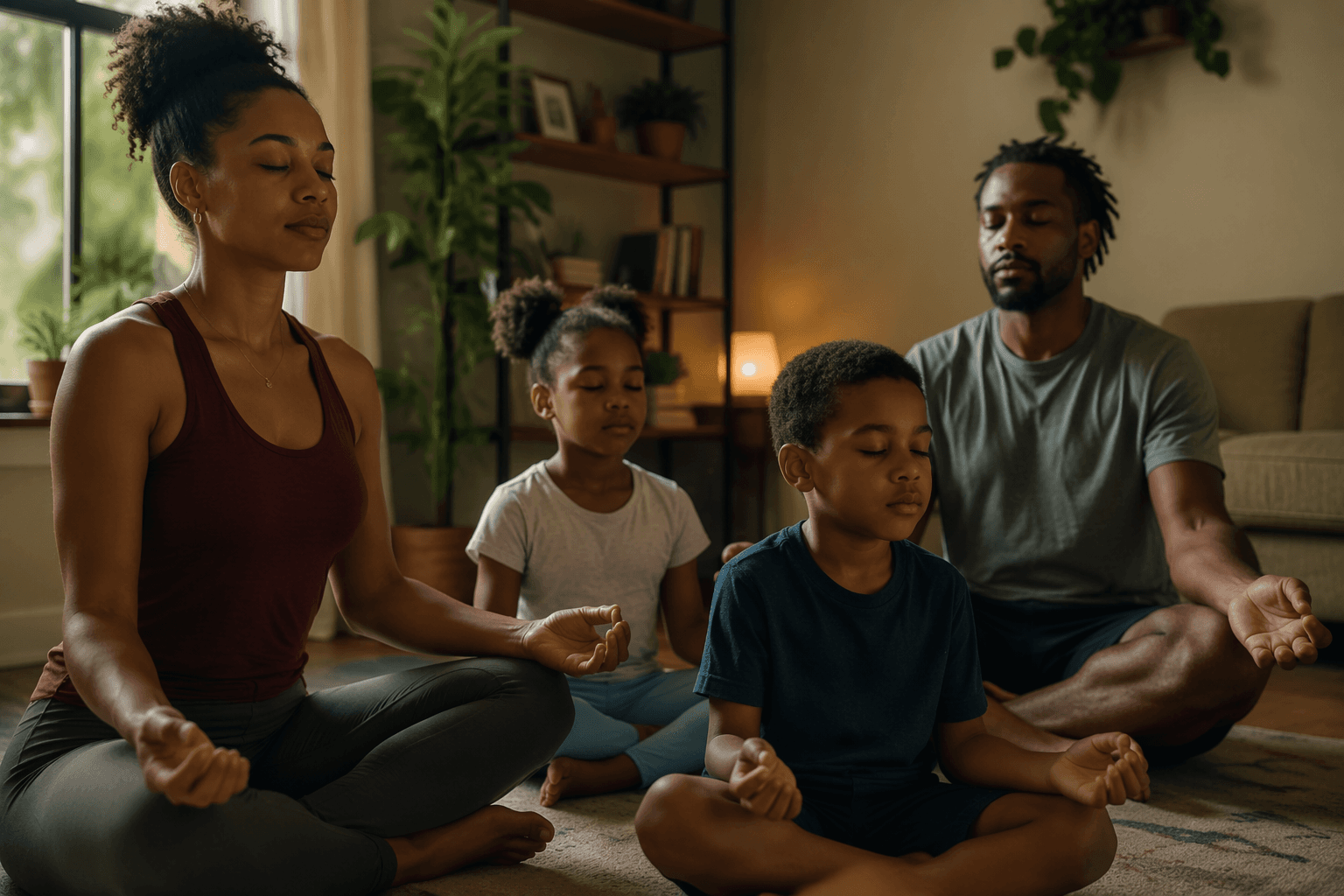
When a child is melting down or a conversation has turned sharp, mindfulness is less about constant calm than about noticing stress sooner and interrupting autopilot. In families, the practice becomes practical in the kitchen, the car line and the bedtime routine, where a little more attention can lead to more patience. Home life is a real mental health environment, not just a backdrop.
Why family mindfulness matters now
The World Health Organization defines mental health as a state of well-being that helps people cope with the stresses of life, learn and work well, and contribute to community life. Family, community and structural factors can protect or undermine that well-being. The Centers for Disease Control and Prevention ties child development to the quality of the relationships and environments where children grow up.
Pressure inside households is not abstract. CDC data, cited by the American Psychological Association, show that diagnoses of anxiety in children ages 3 to 17 rose 29 percent from 2016 to 2020, while depression diagnoses rose 27 percent in the same period. In that setting, a mindfulness practice that stays locked inside individual self-improvement misses the point. Families need tools that work during homework battles, sibling conflict, distracted conversations and the five minutes before lights-out.
Attention comes first
The useful shift in mindfulness is not “be happier.” It is “notice what is happening while it is happening.” Jon Kabat-Zinn’s widely used definition captures that clearly: paying attention on purpose, in the present moment and nonjudgmentally. That emphasis on attention is central, because awareness does not grow without it.
Harvard researchers Matthew A. Killingsworth and Daniel T. Gilbert made that point concrete with a 2010 iPhone app study that collected 250,000 data points. They found that people spent 46.9 percent of waking hours thinking about something other than what they were doing, and that mind-wandering predicted happiness more strongly than the activity itself. In a family setting, that has a direct translation: when parents are mentally elsewhere, they miss tone, timing and need. When children are similarly distracted, they absorb less and react faster.
Where tension shows up at home
The family version of mindfulness is less about sitting still and more about catching the small flashpoints that shape the emotional climate of a home. Bedtime stress is a classic example, because fatigue compresses patience and every request can feel like the last straw. Sibling conflict is another, since the first reaction is often to referee from irritation rather than to pause and see what each child is actually asking for.
Distracted conversations matter too. A parent checking messages while a child talks, or a child half-listening while being asked to clean up, creates a household tone where nobody feels fully received. Mindfulness does not erase those moments. It gives enough space to notice the first signs of reactivity, the tight jaw, the rising voice, the urge to snap, and choose a response that does less damage.
What the evidence says about parents
The research base on mindful parenting now supports that family-centered view. A 2019 meta-analysis in Frontiers in Psychology reviewed mindfulness interventions for parents and focused on their effects on parenting stress and youth psychological outcomes. A 2024 systematic review found that mindfulness-based programs for parents have expanded worldwide, even as curricula and settings vary widely.
More recent work pushes even closer to the family unit itself. A University of California, Davis project led by Joanna Guan tests whether parents and children practicing mindfulness together makes a difference. The project moves beyond treating the child or parent alone and asks how a shared practice changes the system.
A 2025 randomized controlled trial of a family mindfulness program for children with ADHD gives that idea more shape. Parents in the mindfulness group showed better results than parents in a medication-only comparison on overreactive parenting, self-compassion and sleep, and fathers showed larger improvements on key measures as well.
What changes when families practice together
The University of Washington Center for Child and Family Well-Being includes mindfulness and compassion skills among the tools that can promote warm, responsive and consistent interactions. The difference between thoughtful response and automatic reaction is what families tend to feel first.
- A parent pauses before answering a backtalk moment.
- A child gets more of a listening presence during a hard school day.
- A sibling fight is interrupted before it escalates into a pattern.
- A tense dinner conversation slows down enough for someone to hear what was actually meant.
In practice, the gains often look like this:
A simple way to start this week
The most useful family mindfulness habit is short and repeatable. Before bedtime, before a difficult talk or before stepping into a conflict, take one slow breath and name what is happening internally: irritation, worry, fatigue or impatience.
This article was produced by Prism’s automated news system from verified source data, official records, and press releases, then run through automated quality and moderation checks before publishing. The system is built and supervised by the people who set the standards it runs under. Read our full AI policy.
Did this article answer your question?