Mindfulness During Exercise Shapes Emotional and Psychological Wellbeing, Study Finds
Bringing mindful awareness to your workout may shape emotional wellbeing in ways that extend beyond the mat, according to new research from four Chinese universities.
The connection between movement and mental state has long been central to contemplative traditions, but a new preprint from researchers across four Beijing-area institutions adds an academic lens to what many practitioners already sense on the cushion and in the gym: how you pay attention during exercise matters as much as the exercise itself.
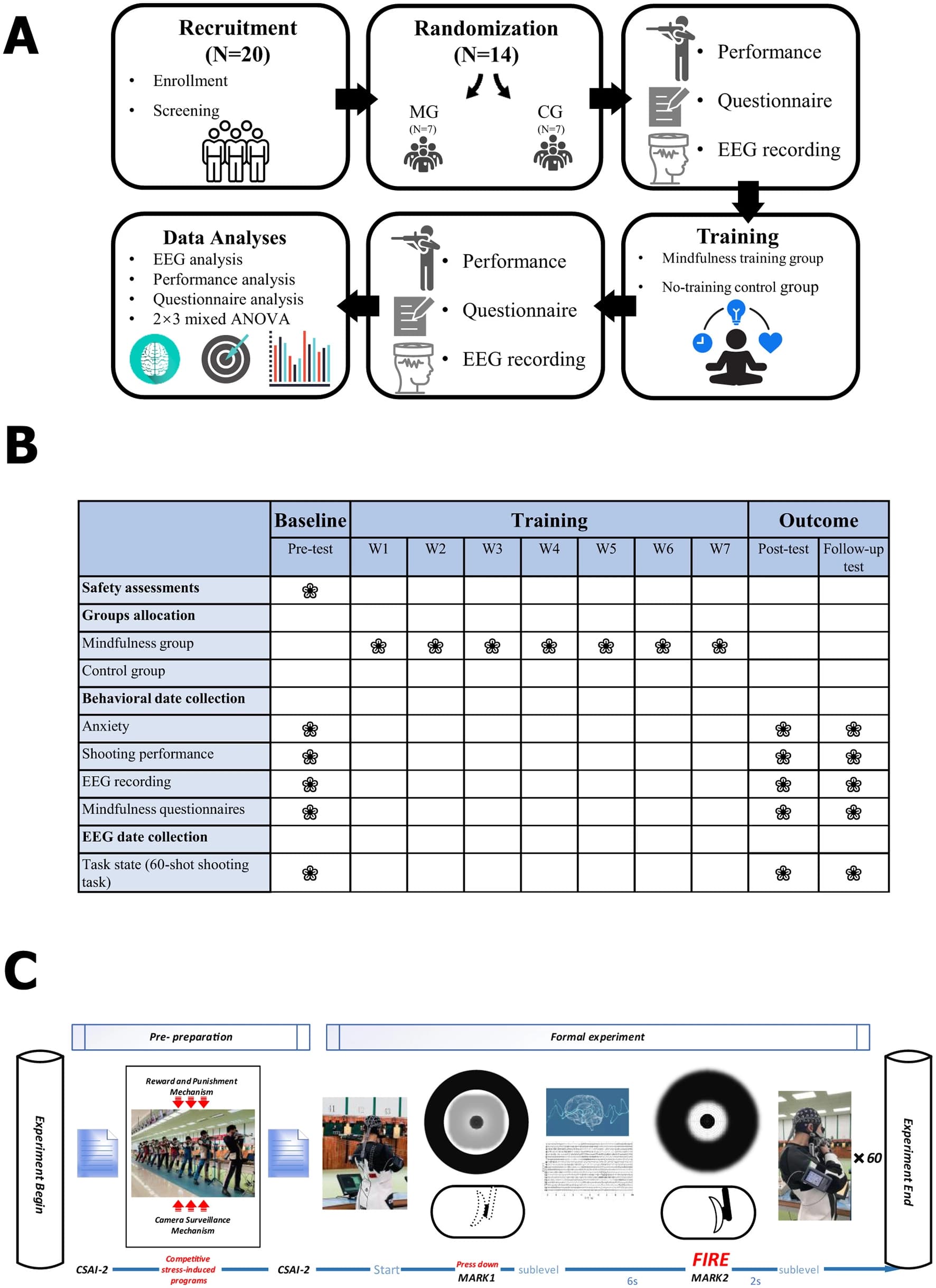
Jiao Liu, Wen-Jing Liu, Yue Qiu, and Hong-Mei Jiang, working across Beijing Institute of Education, Beijing Sport University, Xihua University, and Beijing Union University, posted their findings to Research Square on March 5, 2026. The study examined how mindfulness during exercise shapes affective and psychological wellbeing, a question that sits squarely at the intersection of somatic awareness and the broader contemplative research community has been circling for years.
The collaborative nature of the research is itself notable. Drawing on expertise from four distinct institutions, the team reflects a growing institutional interest in China in formalizing the psychological dimensions of physical practice. Beijing Sport University in particular has been an active hub for research bridging athletic performance and mental health frameworks.
For practitioners who already bring present-moment awareness to yoga flows, mindful running, or even a deliberate walk between sitting sessions, the study's premise will feel intuitive. The formal research question being posed here is whether that quality of attention during movement produces measurable shifts in emotional tone and psychological resilience. That framing aligns closely with what teachers in the vipassana and MBSR traditions have described anecdotally: the gym, the trail, and the pool can all become containers for informal practice when entered with intentional awareness.

Because the work was posted as a preprint, it has not yet completed peer review, a standard caveat worth holding alongside the findings. Research Square hosts preprints across health and medical sciences, and the work of Liu, Liu, Qiu, and Jiang joins a growing body of preprint literature exploring mindfulness in non-clinical, movement-based settings.
The full details of the study's methodology, sample size, and specific findings were not available in the initial posting summary, but the directional claim, that mindfulness quality during exercise influences downstream emotional and psychological states, adds momentum to a research area that practitioners have been waiting to see more rigorously examined.
Know something we missed? Have a correction or additional information?
Submit a Tip