Mindfulness helps workers regulate emotions and stay focused at work
Mindfulness at work is a fast reset, not a personality overhaul. In 60 seconds, 5 minutes, or the rest of the day, it can blunt reactivity before it spills into email, meetings, or manager talks.

In 2025, people in the United States age 15 and over spent an average of 3.0 hours per day working, full-time workers spent 8.5 hours on an average weekday, and 35 percent of employed people did some or all of their work at home on the days they worked. When a meeting turns sharp, mindfulness is about buying back a few seconds before you fire off the email, interrupt your manager, or agree to something you already know you cannot carry.
What mindfulness actually means at work
The workplace version of mindfulness is narrower and more practical than the wellness slogan often attached to it. Meditation is the larger set of practices used to train attention, acceptance, and clarity; mindfulness is the awareness piece that can show up in a seated practice, in a commute, or in the middle of an inbox full of friction.
Many people say they value meditation but still struggle to practice it. Time pressure, skepticism about spirituality, and the simple fact of not being able to unplug long enough to settle attention all push in the same direction, which is why micro-practices and app-based tools have gained traction. Products such as Buddhify and The Work Mindfulness Deck fit that shift by making mindfulness portable enough for work transitions, commutes, and moments when emotion spikes before logic catches up.
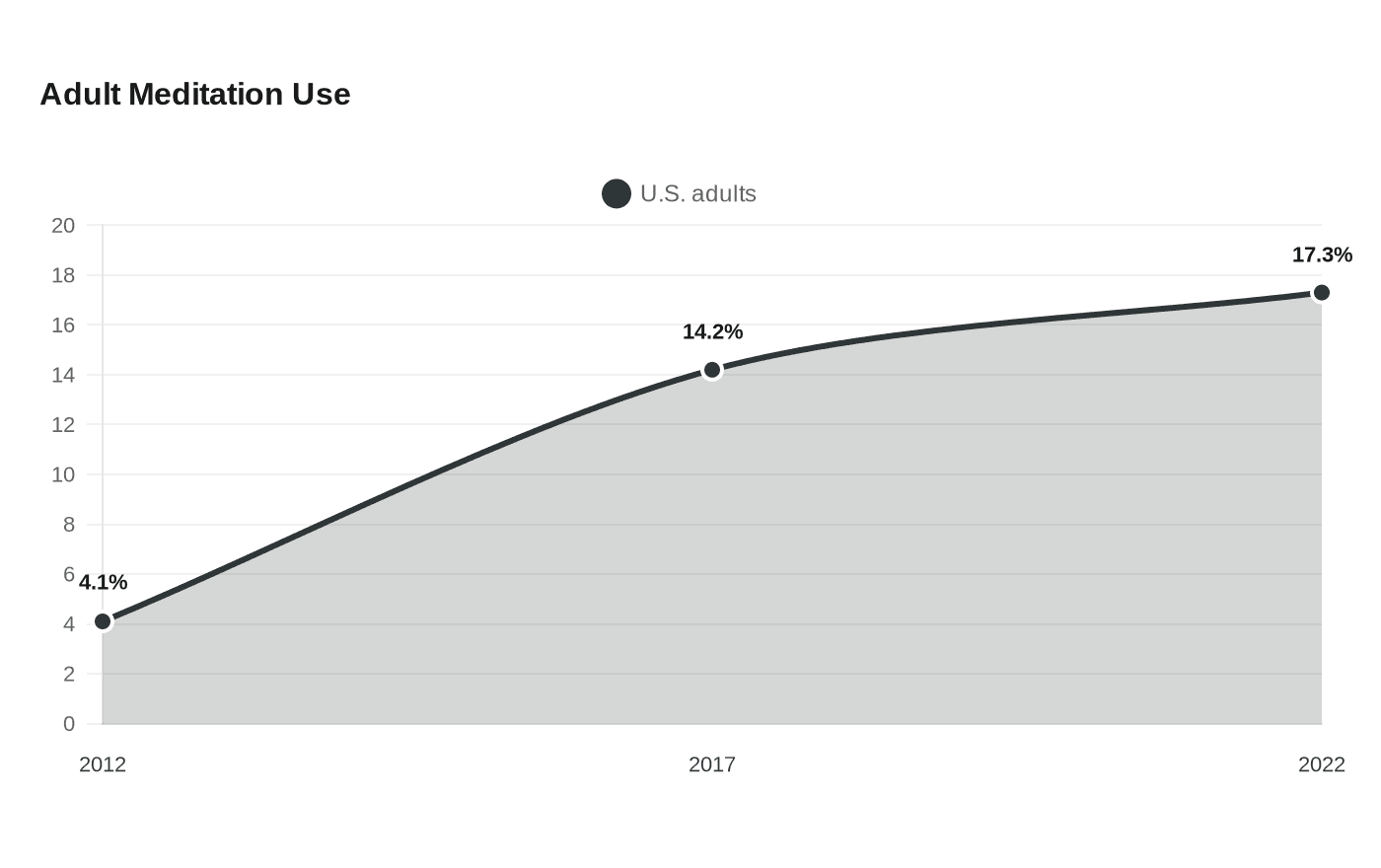
CDC and NCCIH data show U.S. adult meditation use rose from 4.1 percent in 2012 to 14.2 percent in 2017, then reached 17.3 percent in 2022. Even with that growth, fewer than 35 percent of users disclose meditation to health providers.
The first 60 seconds
In a tense meeting
When the room heats up, the goal is not to win the next sentence. The goal is to stop the first surge from making the decision for you. A mindfulness-based response starts with one breath you can actually feel, then a silent label for what is happening, anger, embarrassment, pressure, or all three, before you answer the point being discussed.
That pause is especially useful when the meeting is deciding something irreversible, like a deadline shift, a staffing cut, or a public-facing response.
After a difficult email
Email is where hybrid work turns emotional fast, because the screen gives you just enough distance to misread tone and just enough speed to regret your reply. If an email lands hard, read it once, close the message, and draft your response without sending it. That gives the nervous system a small gap, which is often all it needs to stop turning one sentence into a whole afternoon.
A mindfulness response here is a disciplined delay between the trigger and the send button.
When a manager is pressing you
Conflict with a manager can make even careful people talk too fast, concede too much, or defend too hard. In that moment, the mindful move is to buy time with a clarifying question, a request to come back in a few minutes, or a short summary of what you heard before you answer. The point is to keep the relationship and the decision from getting flattened by the first emotional reaction.
That same logic applies when you feel cornered into saying yes. Mindfulness helps you notice the body signal that usually arrives before the overcommitment, tight chest, quick breath, clenched jaw, and gives you a chance to respond.
The next five minutes
The five-minute window is where workplace mindfulness becomes easiest to actually use. A short walk, a bathroom break, a commute, or the space between meetings can hold a low-friction reset that does not require a silent room or a perfect mood. Tools built for that rhythm have helped push mindfulness into everyday work life, especially smartphone-based formats that organizations can deliver at scale.
Workplace mindfulness research has grown because employers want interventions that can be used broadly, not just in retreat settings, and that is why low-cost prompts, guided audio, and card-style decks keep showing up in offices, clinics, and remote teams.
What the evidence says
In the 2017 National Health Interview Survey-based study of mindfulness users, researchers analyzed 26,742 adult responses, and CDC and NCCIH trend data show meditation use climbing steadily over time. A 2017 CDC report on the U.S. workforce found yoga prevalence nearly doubled from 6.0 percent in 2002 to 11.0 percent in 2012, while meditation rose from 8.0 percent in 2002 to 9.9 percent in 2007.
A CDC and National Center for Health Statistics brief found that yoga, meditation, and chiropractors were all used more in 2017 than in 2012 among U.S. adults, and NCCIH’s 20-year trend puts meditation at 7.5 percent in 2002 and 17.3 percent in 2022.
A RAND Corporation and VA West Los Angeles Healthcare System evidence map concluded that workplace mindfulness evidence can inform policy and organizational decisions about employee well-being. A 2024 systematic review and meta-analysis of mindfulness in nurses found statistically significant decreases in anxiety and stress after treatment, and a 2024 burnout review found more than two-thirds of randomized trials showed a beneficial effect on burnout indicators, especially emotional exhaustion.
Where to be realistic
Recent reviews find workplace mindfulness effects can be limited, context-dependent, or not durable, especially for workers with diagnosed mental health conditions. That means mindfulness can help with regulation and focus, but it cannot fix overload, poor management, or a toxic culture that keeps creating the same emotional fire.
This article was produced by Prism’s automated news system from verified source data, official records, and press releases, then run through automated quality and moderation checks before publishing. The system is built and supervised by the people who set the standards it runs under. Read our full AI policy.
Did this article answer your question?