Mindfulness Linked to Sustainable Food Choices, Study of Vietnamese Consumers Finds
New research finds mindfulness predicts sustainable food choices in Vietnamese consumers, with moral, health, and hedonic values explaining the link.
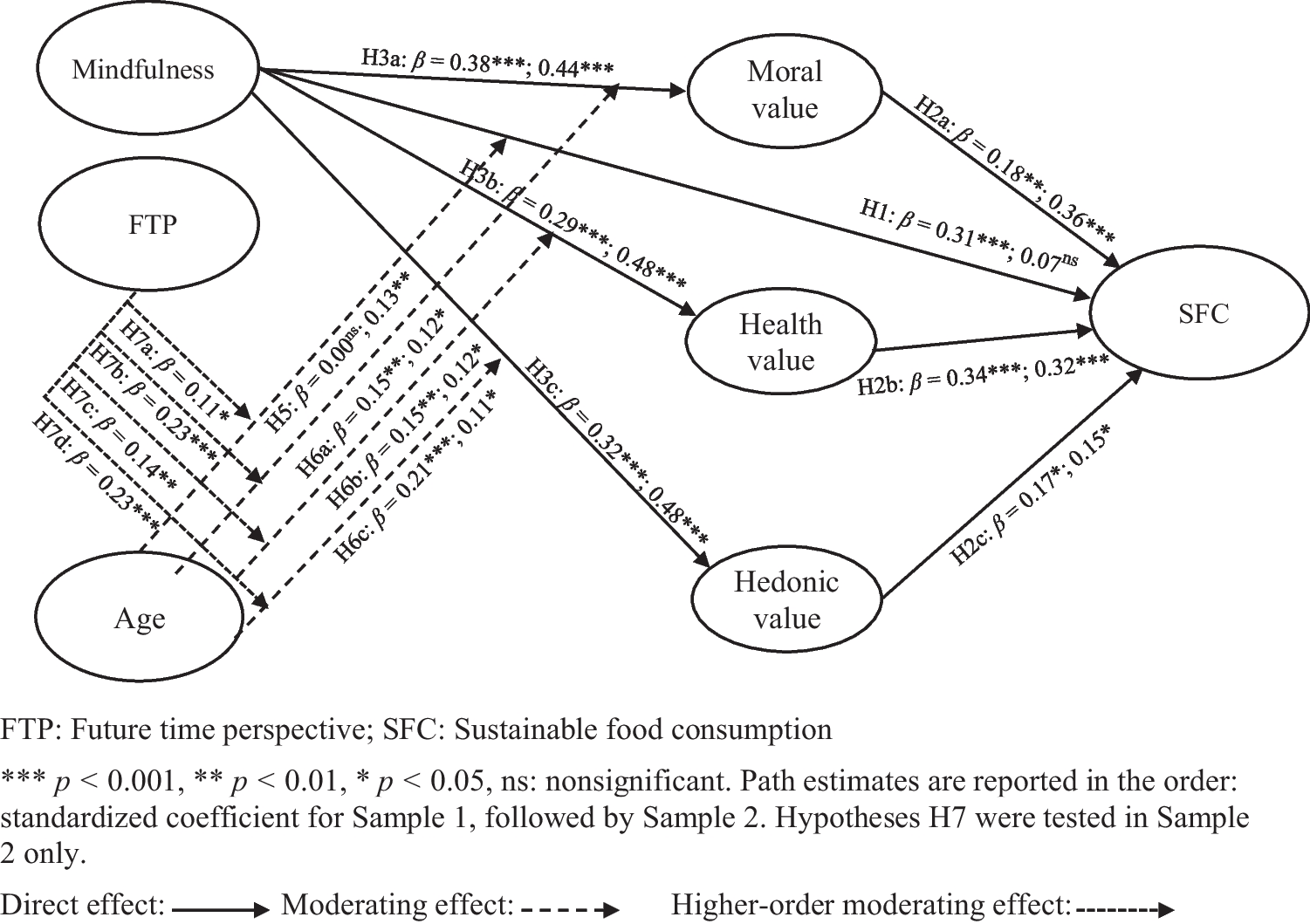
Practicing mindfulness may make people more likely to choose sustainable food, according to a cross-sectional study published in the journal Mindfulness on March 7, 2026. Researchers Ho Huy Tuu and Vo Thi Ngoc Thuy examined Vietnamese consumers to understand what psychological and values-based factors connect a mindful disposition to sustainable food consumption (SFC).
The study tested a higher-order mediation-moderation model, investigating whether three types of values sit between mindfulness and sustainable eating behavior. The researchers found that moral, health, and hedonic values each served as mediators in that relationship, meaning mindfulness appears to encourage sustainable food choices at least partly by shaping how people think about ethics, personal wellbeing, and sensory enjoyment in the context of what they eat.
Age and future time perspective (FTP) added a further layer of complexity to these pathways. The study found that both age and a limited FTP moderate the connections between mindfulness, the values mediators, and actual sustainable food consumption behavior. Notably, the authors identified older consumers as a group warranting particular attention in any practical application of the findings.
The conclusions drawn by Tuu and Thuy are direct about what the results mean for intervention design: "This study suggests mindfulness as a key psychological correlate of SFC, with this relationship linked through the mediation of moral, health, and hedonic values. Age and a limited FTP moderate these relationships. The findings provide a foundational framework for designing age- and FTP-sensitive mindfulness interventions aimed at promoting SFC, particularly among older consumers."

That framing matters for practitioners in the mindfulness space who work on applied programs. Rather than treating mindfulness-based interventions as one-size-fits-all, the research points toward tailoring approaches based on a participant's age and their sense of future time horizon, which is the degree to which people perceive their future as expansive or limited.
The study builds on a foundation laid by earlier work, including a 2009 paper by Amel, Manning, and Scott in Ecopsychology that explored mindfulness and sustainable behavior through the lens of attention and awareness as drivers of greener choices. The new research extends that line of inquiry into the domain of food specifically, and does so using a Vietnamese consumer population, adding geographic and cultural breadth to what had been a largely Western literature.
The dataset used in the study is available from the corresponding author upon reasonable request, per the authors' data availability statement. The full methodology, sample size, and statistical detail remain in the complete article, available through Mindfulness via Springer Nature.
Know something we missed? Have a correction or additional information?
Submit a Tip