Mindfulness Northwest retreat in Washington deepens practice with loving-kindness
A mostly silent weekend at Samish Island asks for more than an app ever can: time, attention, and a steadier container for practice.
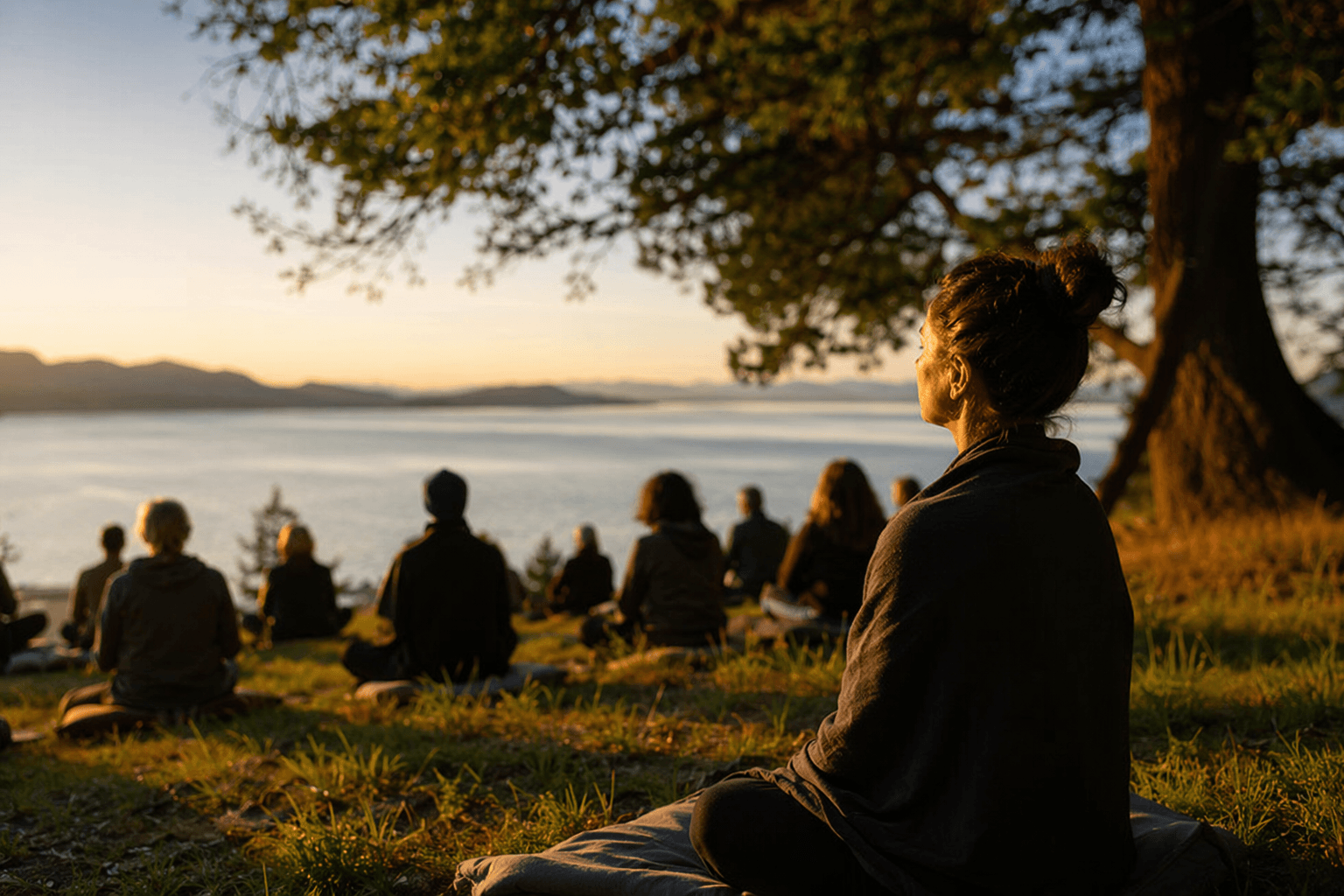
A weekend retreat changes the job of mindfulness. Instead of squeezing practice between texts and errands, Mindfulness Northwest is setting up a mostly silent, in-person container at Samish Island Campground and Retreat Center in Bow, Washington, with guided meditation, walking, gentle yoga, and body scan work woven through the schedule.
What this weekend actually is
The Summer Weekend Retreat runs June 26-28, 2026, and it is pitched as a next step for people who already have some mindfulness practice or have finished a class and want something deeper. The theme is loving-kindness, which shifts the emphasis from attention alone toward a more nourishing quality of heart, and the format makes room for that by slowing the pace down.
This is not a loose drop-in session. The retreat begins Friday at 4:00 pm with check-in, dinner, and orientation, then moves into silence. It closes Sunday at 12:00 pm PT after a full Saturday of practice and a shorter Sunday morning, which means the experience is built around sustained continuity rather than a single talk or a one-off sit.
What a first-timer can realistically expect
If this is your first residential retreat, expect structure, quiet, and repetition. Mindfulness Northwest says the weekend will be mostly silent, but it is not silent in a way that shuts people out of support. Small and large group discussion bracket the quiet periods, so participants are not left to improvise their way through the whole thing.
The actual practice menu is familiar to anyone who has touched an MBSR-style class: sitting meditation, walking meditation, gentle yoga, and the body scan. That mix matters because it reflects how mindfulness is often taught in real life, with movement and embodied attention alongside formal sitting rather than a single technique repeated for hours.
Why Samish Island changes the experience
The retreat is held at Samish Island Campground and Retreat Center, about an 80-minute to 90-minute drive north of Seattle, in Skagit County against the Salish Sea. The venue says it was established in 1959, and it spans 80-plus acres, or 87 acres depending on the page, with open space, forested areas, and beaches.
That setting is part of the point. A residential retreat removes the usual friction of commuting home, checking messages, or trying to preserve practice in a living room that still contains laundry and work email. Samish Island also carries a clear land-based context: the center describes the property as being on the traditional lands of the Coast Salish Peoples, specifically the Samish Nation.
Who this format is for, and who may want something lighter
This is the kind of event for someone who wants continuity more than convenience. If your practice has lived mostly in apps, short guided sessions, or occasional classes, the retreat offers something those formats usually cannot: a shared schedule, extended quiet, and enough repetition for patterns to show themselves.
It also asks for a realistic commitment. Two days of mostly silent practice can feel spacious to one person and intense to another. The appeal is not that it is easy, but that it gives enough time for a beginner or returning practitioner to feel the difference between scattered practice and a held container.
The cost question is built into the design
Mindfulness Northwest lists the tuition on a sliding scale of $355 to $635, or $89 to $159 a month, with a four-month no-interest payment plan. Limited scholarships are also available, which makes the retreat more accessible than a flat, all-or-nothing price would be.
That matters because retreats often test the boundary between aspiration and budget. A weekend like this is not priced like a casual class, but it is also not positioned as a luxury product detached from the community. The payment plan and scholarships signal that the organization wants the retreat to function as a practical step in a longer practice, not as a gated experience.
Where it sits in the mindfulness lineage
Mindfulness Northwest describes the retreat style as part of the tradition of Mindfulness-Based Stress Reduction, the program Jon Kabat-Zinn launched in 1979. That lineage is not just branding; it helps explain why the weekend includes meditation, discussion sessions, and other ways of carrying practice into stressful moments.
The National Center for Complementary and Integrative Health says MBSR includes meditation, discussion sessions, and additional strategies for applying practice to stressful experiences. A major review cited by JAMA Internal Medicine found mindfulness meditation programs were associated with small improvements in anxiety, depression, pain, and stress or distress. The promise here is not a cure-all. It is a modest but real shift, especially when the structure is strong enough to keep people practicing.
Why the loving-kindness theme matters now
The loving-kindness theme gives the retreat a particular emotional register. Instead of treating mindfulness as a purely technical exercise in attention, the weekend asks participants to cultivate friendliness and care, which is one reason this format can feel different from solo practice at home.
That emphasis also fits the way many mindfulness communities are widening their language around compassion. A retreat like this can make that move concrete: silence is still central, but the silence is in service of a broader relational quality, not just concentration for its own sake.
A retreat that is part of a longer practice web
Mindfulness Northwest is not treating Samish Island as a one-off destination. The organization also advertises a separate five-day Roots of Mindfulness retreat at the same venue later in 2026, which makes the site look like a recurring hub rather than a single special event.
The teachers are part of that same ongoing web. Carolyn McCarthy and RJ Rongcal lead the weekend, and McCarthy’s public-facing teaching schedule includes regular online Sunday sit sessions with Rongcal. That continuity matters: the retreat is not a detached getaway but a larger practice community temporarily gathered in one place.
For anyone deciding whether a weekend retreat is worth the effort, the real test is not whether it feels peaceful in the moment. It is whether two days of silence, movement, and shared discipline give practice enough shape to last once the drive back to Seattle is over.
This article was produced by Prism’s automated news system from verified source data, official records, and press releases, then run through automated quality and moderation checks before publishing. The system is built and supervised by the people who set the standards it runs under. Read our full AI policy.
Know something we missed? Have a correction or additional information?
Submit a Tip