Trait mindfulness linked to better emotion regulation in depression
In 97 adults with major depressive disorder, higher trait mindfulness lined up with better emotion regulation and self-reported mental health, but the design cannot prove cause.
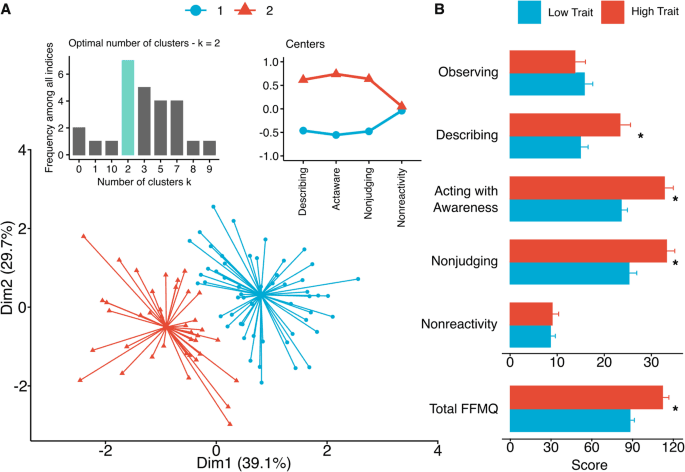
Among 97 adults diagnosed with major depressive disorder, higher trait mindfulness was associated with better self-reported mental health and more adaptive emotion regulation. Depressive spirals often tighten around rumination, avoidance, and anxious reactivity.
What the study examined
The study examined trait mindfulness, not a meditation program. Trait mindfulness refers to a person’s natural tendency to stay present, open, and aware in ordinary experience, even when thoughts and feelings are difficult. The sample was clinically specific: 66% were women, with a mean age of 26.62 years and a standard deviation of 7.24.
It focused on people who are already living with a psychiatric diagnosis, not a general wellness sample. The key question is whether a steadier, more observant mental style is linked to better day-to-day functioning when depression and anxiety are already in the picture.
What higher trait mindfulness was associated with
Emotion regulation appeared to be the likely bridge, with mindfulness fitting a pattern of more adaptive responses rather than automatic reaction.
When a thought like “I’m failing” lands with full force, the next move can be either a spiral or a pause. Mindfulness science has long argued that the pause matters: it can reduce the grip of rumination, make avoidance less automatic, and create room for reappraisal instead of suppression. This study suggests that people with more naturally occurring mindfulness may be handling depressive thinking and anxious spirals in a less reactive way.
Why this clinical group matters
About 332 million people worldwide live with depression, affecting about 5.7% of adults globally, according to the World Health Organization. Depression is also about 1.5 times more common among women than among men, and the WHO identifies it as a leading cause of disability worldwide.
In the United States, major depression is one of the most common mental disorders, according to the National Institute of Mental Health. The Centers for Disease Control and Prevention identifies major depression as a leading cause of disability and a major contributor to economic burden.

How this fits the wider mindfulness evidence
A 2022 paper in Frontiers in Psychology linked mindfulness to lower depression, anxiety, and psychological distress during the COVID-19 pandemic, and part of the association ran through lower rumination and insomnia, plus greater cognitive reappraisal and less suppression.
A 2024 controlled trial in patients with recurrent or persistent major depressive disorder found that mindfulness-based cognitive therapy plus treatment as usual reduced depressive symptoms more than treatment as usual alone, with a medium effect size of d = -0.54. NICE guidance on depression in adults includes mindfulness-based cognitive therapy among recommended options for some forms of depression.
Where the limits matter most
This was a cross-sectional study, which means it captured a snapshot in time. It can show association, but it cannot show that higher mindfulness caused better emotion regulation, or that better emotion regulation caused higher mindfulness, or that both reflect some other factor entirely.
This paper is not proof that meditation treats depression, and it should not be read that way. It is evidence that, in people already diagnosed with major depressive disorder, a naturally higher tendency to stay present and aware is linked with a more adaptive mental health profile. That makes trait mindfulness an interesting target for future intervention design, but it does not turn correlation into cure.
What to take from it in daily practice
The practical takeaway is not to force a mood shift. It is to notice the move you make after the thought appears. If a depressive spiral starts, the useful question is whether you immediately suppress it, avoid it, or give it room to be observed and reframed.
This article was produced by Prism’s automated news system from verified source data, official records, and press releases, then run through automated quality and moderation checks before publishing. The system is built and supervised by the people who set the standards it runs under. Read our full AI policy.
Know something we missed? Have a correction or additional information?
Submit a Tip