People rehearse mortality in coffin-like meditations to reframe anxiety
Practitioners are intentionally rehearsing mortality by meditating inside coffin-like spaces to reframe anxiety and cultivate calm, a trend surveyed by Jemima Lewis on February 25, 2026.

An emergent, if provocative, wellness practice has people intentionally rehearsing mortality and, in some cases, meditating in coffin-like spaces to reframe anxiety and find calm. The most direct description of the phenomenon appeared in a feature by Jemima Lewis, who surveyed the practice in a piece dated February 25, 2026.
Lewis documented practitioners who seek to change their relationship to anxiety by simulating end-of-life conditions; some sessions place meditators into dark, coffin-like enclosures for short periods to mimic a concentrated confrontation with mortality. The aim, as reported in Lewis’s February 25, 2026 overview, is not morbidity but recalibration: participants say the rehearsal shifts attention from diffuse worry to immediate bodily sensations, then to steady breathing and acceptance.
The practice is emerging across several contexts Lewis noted: boutique wellness studios experimenting with coffin-shaped pods, individual facilitators leading guided immersions that include breathwork and counseling, and small groups trading scripts for structured rehearsals. Lewis’s February 25, 2026 survey framed these rituals as part of a broader move toward intentionally confronting fear rather than avoiding it, and she flagged the approach as divisive within the mindfulness community because of its theatricality and ethical questions about setting and consent.
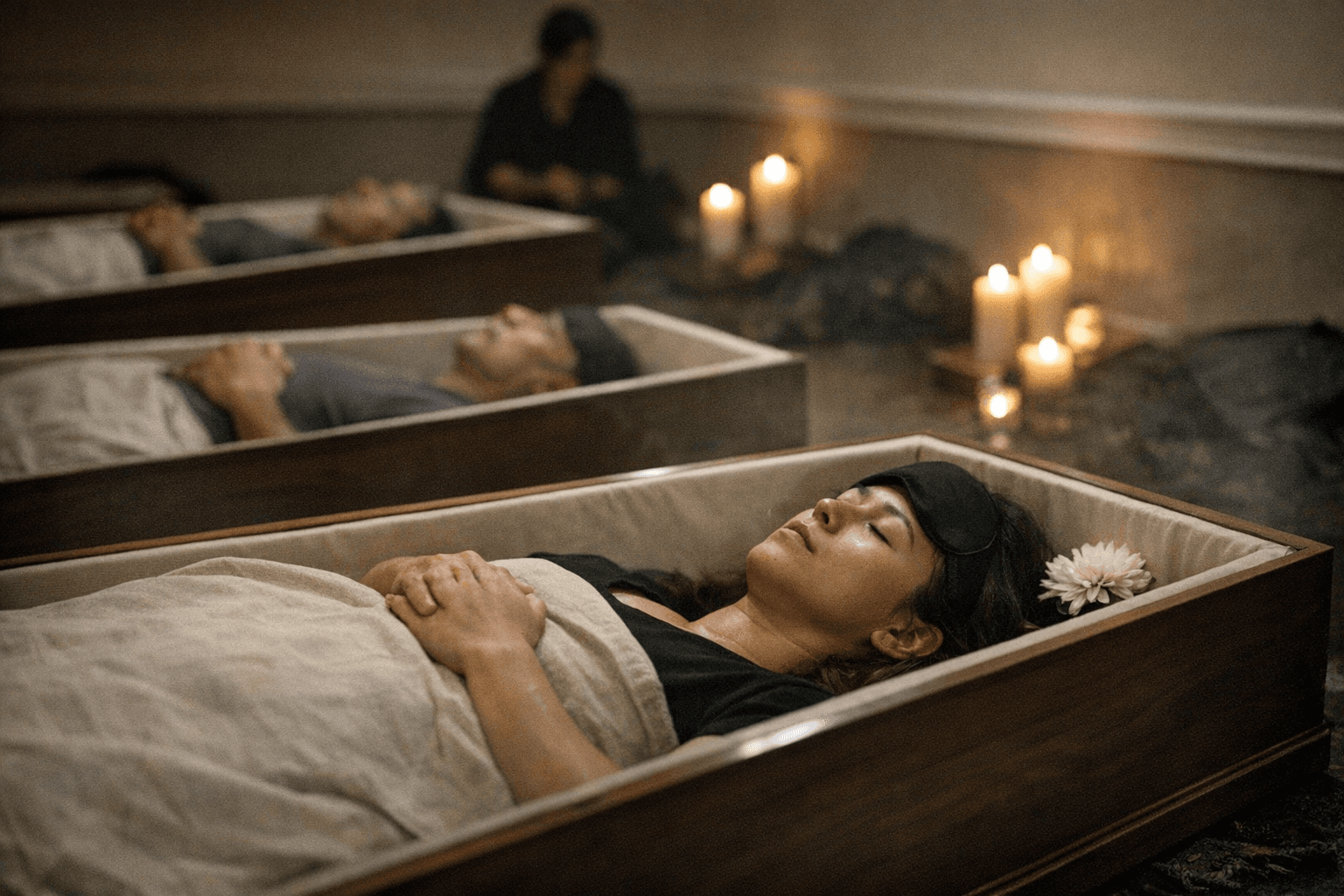
Lewis also reported that session lengths vary widely in the trend she described on February 25, 2026, with some people choosing brief five- to ten-minute enclosures while others opt for longer guided meditations that include preparatory breathwork and an integration period afterward. That variation, Lewis’s piece suggests, is important: shorter exposures emphasize shock and recalibration, while longer sessions aim to fold the rehearsal into a reflective practice that includes debriefing and support.
The trend Lewis surveyed on February 25, 2026 raises practical questions for mindfulness teachers and community leaders about safety, consent, and clinical boundaries. Lewis’s reporting presents the practice as intentional and carefully staged in many cases, with facilitators designing scripts and timeframes to prevent retraumatization. Whether coffin-like meditations take hold more broadly, Lewis’s February 25, 2026 feature implies, will depend on how well practitioners balance the provocative form with established standards of care in mindfulness teaching.
This article was produced by Prism’s automated news system from verified source data, official records, and press releases, then run through automated quality and moderation checks before publishing. The system is built and supervised by the people who set the standards it runs under. Read our full AI policy.
Did this article answer your question?