Randomized trial tests whether brief mindfulness improves interethnic perspective-taking interactions
A randomized trial tested whether a brief mindfulness instruction improved interethnic perspective-taking in virtual Latinx–White dyads; results link mindfulness and compassion to different prosocial effects.
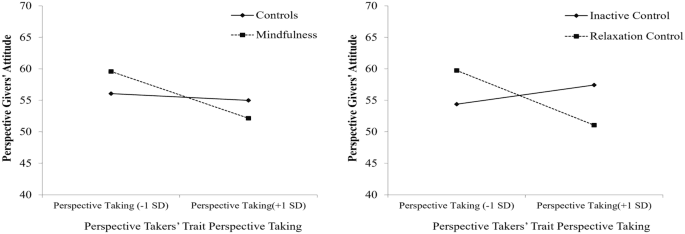
Researchers tested whether a brief mindfulness instruction could improve the quality of perspective-giving and perspective-taking in virtual, power-asymmetric interethnic pairs composed of Latinx and White non-Latinx participants. The randomized experiment focused on whether short contemplative practice shifts how people listen, respond, and behave toward members of another ethnic group during one-on-one interactions.
The study joins a growing body of work that differentiates mindfulness and compassion practices by outcome. Across related experiments, compassion training "had the strongest effect on parochial empathy, but mindfulness training showed stronger effects on out-group altruism and support for out-group immigration." In practical terms this means compassion exercises may narrow the empathy gap between in-group and out-group, while brief mindfulness appears more likely to increase concrete helping and policy support for outsiders in some contexts.
Background research frames these results. Prior brief focused-attention meditations of about 10 minutes reduced implicit age and race bias and decreased out-group discrimination in economic games, while a 4-day focused-attention protocol increased helping toward racial out-group members in both scenarios and in vivo settings. Meta-analytic summaries across 70 studies and 9,231 participants report that mindfulness is "strongly associated with improvements in intergroup or antibias outcomes, with big effects on explicit responses such as attitudes, feelings, and observed behaviors and medium effects on implicit attitudes."
Why this matters for practitioners and community groups is practical: mindfulness practice may lower automatic arousal or widen moment-to-moment awareness and so "attenuate arousal and increase awareness of and/or allow one to override situational and personal factors that inhibit interracial helping behavior." That mechanism suggests short practices can make it easier to notice and act against habitual avoidance or silence in tense interethnic situations, making perspective-taking conversations more productive and less reactive.

The evidence is not uniform. Some measures showed null or mixed effects: training conditions did not differ on support for out-group causes in one set of analyses, and ecological momentary assessment measures did not find reductions in preferential helping toward same-race strangers and acquaintances. Individual differences mattered: those higher in trait empathic concern or with higher-quality intergroup contact were more likely to show benefits from compassion or mindfulness training on certain outcomes.
For meditation teachers, facilitators, and community organizers, the takeaways are clear and actionable. Short, focused mindfulness practices can be incorporated before difficult cross-group dialogues to reduce reactivity and promote helping behaviors; compassion-focused exercises can be added when the goal is to close empathy gaps. Practitioners should track which outcomes they value - affective empathy, helping behavior, or policy support - and tailor brief practices accordingly.
What comes next is more precision. The study points to promising, scalable uses of brief contemplative practice in interethnic encounters, but practitioners and researchers should test specific protocols, durations, and coaching cues to match the practice to the goal. Practitioners can begin experimenting with short focused-attention and compassion sequences while monitoring real-world interactions and feedback.
This article was produced by Prism’s automated news system from verified source data, official records, and press releases, then run through automated quality and moderation checks before publishing. The system is built and supervised by the people who set the standards it runs under. Read our full AI policy.
Did this article answer your question?