Study Finds 8-Day Mind-Body Training Reduces Stress in Prison Settings
An 8-day mind-body training program delivered inside U.S. prisons produced durable mental-health gains, according to new peer-reviewed research.

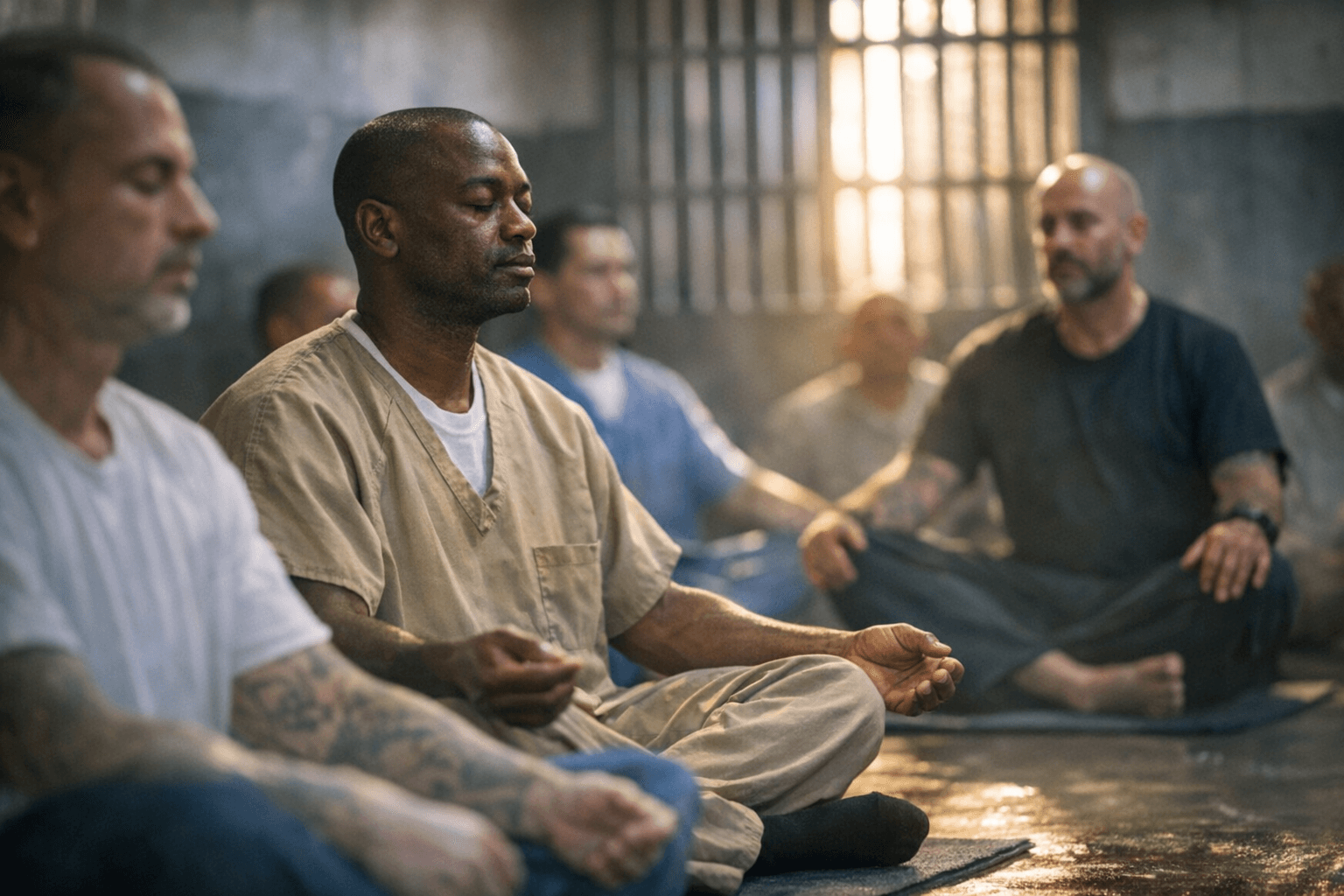
New peer-reviewed research published today in the open-access journal Healthcare confirms that an 8-day mind-body medicine training program delivered inside U.S. correctional facilities produces meaningful reductions in stress along with durable mental-health gains and measurable skill uptake among incarcerated participants.
The study, conducted by a team from the Center for Mind-Body Medicine, represents a significant extension of contemplative and somatic practice into one of the most high-stress, under-served environments imaginable. Correctional settings present unique challenges for any wellness intervention: chronic hypervigilance, trauma histories, institutional routines that resist disruption, and populations whose access to evidence-based mental health support is often severely limited. That an 8-day structured program could produce results durable enough to register in a peer-reviewed study is a notable finding for the broader mind-body medicine field.
The Center for Mind-Body Medicine has long championed integrative approaches that combine meditation, guided imagery, movement, and group processing. Their training model is designed to build self-regulation skills that practitioners can continue using independently, which may explain why the research points specifically to lasting gains rather than short-term relief. Skill uptake, the degree to which participants actually internalized and applied the techniques, was also tracked as a distinct outcome, suggesting the study went beyond simple symptom measurement to assess whether the training translated into genuine capacity building.
The research appears in Healthcare, an MDPI open-access journal, meaning the full study is freely available to practitioners, researchers, program coordinators, and advocates working at the intersection of contemplative practice and criminal justice reform. For those in the mindfulness community already engaged with trauma-sensitive teaching or interested in bringing practice into institutional contexts, the methodology and outcome measures detailed in the study offer a replicable framework worth examining closely.
The publication date of March 16, 2026 places this research at a moment when interest in trauma-informed mindfulness continues to grow across healthcare, education, and justice settings. The findings add empirical weight to what many experienced teachers have observed anecdotally: that structured mind-body practice, even in compressed formats, can shift stress physiology and build resilience in populations facing extraordinary adversity.
This article was produced by Prism’s automated news system from verified source data, official records, and press releases, then run through automated quality and moderation checks before publishing. The system is built and supervised by the people who set the standards it runs under. Read our full AI policy.
Did this article answer your question?