Yoga Tourism Set to Expand, Mindfulness Retreats Drive Demand
Market research released December 30 projects that global yoga tourism will grow from about $177.1 billion in 2024 to $222.5 billion by 2030, a compound annual growth rate of about 3.9 percent. The findings highlight how meditation, mindfulness sessions, and retreat style experiences are central to rising demand, with implications for retreat leaders, community organisers, and practitioners.
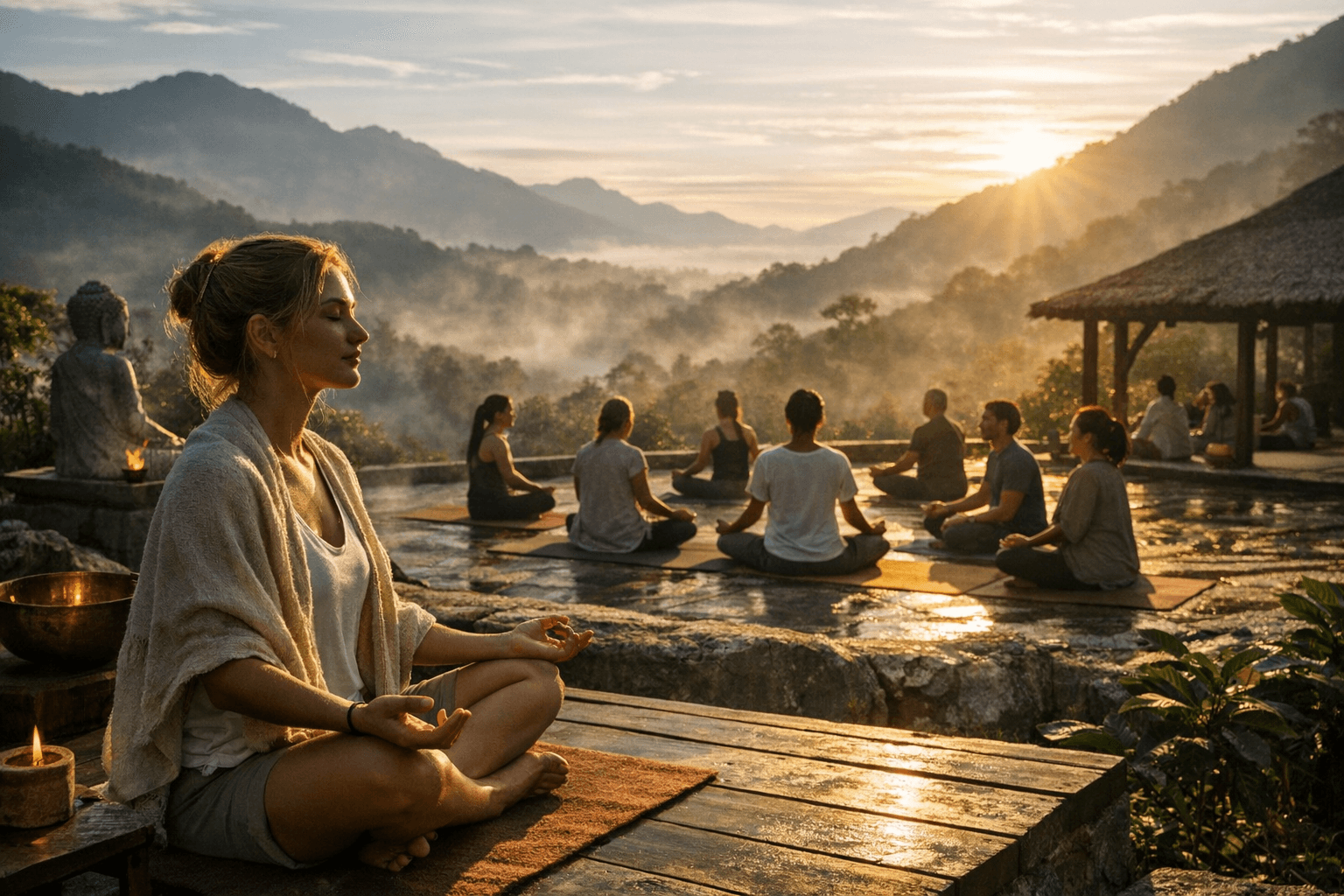
Market research released December 30 projected substantial growth in the global yoga tourism sector through 2030, and placed mindfulness and meditation at the heart of that expansion. The report estimates movement from about $177.1 billion in 2024 to roughly $222.5 billion by 2030, reflecting a compound annual growth rate of about 3.9 percent. That predicted rise matters to local retreat operators, teachers, and community organisers because it signals growing consumer interest in structured silence, guided practice, and immersive wellness travel.
Several clear drivers are boosting demand. Wellness travel and spiritual retreat interest are converging with expanding corporate wellness programs and a notable rise in solo travel, especially among women. Social media and influencer marketing are amplifying awareness of retreat style experiences and shaping consumer expectations. Many modern retreats now position meditation, mindfulness sessions, breathwork, and digital detox programming as core offerings rather than optional extras.
Product innovation is already visible across the market. Retreat operators are diversifying into Ayurveda, meditation intensives, detox programs, and sustainable eco retreats. Hybrid and virtual options are increasingly used to extend accessibility beyond in person seasons. Corporate packages and luxury bespoke wellness programs that include guided mindfulness practice are identified as significant growth segments, creating opportunities for collaborations with businesses seeking employee wellbeing solutions.
The trend has direct practical value for mindfulness practitioners and organisers planning retreats. Confirm teacher qualifications and provide evidence based programming to protect participant wellbeing and sustain credibility. Prioritise ethical tourism practices by limiting group sizes, sourcing local staff, and respecting host communities and ecosystems. Expand accessibility with hybrid online offerings and shorter day long experiences that lower travel and time barriers. Consider tailored corporate packages that embed guided mindfulness into on site or virtual employee wellbeing schedules.
Community relevance will hinge on balancing mainstream demand with authenticity. Rising commercial interest brings funding and more participants, and it also raises the risk of superficial programming. Maintain clear standards for training and curriculum, document safety protocols, and communicate the therapeutic scope of programs so participants know what to expect.
As yoga tourism grows, retreat leaders and community organisers have an opportunity to shape the sector. Track local demand, adapt offerings responsibly, and keep mindfulness practice grounded in qualified teaching and ethical operations to meet rising interest without sacrificing integrity.
This article was produced by Prism’s automated news system from verified source data, official records, and press releases, then run through automated quality and moderation checks before publishing. The system is built and supervised by the people who set the standards it runs under. Read our full AI policy.
Did this article answer your question?


