Richie Hawtin turned minimal techno into a live performance language
Richie Hawtin made minimal techno feel architectural, then proved it at the Guggenheim with Plastikman. The 2013 museum set turned restraint into a live language.
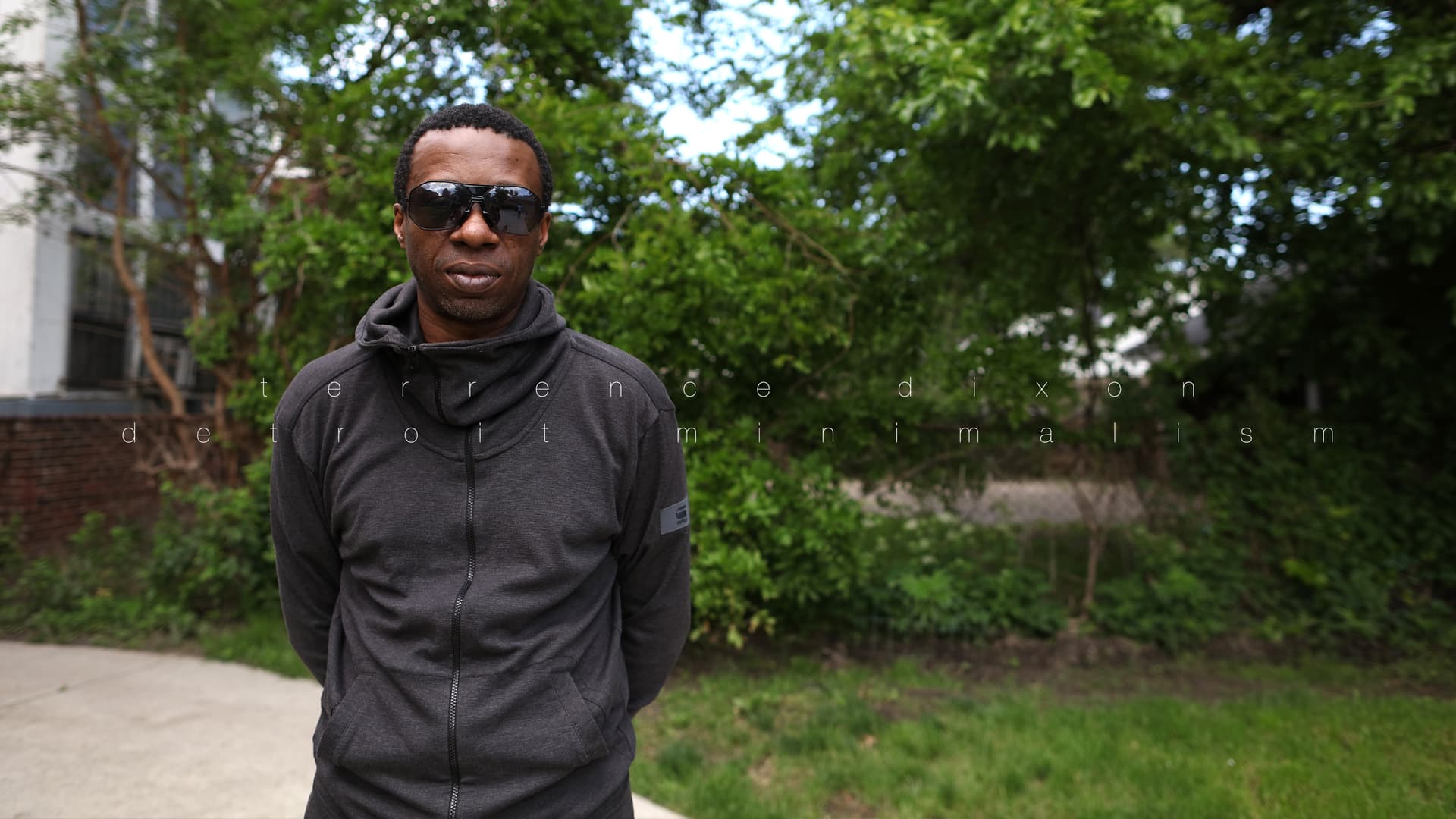
Richie Hawtin did more than strip techno down. He gave minimal techno a performance grammar, one that could feel as deliberate as composition and as immediate as a club set. Resident Advisor describes him as the artist who created a unique techno sound synonymous with Detroit, and Raf Simons once compared listening to his music to listening to classical music.
Minimal techno, built like a score
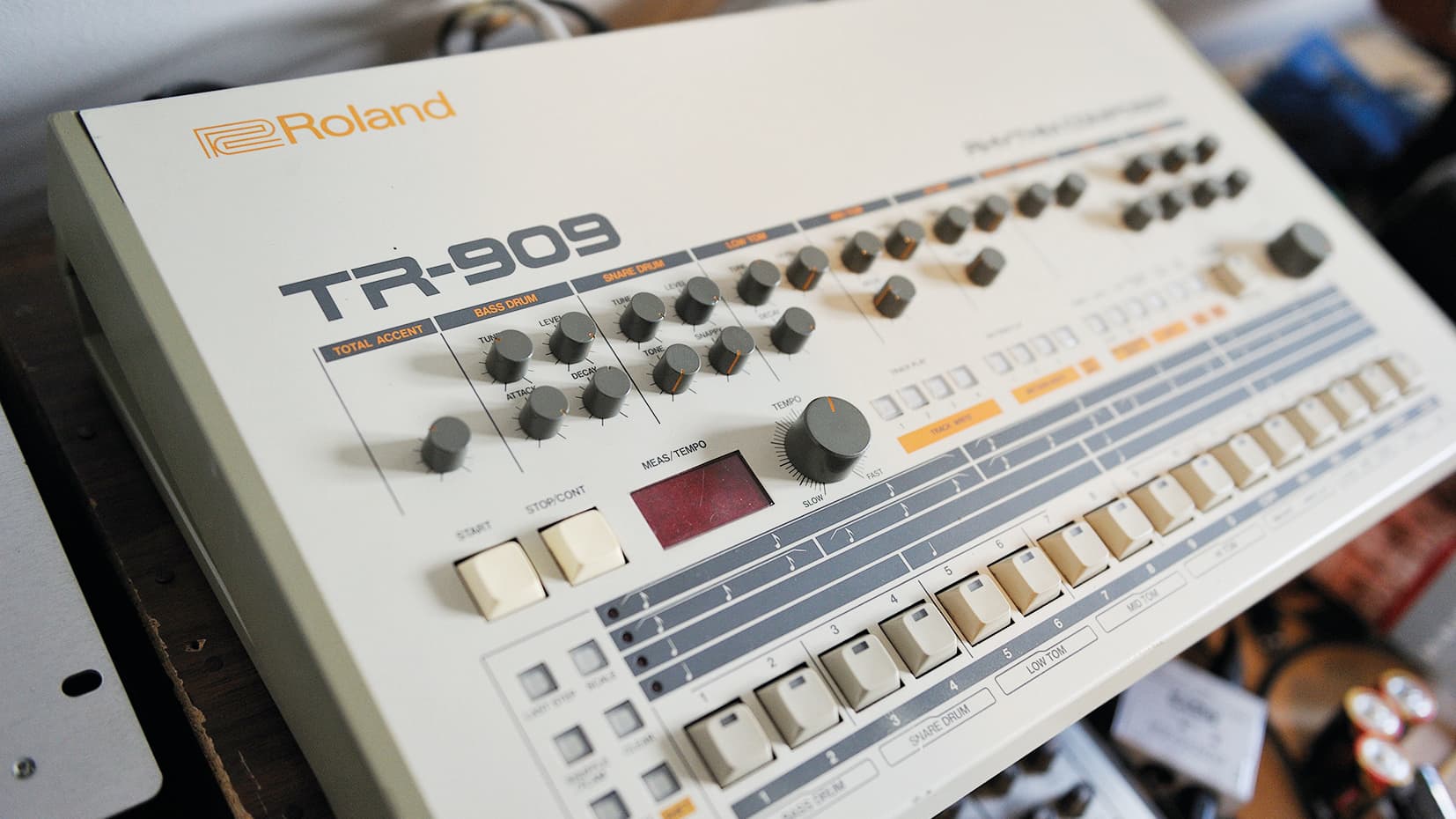
That comparison lands because Hawtin’s best work has always sounded engineered for tension, not release. The appeal is not in how much he adds, but in how carefully he controls what stays out: a pulse, a pressure point, a line that shifts by inches instead of by obvious drops. In that sense, minimal techno under Hawtin becomes less of a genre tag and more of a method, one where structure does the emotional work.
The Plastikman project is the clearest version of that idea. Hawtin’s stripped-back records made him influential far beyond a single run of club tracks because they treated repetition as a design choice, not a shortcut. That discipline is what let his name travel from Detroit-rooted techno conversation into art-world and fashion circles without losing credibility on the dance floor.
Why the live format mattered
Hawtin’s importance grows when you follow him from records into performance. Minimal techno can flatten into wallpaper if it is treated as a fixed studio artifact, but Hawtin kept pushing it toward live interpretation, where arrangement, pacing, and visual framing become part of the set itself. That shift helped normalize the idea that a techno artist could be both DJ and conceptual performer.
His broader profile as a selector and curator only reinforced that expectation. Instead of presenting minimal techno as a narrow club utility, he made it legible as something with historical continuity and formal ambition. The result was a scene in which a stripped-down groove could be judged by the same standards as any other live work: composition, control, and the ability to hold attention without overstatement.
The Guggenheim show as the clearest example
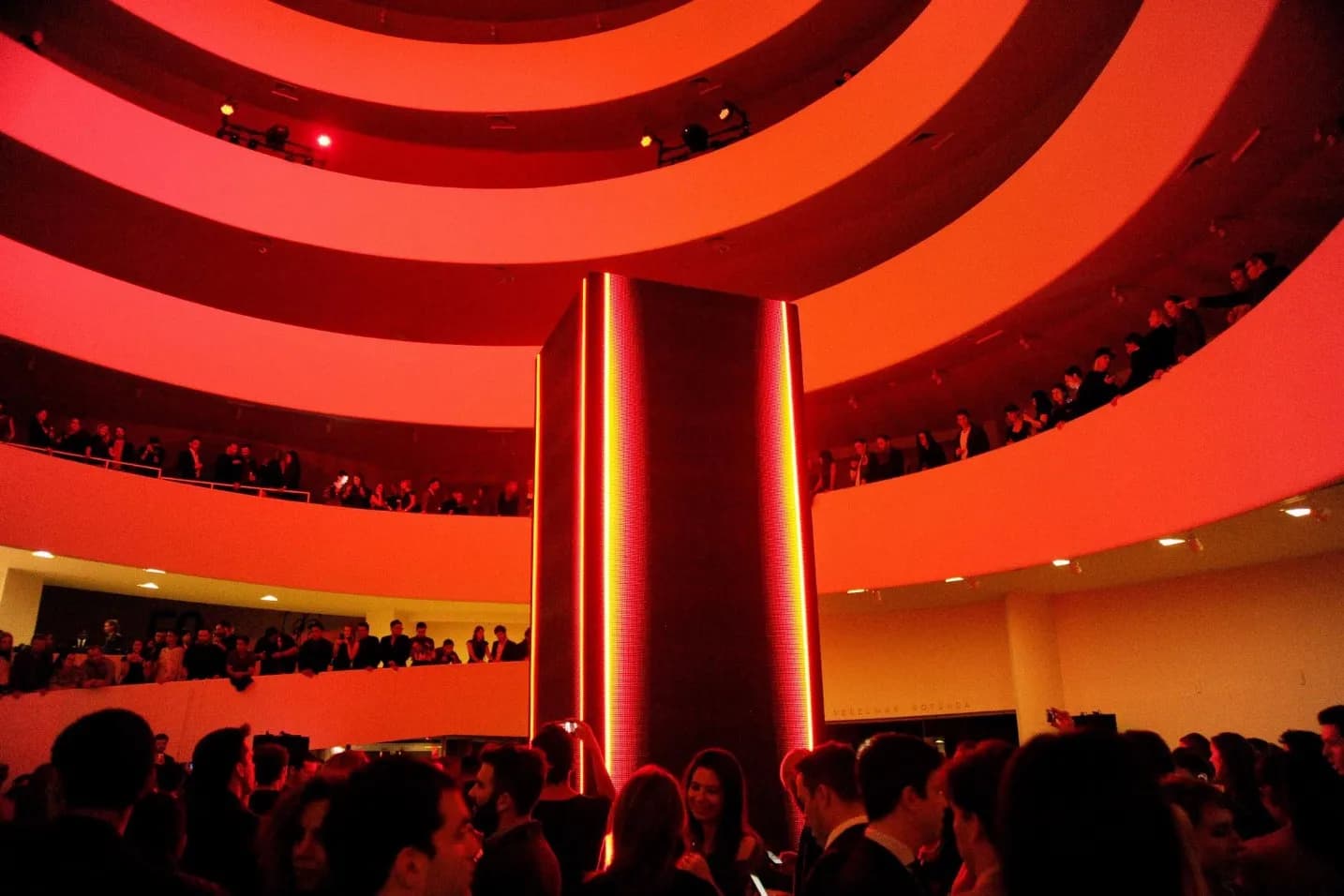
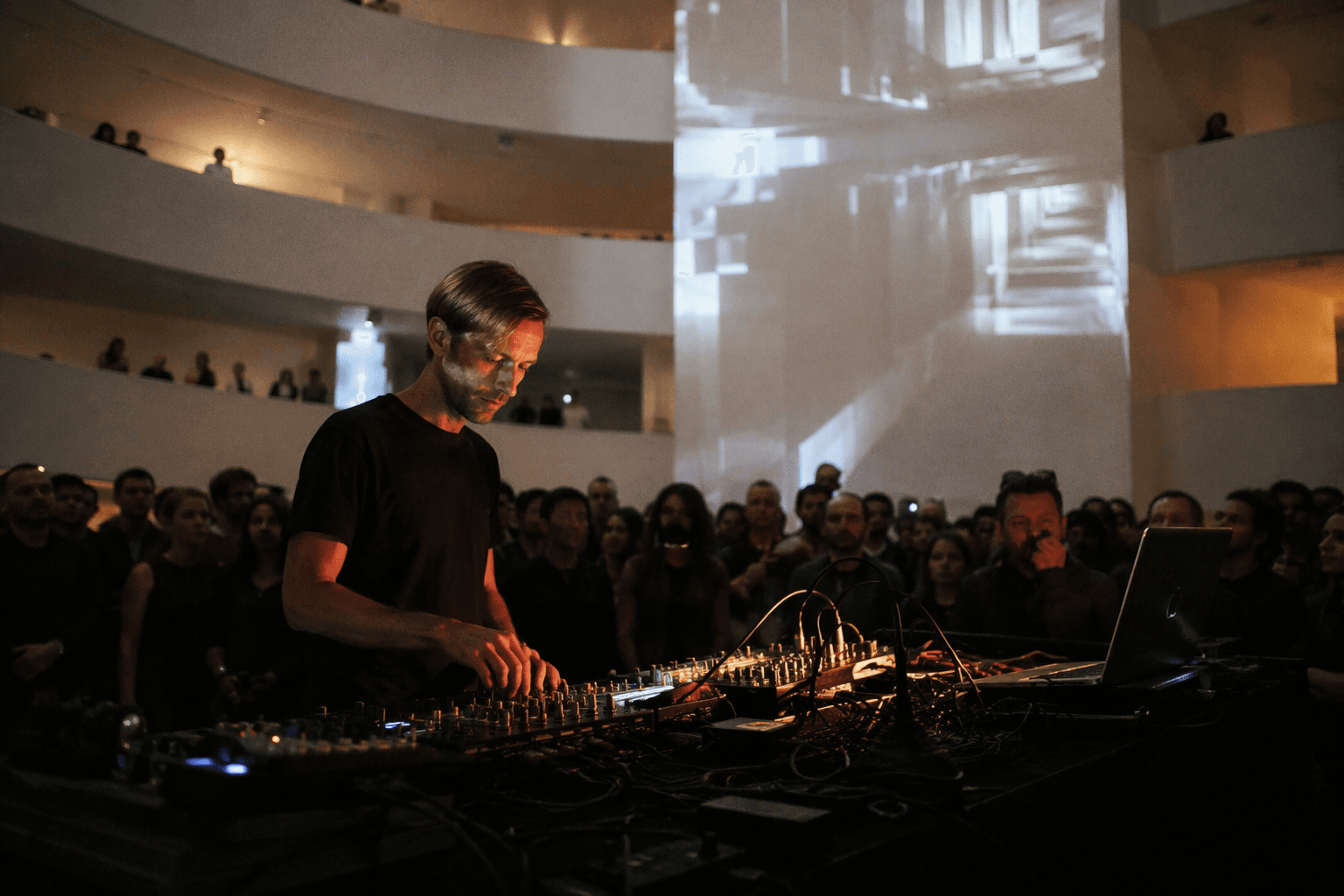
The strongest case study is the Plastikman performance at the Solomon R. Guggenheim Museum in New York on November 6, 2013. The Guggenheim announced the appearance on September 17, 2013, positioning it as a special fundraiser for the Guggenheim Foundation and the centerpiece of the museum’s annual fundraiser and Guggenheim International Gala pre-party. Hawtin was invited by Belgian fashion designer Raf Simons, which tells you how far the project had moved beyond club culture by then.
The staging mattered as much as the booking. The show featured a specially constructed LED obelisk, sometimes described as a monolith, and was framed as a unique audiovisual live performance rather than a conventional DJ slot. Ibiza Spotlight called it a rather unique performance, and that wording fits the larger point: this was minimal techno presented as an environment, not just a sequence of tracks.
That museum context also produced a recorded artifact. The Plastikman album EX was recorded at the Solomon R. Guggenheim Museum on November 16, 2013, then released on June 10, 2014. The sequence is revealing because it shows Hawtin’s live work feeding back into a documented release, with the museum itself functioning as both venue and studio.
What Hawtin changed for minimal techno
If you want the practical lesson from Hawtin’s career, it is this: minimal techno does not have to wait for a drop to feel alive. A set can move through tension, spacing, and timed shifts in a way that keeps the room locked without ever shouting for attention. Hawtin’s work made that approach feel scalable, from the club booth to the Guggenheim’s marble interior.
- A Plastikman set could be built around a single visual object, like the LED obelisk, and still feel like a complete performance.
- A museum commission could still carry techno’s core discipline, provided the arrangement stays tight and the sound stays purposeful.
- A live recording like EX could preserve that tension and still function as a proper release.
That is why Hawtin remains such a useful reference point for minimal techno. He showed that the genre’s power is not in volume or excess, but in the ability to turn restraint into motion, and motion into a live language that can stand up in a club, a gallery, or a museum fundraiser without changing its spine.
This article was produced by Prism’s automated news system from verified source data, official records, and press releases, then run through automated quality and moderation checks before publishing. The system is built and supervised by the people who set the standards it runs under. Read our full AI policy.
Did this article answer your question?