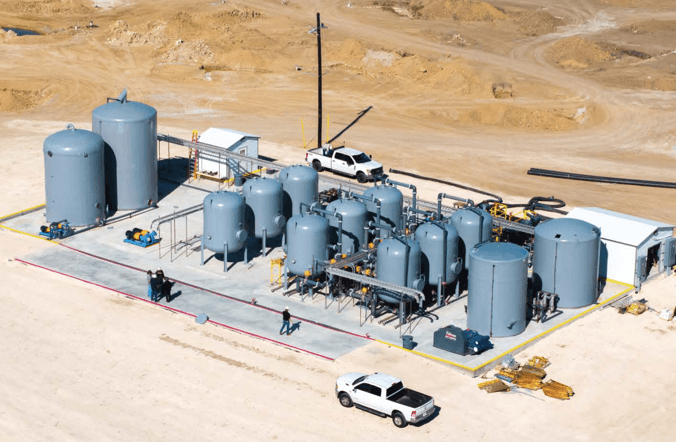
Ampera plans thorium-fueled microreactors with Australian supply chain
Ampera wants Australian thorium to feed a U.S. microreactor stack, but the fuel still has to clear conversion, fabrication, and NRC licensing first.
_59969.jpg&w=1920&q=75)
Ampera is trying to do something thorium startups usually only sketch on slides: pull ore out of Australia, turn it into reactor fuel in the United States, and wrap the whole chain around a factory-built microreactor. That is a harder business than a one-line supply announcement suggests. Thorium is fertile, not fissile, so it cannot run a chain reaction by itself; it has to absorb neutrons and breed uranium-233 before it becomes useful as fuel.
The company says the fuel will be procured from Australia and produced in-house in the United States, through Ampera Australia Pty Ltd, which it formed in February 2026 to speed thorium procurement and import. That puts the real work well beyond mining. Australian material has to be characterized, refined, converted into a usable feedstock, and then qualified for reactor-grade fabrication. Geoscience Australia’s AECR 2024 keeps thorium in the frame as part of Australia’s end-2022 resource base, while the U.S.-Australia critical minerals framework signed on October 20, 2025 gives the supply chain a policy tailwind.
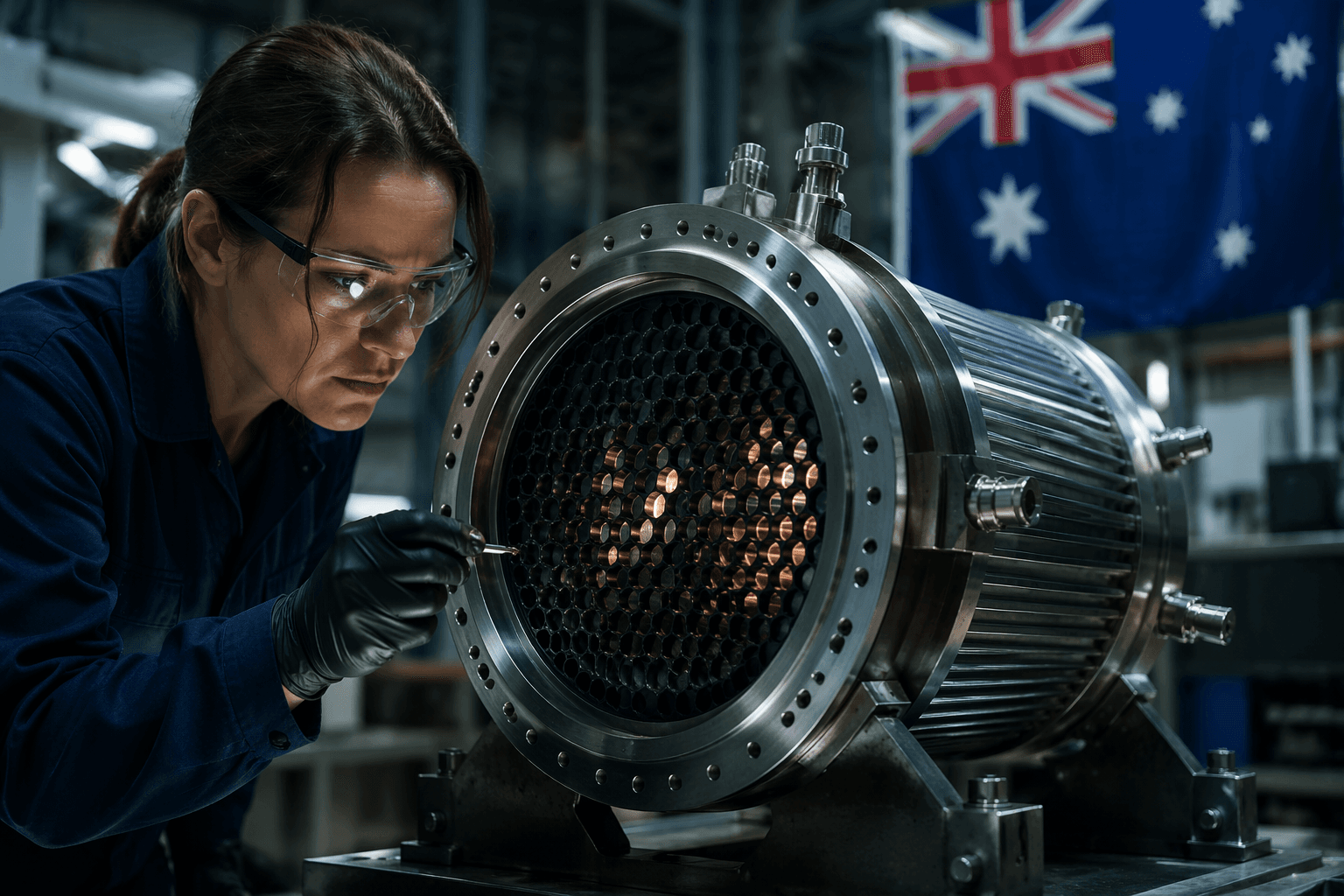
Ampera’s reactor pitch is equally ambitious. World Nuclear News described the concept as a subcritical thorium-based microreactor that does not require refuelling, aimed at data centers, defense, industrial users, and maritime applications. Ampera’s own site says its source-assisted microreactor systems are designed to deliver 15 to 30 MWe, while April coverage put the containerized concept at about 30 megawatts and said it was intended to run for decades without refuelling. The company says the platform combines TRISO fuel, a neutron-source technology, and advanced additive manufacturing, and it claims more than 60 patents, with one April account putting the figure at 66 global patents.
None of that removes the messy steps in the middle. TRISO production is a precision manufacturing problem, neutron-source integration is a reactor physics problem, and a thorium fuel cycle still has to prove it can be made consistently, licensed cleanly, and run at commercial scale. That is why thorium has lingered in the category of promising fuel cycle rather than routine industrial hardware. The IAEA says thorium is about three times as abundant as uranium in the Earth’s upper crust, but World Nuclear Association still describes cost-effective deployment as an R&D challenge, not a solved commercial route.
Regulation is the other gate. Ampera filed a formal letter with the U.S. Nuclear Regulatory Commission on February 23, 2026 to begin the pre-application process for a factory-fabricated, containerized microreactor, and the NRC’s Part 53 framework became effective on April 29, 2026. That rule is meant to be risk-informed, performance-based, and technology-inclusive, which helps advanced reactors, but it does not erase the need to show that a thorium supply chain, a fuel line, and a subcritical core all work together in one manufacturable package. Ampera’s April 2, 2026 collaboration with Scorpio Tankers also shows where it wants to sell first: not just into data centers, but into shipping and maritime power, where the promise of no refuelling sounds even better until the first fuel batch has to clear the factory floor.
This article was produced by Prism’s automated news system from verified source data, official records, and press releases, then run through automated quality and moderation checks before publishing. The system is built and supervised by the people who set the standards it runs under. Read our full AI policy.
Know something we missed? Have a correction or additional information?
Submit a Tip