Astral Systems raises £23 million to commercialize compact fusion reactors
Astral Systems’ £23 million round is aimed at one concrete target: multiple compact fusion reactors running at full capacity at Berkeley by the end of 2026.

Astral Systems has raised £23 million in Series A funding to push its compact multi-state fusion reactors toward a specific build milestone: multiple reactors running at full capacity by the end of 2026. The Bristol-based company says the money takes total funding to more than £28 million and backs what it calls “commercially viable technology with near term applications,” with production, testing and isotope output now the real story.
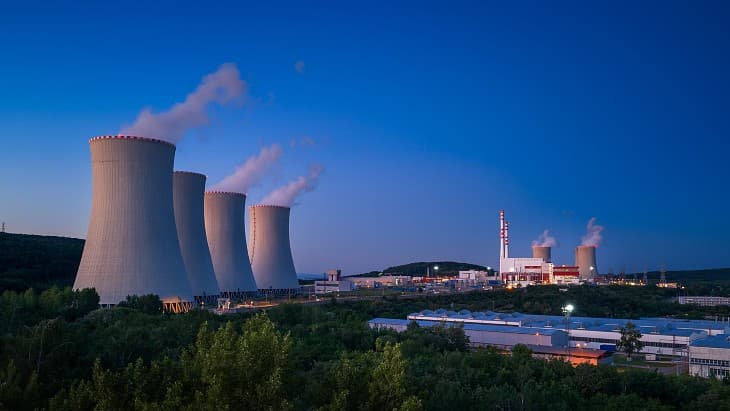
The round was led by Mercia Ventures and backed by Tees River, Daphni, Blast Club, Speedinvest and Playfair. Mercia says Astral is developing a high-energy facility at the former Berkeley Power Station in Gloucestershire, and that site is where the company expects the hardware to move from demonstration into a more industrial operating regime. Astral also plans to expand its team from 23 people to more than 40 by 2026, which tells you the financing is meant to feed engineering, not just slides.
That matters because Astral is not starting from zero. The University of Bristol said in November 2023 that co-founder Dr Tom Wallace-Smith and the Astral team had developed and demonstrated a first-of-its-kind Multi-State Fusion reactor for creating medical isotopes. Astral’s pitch is that its compact reactors can deliver high particle flux and long service life for medical, industrial and research use, with one clear near-term target being radioisotopes rather than electricity on a grid.
The medical-isotope angle is more than clever positioning. NHS England said on 29 October 2024 that Europe was facing a shortage of Mo99 and Tc99 generators because all three reactors used to produce them were out of service. UK parliamentary statements said technetium-99m is used in diagnostic imaging and some cancer surgeries, while NHS Scotland said supplies of molybdenum-99 used to make technetium-99m generators were limited until mid-November 2024. Astral is trying to turn that vulnerability into a manufacturing opportunity.

Mercia says the company wants one or more medical isotopes on the market in 2027, and a 2025 University of Bristol and McMaster University collaboration pointed to actinium-225 and lead-212 as part of the longer isotope pipeline. Astral also said in 2025 that it had become the first commercial fusion company to breed tritium using its own fusion reactor. Put together, that is a more tangible benchmark than a generic fusion promise: a 2023 isotope demo, a 2025 tritium result and a 2026 full-capacity target at Berkeley.
This article was produced by Prism’s automated news system from verified source data, official records, and press releases, then run through automated quality and moderation checks before publishing. The system is built and supervised by the people who set the standards it runs under. Read our full AI policy.
Did this article answer your question?