Crushed concrete could lock away strontium-90 at nuclear sites
Crushed nuclear-site concrete did more than hold its shape: it pulled strontium-90 out of solution, especially when air and phosphate were in play. That could shrink waste streams at legacy sites.
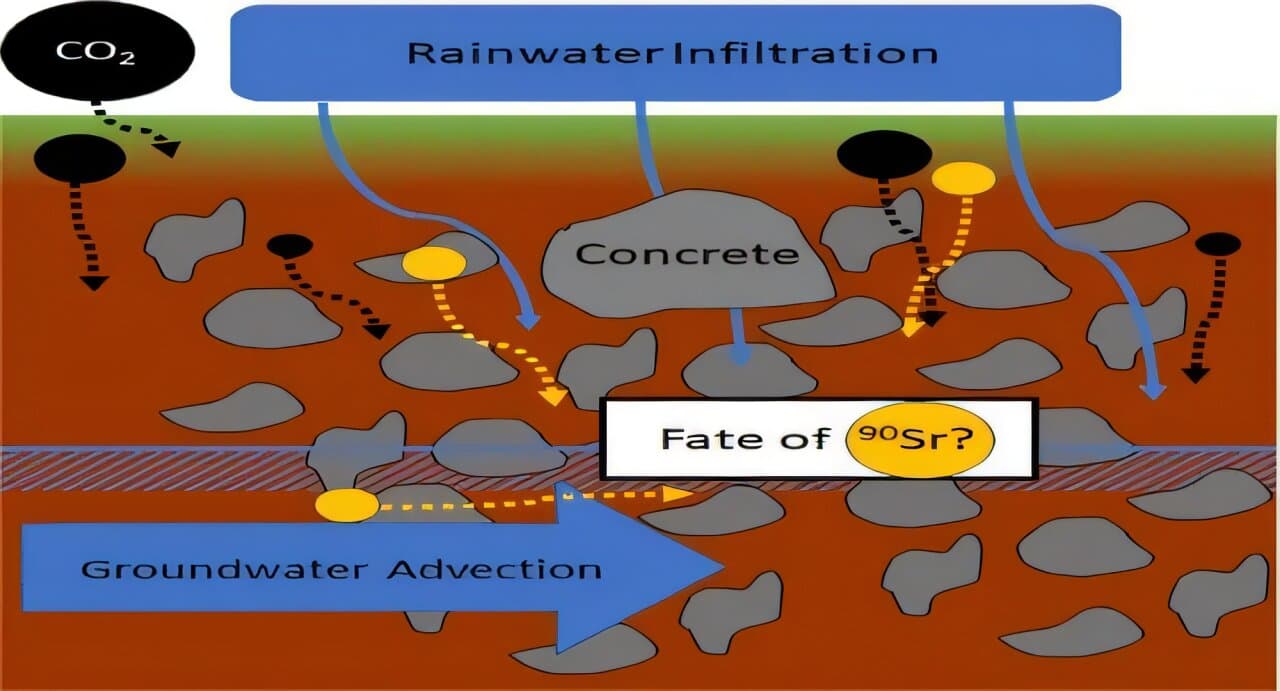
Crushed concrete from legacy nuclear facilities may be more useful than a haul to the skip. In controlled tests, it pulled strontium out of water and held onto it long enough to matter for decommissioning, which is exactly the kind of result that can change how operators think about lightly contaminated rubble. The point is not that concrete becomes clean, but that it may become part of the fix.
A waste stream that might do real work
The study, published in ACS ES&T Water and announced by the University of Manchester on 25 June 2026, brought together the University of Manchester, the United Kingdom National Nuclear Laboratory, and Clemson University. The Nuclear Decommissioning Authority funded the work, and the team used concrete sourced from the NDA itself, so this was not a toy sample from a lab shelf.
That matters because decommissioning generates large volumes of lightly contaminated concrete, and the study’s own framing is blunt: on-site disposal options are under investigation for exactly this kind of material. If concrete can help immobilize strontium at the same place it was created, the industry gets a cleaner disposal route, fewer truck movements, and less pressure on engineered disposal capacity.
What the crushed concrete actually did
The team mixed crushed concrete with synthetic groundwater containing either stable strontium or trace levels of strontium-90, then ran the experiments for three months under two very different conditions. In air-equilibrated systems, the concrete removed about 82% of the strontium from solution over that period. In air-limited systems, it removed only 14%.
That gap is the whole story. The material is not just passively soaking up contamination, it is responding to the chemistry around it, and oxygen and carbon dioxide in air seem to be the trigger. The researchers tied the stronger uptake to calcite formation as the concrete reacted with carbon dioxide, creating a mineral host that can take strontium into its structure.
X-ray absorption spectroscopy backed that up by showing strontium was partially incorporated into the newly formed calcite in the air-exposed samples. In practical terms, that means the contaminant is not just sitting on the surface waiting to move again. It is getting built into the mineral phase, which is the sort of retention decommissioning engineers actually care about.
Why phosphate makes the system tougher
The phosphate results are the part that should make site managers sit up. In air-equilibrated phosphate systems, up to 98% of strontium was removed from solution within 48 hours, a much faster and stronger response than the baseline concrete-alone setup. Microscopy showed poorly crystalline calcium phosphate coatings forming on the concrete surface, which adds another retention mechanism on top of calcite.
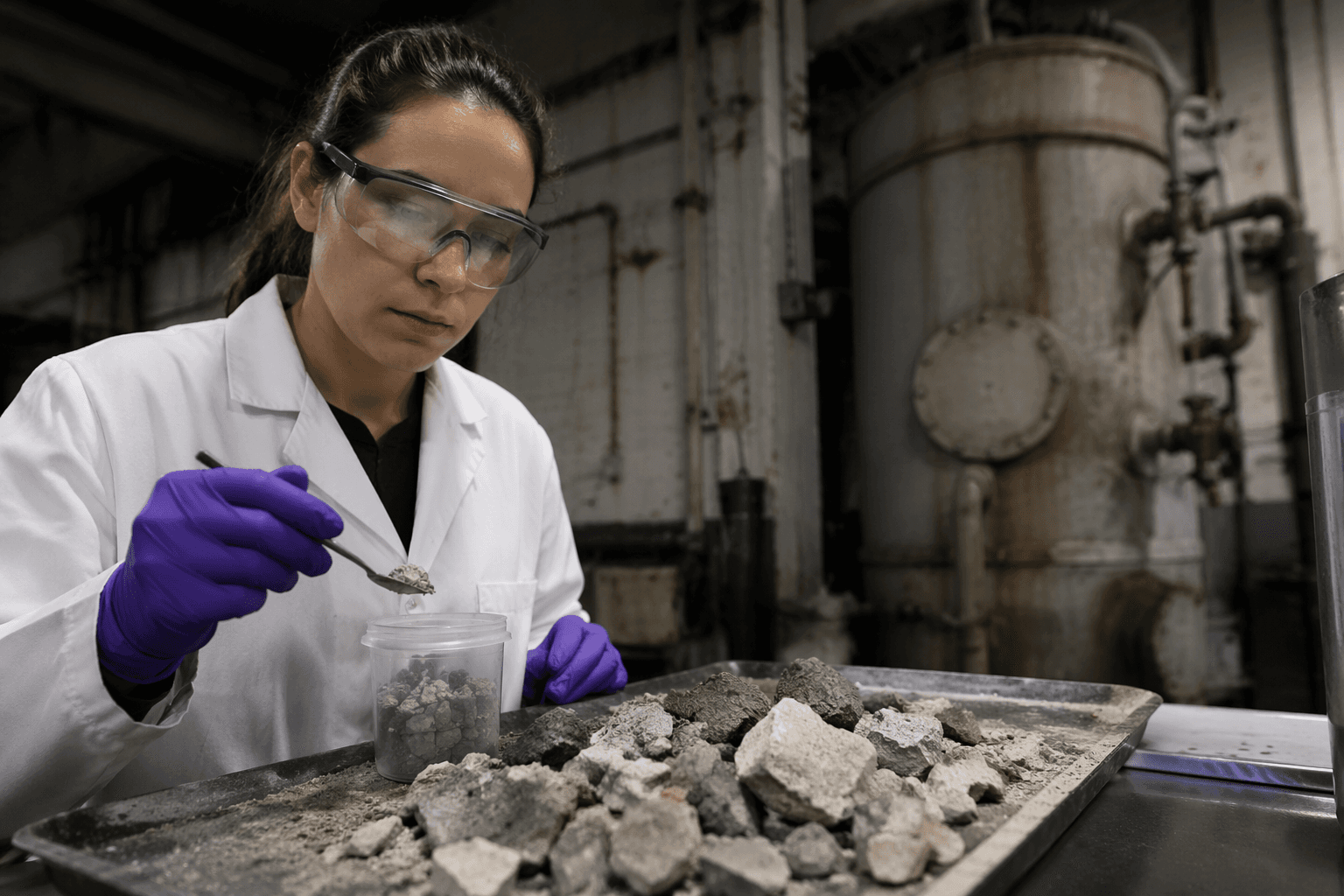
Phosphate treatments also improved uptake even in low-oxygen conditions. That opens a more operationally useful door than a simple bench-top success, because real waste cells and contaminated soils do not all behave the same way. If a phosphate amendment can keep strontium tied up when oxygen is scarce, that gives cleanup teams another lever for designing disposal cells, barriers, or in-place treatment zones.
Professor Katherine Morris, the senior author, is the BNFL Research Chair at The University of Manchester and directs the Radioactive Waste Disposal and Environmental Remediation National Nuclear User Facility and the Sellafield Effluent and Decontamination Centre of Expertise. That background fits the problem perfectly: this is not abstract mineral chemistry, it is waste management science aimed at the mechanics of leaving contaminated material where it can no longer wander.
Why Sellafield and Hanford are the obvious test cases
The practical payoff lands hardest at legacy sites like Sellafield and Hanford. Sellafield has a 70-year industrial history and has been described in earlier materials as one of the oldest and largest nuclear sites in the world. UK materials have put the cost of soil and groundwater cleanup there at about £3 billion, with remediation stretching to 2120. Strontium-90 is part of that problem set.
Hanford carries a similar burden on the U.S. side. The U.S. Department of Energy and related site materials have discussed strontium-90 in the 100-K Area and 100-N Area groundwater, where contamination is still tied to past reactor liquid-waste disposal practices. That is the kind of legacy source term where any method that slows migration, reduces disposal volume, or supports an on-site disposal case can change the cleanup math.
The real operational question is not whether crushed concrete can bind strontium in a beaker. It is whether the effect survives the messy reality of a disposal cell, where groundwater chemistry shifts, oxygen availability changes, and the waste itself is far from uniform. The Manchester paper is aimed squarely at safety-case development for on-site disposal scenarios, and that is the right next step.
What still has to be proven before anyone relies on it
The evidence so far is strong enough to be interesting, but still bench-scale. The experiments ran for three months in synthetic groundwater, not in a full field setting with fluctuating chemistry, mixed contaminants, and real hydraulic flow. The big unanswered questions are the ones that decide whether this becomes a practice or just a promising mechanism: how durable the calcite and calcium-phosphate hosts remain over longer times, how the process behaves in different site waters, and whether the treatment can be engineered consistently at disposal scale.
That is the difference between a laboratory result and a decommissioning tool. Right now, crushed concrete looks less like an inert cleanup burden and more like a material that can help trap strontium-90 in place. If that holds up outside the lab, old rubble could end up taking on a job that matters as much as the reactor itself: keeping contamination from moving any farther.
This article was produced by Prism’s automated news system from verified source data, official records, and press releases, then run through automated quality and moderation checks before publishing. The system is built and supervised by the people who set the standards it runs under. Read our full AI policy.
Did this article answer your question?