Eagle Nuclear to Launch 47-Hole Uranium Drill Program in July
Eagle Nuclear is lining up 47 diamond holes and 27,000 feet at Aurora, a big test of whether the deposit can move closer to U.S. uranium supply.
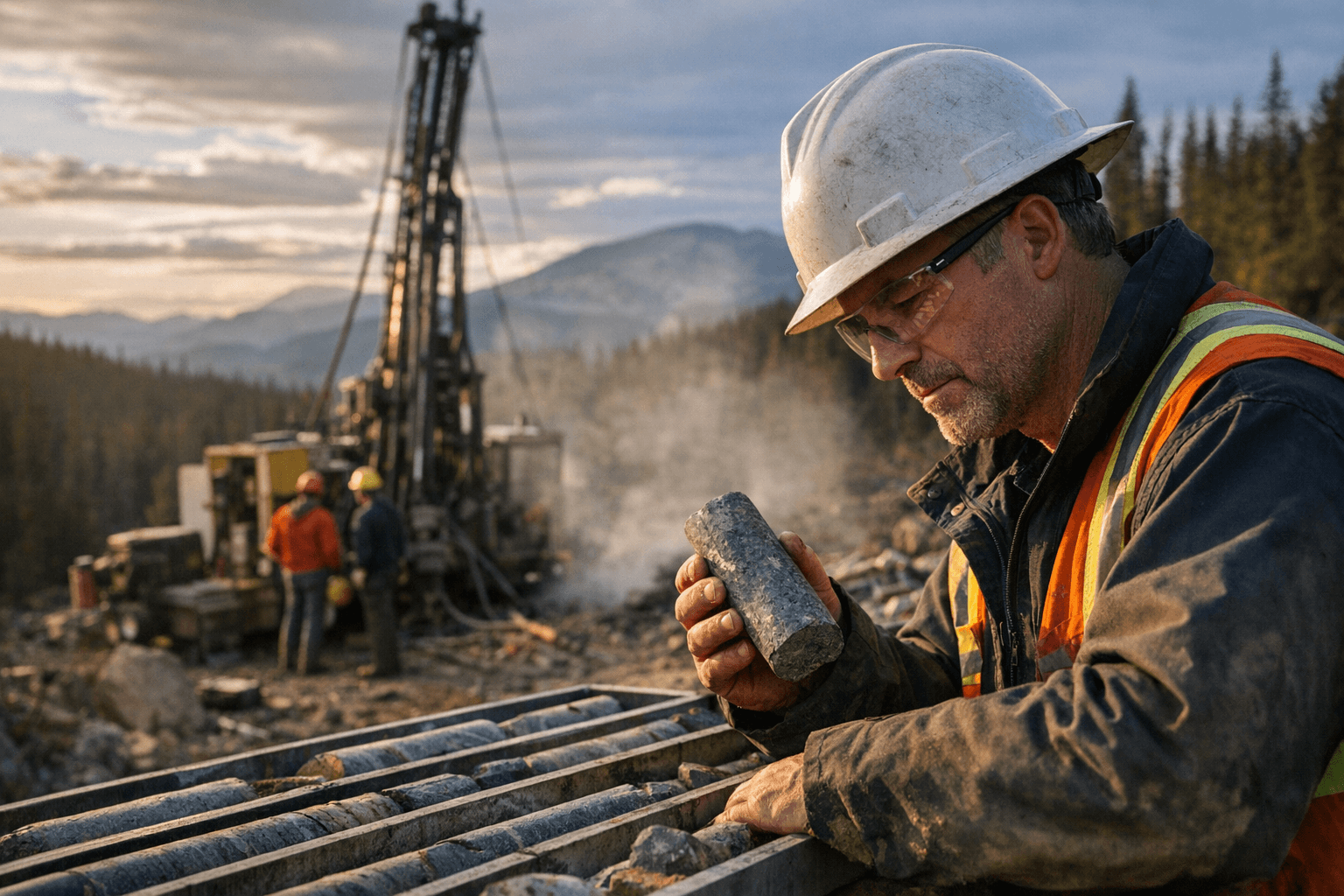
Eagle Nuclear is set to start a 47-hole, 27,000-foot investigative drill program in July at its Aurora Uranium Project on the Oregon-Nevada border, and the real question is not how deep the holes go but whether they move the asset closer to domestic uranium supply. Eagle says Aurora holds 32.75 million pounds of indicated U3O8 and 4.98 million pounds of inferred near-surface U3O8, a resource base that has made the project one of the most closely watched uranium names in the U.S. build cycle.
The company is not treating the work as simple prospecting. It is casting the program as pre-feasibility de-risking, with the goal of closing data gaps before a prefeasibility study expected in the second half of 2027. The holes are meant to do several jobs at once: expand and define resource zones, improve classification, support advanced metallurgy and flowsheet work, inform rock mechanics for pit engineering, and sharpen hydrogeological analysis. Eagle also plans gamma logging in every hole, with some holes surveyed by acoustic televiewer to pull structural geology data, while six holes are set aside specifically for groundwater and hydrogeology.
That matters because Aurora is not a greenfield hunch. Eagle says the deposit has already been drilled more than 600 times, and the adjacent Cordex deposit has seen more than 100 holes. The project straddles Malheur County, Oregon, and Humboldt County, Nevada, with a proposed processing location in Nevada. A 2025 SEC S-K 1300 technical report summary says the project spans more than 360 mining claims across nearly 30 square kilometers, with access via an unsealed road off U.S. Route 95.
Investors and reactor watchers should be looking for three things next: whether the new drilling tightens the resource enough to support mine planning, whether the permitting path stays on track, and whether the timeline keeps slipping toward actual development rather than another round of studies. Eagle engaged SLR International Corporation as lead permitting manager on March 18, and it has already submitted permit applications to the Bureau of Land Management and Oregon regulators. Oregon’s mining program handles operating permits, exploration permits, and exclusion certificates, and state law requires a consolidated application for a mining operating permit.
Even with that progress, Aurora is still far from pounds that could feed the market. There is no production decision, no mill, and no commercial output yet. But in a market where U.S. uranium production has been rising and companies are still hunting for policy and supply signals, July’s drilling will show whether Aurora is becoming a real domestic supply candidate or just a larger resource on paper.
This article was produced by Prism’s automated news system from verified source data, official records, and press releases, then run through automated quality and moderation checks before publishing. The system is built and supervised by the people who set the standards it runs under. Read our full AI policy.
Did this article answer your question?