Hinkley Point C installs unit 2 reactor vessel with Big Carl
A 500-tonne reactor vessel slid through a 19.5-metre hatch and landed with 40 millimetres to spare, putting Unit 2 into the heart of Hinkley Point C’s build.
_77890.jpg&w=1920&q=75)
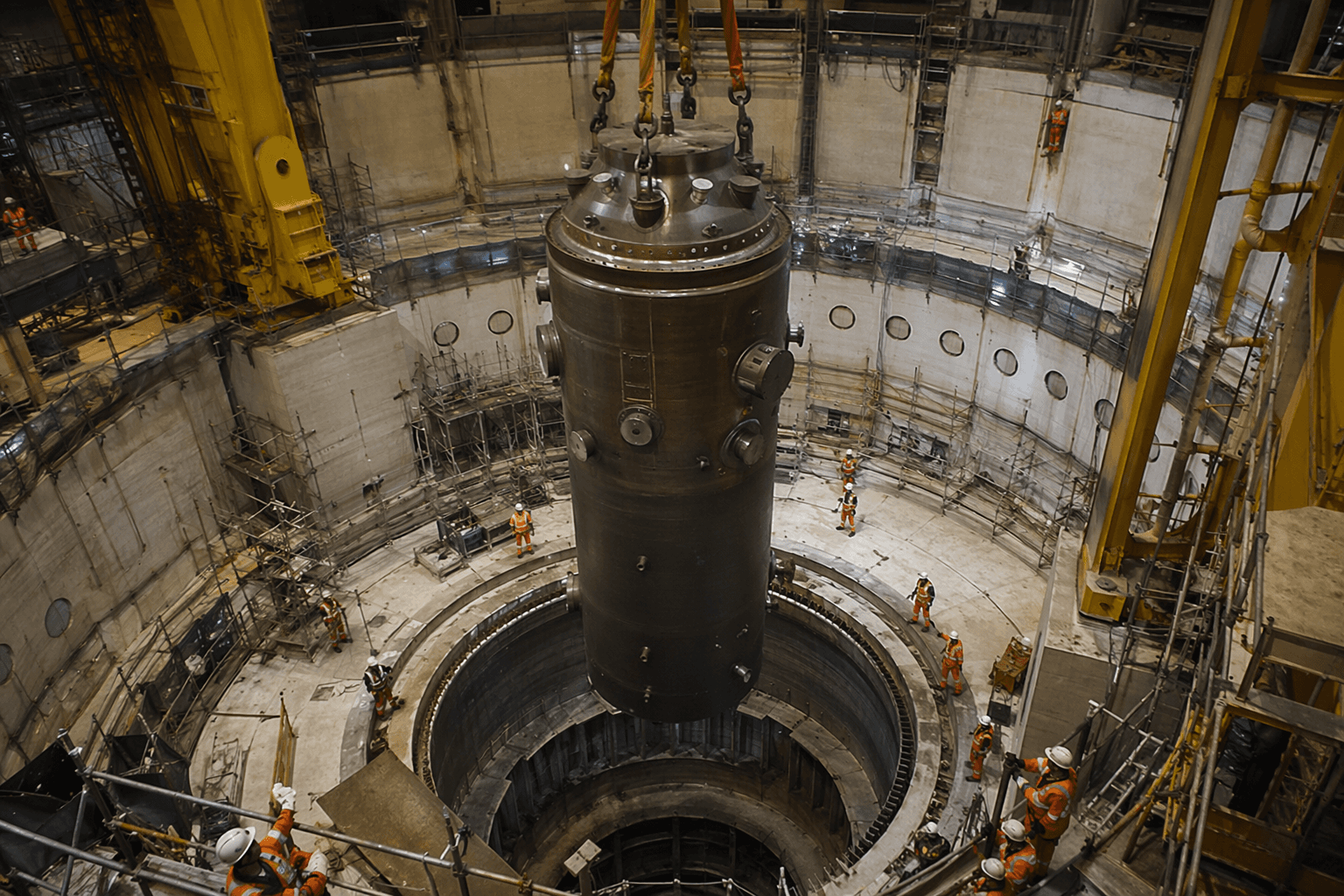
A 500-tonne steel cylinder slid through a 19.5-metre-high hatch and settled with just 40 millimetres of clearance on each side, putting Hinkley Point C’s Unit 2 reactor vessel in its final home inside the reactor building. For a project built on concrete, cranes and repetition, this was the moment the second unit stopped looking like a shell and started looking like a reactor.
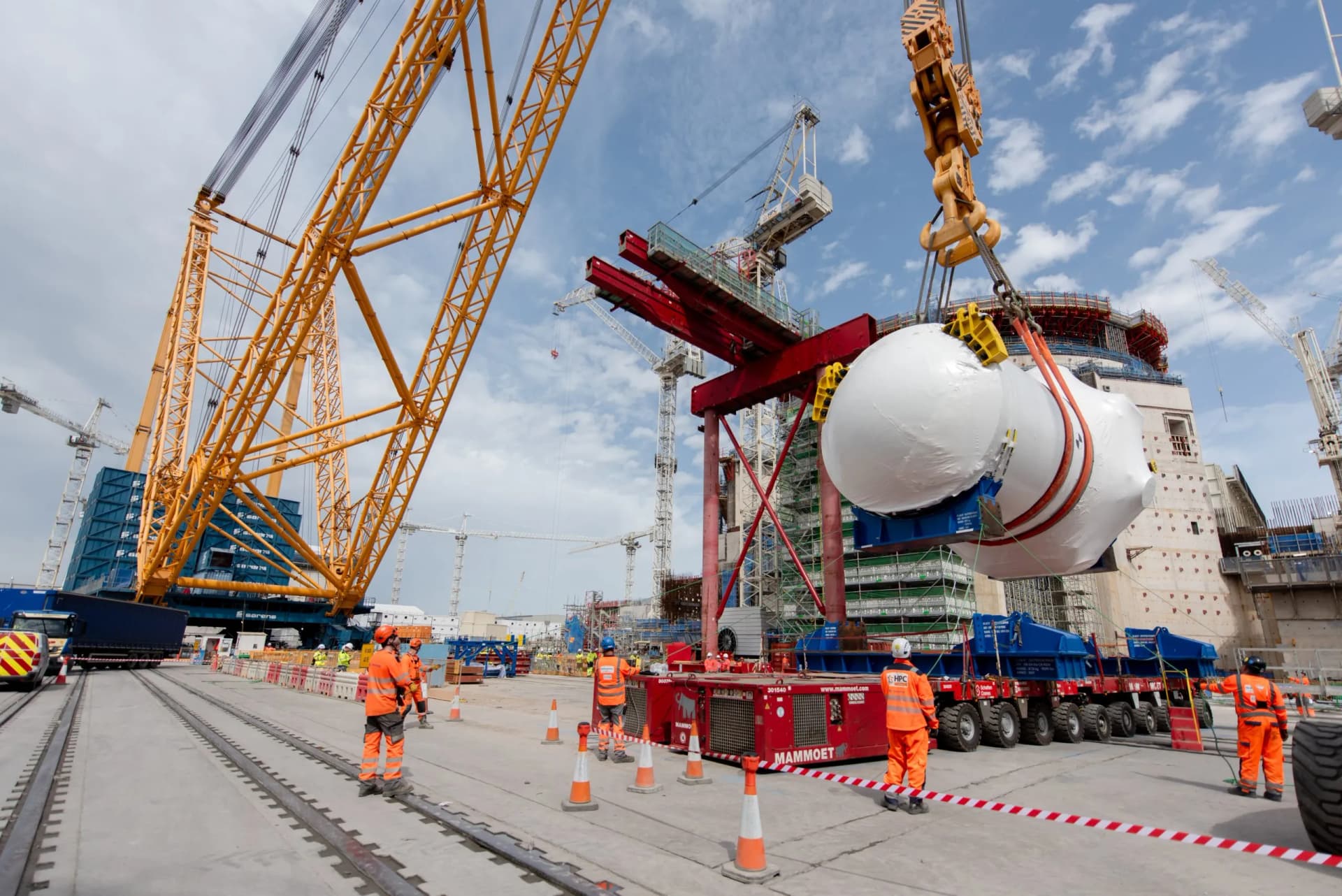
The lift took two days, beginning on Thursday morning and finishing on Friday afternoon, with Big Carl, the world’s largest crane, doing the heavy work outside the reactor building before the vessel was handed through the hatch and lowered into place. Once inside, the internal polar crane rotated the 13-metre-long vessel to vertical and set it onto its support ring. That tight fit matters because the reactor pressure vessel is the core enclosure of the plant, the thick steel shell that will hold the reactor core, coolant and internal hardware.
The sequence also showed how much Hinkley Point C has learned between its two units. Unit 1’s reactor vessel was moved using cranes, jacks and gantries, not Big Carl, and EDF has said the new method for Unit 2 saved space, time and money. That is the real story here: not just a dramatic lift, but a better one, with the second identical reactor benefiting from the first one’s lessons.
The vessel itself was completed late last year at Framatome’s Saint-Marcel plant in eastern France and delivered to Somerset in January after moving via Avonmouth Docks and Combwich Wharf. EDF has said the first Hinkley Point C reactor vessel, completed at Framatome’s Le Creusot facility in 2022, arrived in 2023 and is already installed and welded in place on Unit 1. EDF and NucNet have also described the Unit 1 installation as the first reactor vessel fitted at a British power station since Sizewell B in 1991.
Hinkley Point C is being built as a twin-EPR station, with each unit expected to power around 3 million homes, or about 6 million homes in total. The government approved the project in September 2016, and EDF’s early-2026 planning pointed to first power around the end of the decade, with one scenario targeting 2029. By February, EDF had lifted its cost estimate to £35 billion in 2015 prices and shifted expected first power to 2030. So the vessel lift was a major physical milestone, but it also underscored the broader picture: Unit 2 is moving forward, yet the overall build still points to a slower, costlier climb than the earliest schedules promised.
After the 500-tonne vessel cleared the hatch with millimetres to spare, Hinkley Point C had crossed from civil works into the part of the build where the reactor itself starts to take shape.
This article was produced by Prism’s automated news system from verified source data, official records, and press releases, then run through automated quality and moderation checks before publishing. The system is built and supervised by the people who set the standards it runs under. Read our full AI policy.
Did this article answer your question?