Realta Fusion unveils Hammir-DT, a 500 MW tandem mirror plant
Realta's Hammir-DT pairs a tandem mirror core with direct energy conversion, aiming for about 200 MWe from 500 MW of fusion power.
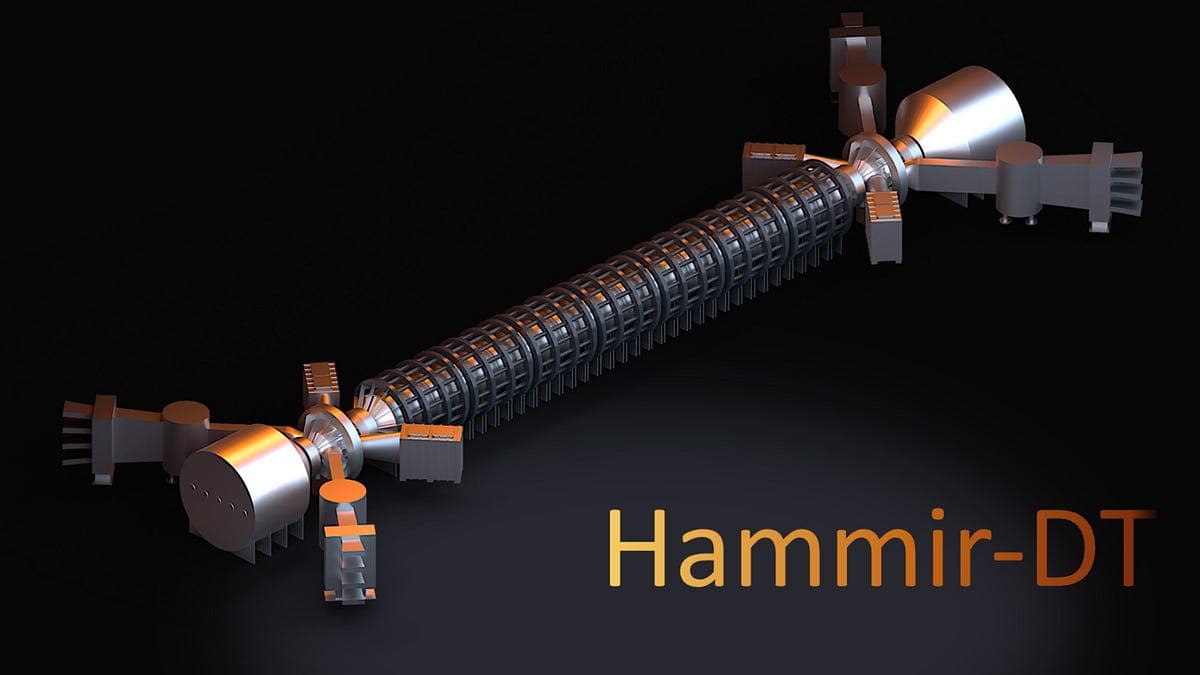
Realta Fusion used June 9 to put a very specific bet on the table: a deuterium-tritium tandem mirror called Hammir-DT, sized for about 500 MW of fusion power, roughly 538 MW of thermal output and around 200 MWe under the company’s assumptions. The pitch is not just more fusion. It is a machine built to run continuously, feed industrial heat loads and pull more value from charged products through direct energy conversion instead of leaning entirely on a conventional steam cycle.
That choice says a lot about Realta’s strategy. The company, based in Madison, Wisconsin, has been building its case around the idea that a modern mirror can do what the old mirror programs could not: use high-temperature superconducting magnets, active plasma stabilization and modern heating systems to make a once-disfavored confinement concept look like a practical power plant architecture. Realta is calling Hammir-DT the first modern axisymmetric tandem mirror fusion power plant design, and it is tying that claim to a target levelized cost of electricity below $50/MWh in production.
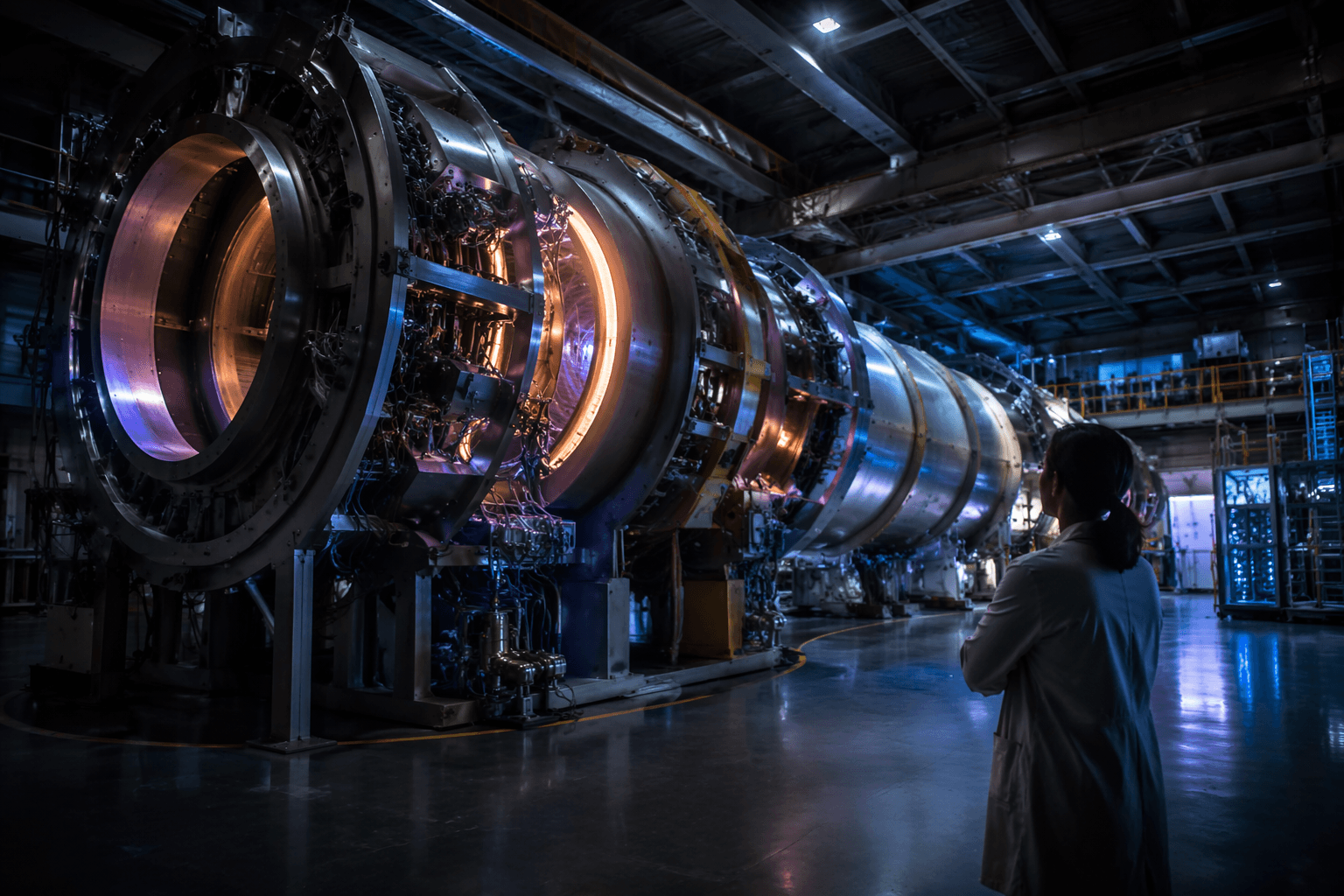
The fuel cycle matters just as much as the magnet geometry. Hammir-DT is explicitly a D-T plant, with lithium-6 in the breeder blanket to breed tritium, which means Realta is trying to address one of fusion’s messiest operational bottlenecks while still talking about net electricity. Direct energy conversion is the other key piece. If the machine can capture charged-particle energy directly, the company argues, it lowers the Q required to reach net-electric operation, which is exactly the sort of shortcut every commercial fusion concept wants and almost none can cleanly claim.
Realta’s earlier modeling points in the same direction. In August 2025, the company said a 50-meter-long center cell could achieve Q greater than 5 and potentially Q greater than 10 with a longer center cell. It also said its software toolkit was the first viable approach it had found for modeling drift-cyclotron loss-cone instability. That is not marketing fluff. That is the sort of hard plasma-physics problem a tandem mirror has to beat before anyone can seriously talk about steel, turbines and financing.
The broader backdrop is a field that has clearly moved beyond a tokamak-only mindset. Realta says it develops compact, scalable, modular fusion energy systems for industrial heat and power, operates a working experimental fusion machine at the University of Wisconsin-Madison’s Physical Sciences Laboratory, and is backed by Khosla Ventures and Future Ventures. It is also one of eight companies selected for the U.S. Department of Energy’s Fusion Energy Sciences Milestone Program, and the Wisconsin HTS Axisymmetric Mirror it sponsors had its first plasma in July 2024.
That is why Hammir-DT stands out. It is not another generic fusion promise, but an attempt to make a mirror machine answer the field’s ugliest questions at once: confinement, tritium breeding, power extraction and operating mode. If Realta can really keep those pieces together, the old mirror story stops being a cautionary tale and starts looking like an engineering path with teeth.
This article was produced by Prism’s automated news system from verified source data, official records, and press releases, then run through automated quality and moderation checks before publishing. The system is built and supervised by the people who set the standards it runs under. Read our full AI policy.
Did this article answer your question?