Avian Welfare Coalition expands shelter resources for parrots and captive birds
When a parrot lands in intake, this hub gives shelters quarantine, handling, and housing tools that can keep a crisis from turning into a loss.
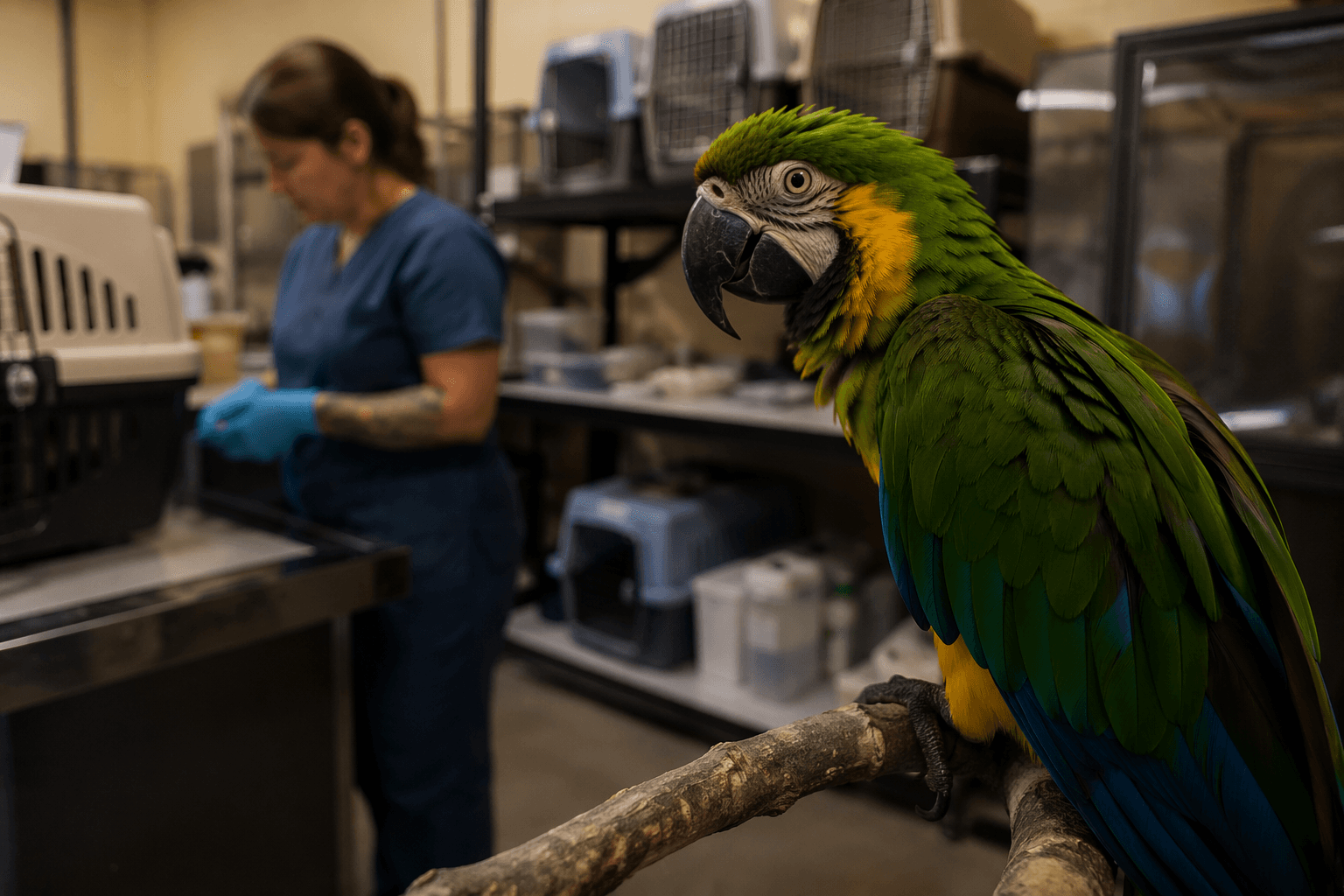
A parrot at intake is rarely a simple case. One bird may arrive after a move, another after a death in the family, another because behavior and noise finally overwhelmed a household that could not keep up with a long-lived, high-needs species. That is exactly where the Avian Welfare Coalition’s shelter resources matter: they turn a chaotic handoff into something closer to a workable care plan.
What shelters actually get from the coalition
The Avian Welfare Coalition says it was formed in 2000 and is dedicated to the ethical treatment of parrots and other captive birds. Its Resource Center was launched as the first website devoted to the concerns of captive exotic birds exploited by the pet trade, and the shelter outreach side is built for the real jobs that come with bird intake, quarantine, and placement. The coalition says shelters have four exclusive resources for caring for exotic birds, which is a useful clue about how specialized this work really is.
That specialization matters because parrots are not scaled-up dogs or cats. A shelter that treats them that way can miss the basics fast: a bird that is stressed by a too-open kennel front, a bird that needs species-appropriate housing rather than improvised perch-and-cage guesswork, or a bird that must be handled by staff who know restraint is a skill, not a grab. AWC’s shelter pages point staff toward training in handling and restraint, basic physical examinations, and housing that fits the way exotic birds actually live.
Why quarantine is the first pressure point
If there is one place where bird intake gets ugly, it is quarantine. AWC specifically flags quarantine as one of the hardest tasks shelters face, and that tracks with what anyone who has tried to set up an avian intake room already knows: space is tight, equipment is specialized, and incoming birds often arrive with unknown histories. The coalition also notes that many shelters cannot easily dedicate room and resources to effective quarantine, which is where mistakes turn expensive and dangerous.
That is why the shelter resource center is so practical. It is not trying to romanticize rescue work. It is trying to help staff build the knowledge and skills needed to care for and place exotic birds responsibly, from the first isolation period through the move into foster, sanctuary, or adoption. For a bird that arrives frightened, under-socialized, or medically uncertain, that sequence is what protects both the bird and the people handling it.
The training piece is not optional
AWC has paired its outreach materials with an online avian wellness webinar series created with the Global Federation of Animal Sanctuaries. The point is straightforward: animal care professionals need training that speaks bird, not generic shelter language. A parrot that is defensive at intake, reactive during restraint, or difficult to examine is not being difficult for the sake of it. It is showing up like a parrot in an environment that may already be unfamiliar, loud, and stressful.
The coalition’s shelter pages focus on exactly the parts of bird care that can be hard to learn on the fly. Handling and restraint need technique. Basic physical exams need avian-specific confidence. Housing needs to reflect species needs, not just available square footage. For rescuers and shelter staff, that combination can be the difference between a safe temporary stay and a transfer that ends in injury, escape, or a bird being placed before it is ready.
Why owner surrender keeps feeding the pipeline
The shelter side exists because parrots keep entering the system for reasons that are painfully predictable. Housing changes push people out of bird keeping. Death in the family can leave a bird without a home plan. Behavior conflict can break the bond between bird and owner. And the species itself creates a pressure many people underestimate: parrots often outlive the circumstances that brought them home in the first place.
That is why AWC’s model helps both ends of the rescue pipeline. It gives receiving organizations a better framework for intake and placement, and it improves the odds that a bird in crisis is treated with the specialized behavioral and medical care it needs. In practical terms, that means fewer improvised decisions and more birds moving through a system that understands what a parrot actually is.
The welfare standards finally have more bite
The broader regulatory backdrop matters too. USDA bird welfare standards under the Animal Welfare Act became effective on March 23, 2023, and applied to current licensees and registrants starting August 21, 2023. Those rules require bird housing facilities to be structurally sound, kept in good repair, and secure enough to contain birds, including with double-door systems or equivalent escape-prevention measures.
That is not paperwork trivia. For shelters, sanctuaries, and rescue groups, those standards set a baseline for what a bird facility should look like when birds are arriving, moving, and being housed under stress. They also reflect the reality that bird care has long been under-discussed compared with other companion species, even though parrots remain widely kept in captivity.
A longer fight behind the resource hub
AWC’s current shelter work sits inside a much longer campaign. The organization says it was part of litigation that led to a June 2020 court order requiring USDA bird rulemaking. That history helps explain why the coalition treats shelter education, welfare advocacy, and rulemaking as part of the same job. It also explains why the site reads less like a static information page and more like a field manual for people who actually have birds in hand.
The need is still there because parrots remain a comparatively under-researched captive species. In a recent Delphi study, parrot welfare experts and sector professionals identified 28 welfare issues, which is a blunt reminder that this is not a solved field. The shelter resources, webinars, and care materials are doing what the formal system still struggles to do consistently: translate welfare knowledge into daily decisions at intake, during quarantine, and at placement.
When a bird walks, flies, or gets carried through shelter doors after a household rupture, the problem is never just where to put the cage. The coalition’s real value is that it gives staff a way to answer the harder question first: how do you keep this parrot safe long enough to give it a real next chance?
This article was produced by Prism’s automated news system from verified source data, official records, and press releases, then run through automated quality and moderation checks before publishing. The system is built and supervised by the people who set the standards it runs under. Read our full AI policy.
Know something we missed? Have a correction or additional information?
Submit a Tip