Blue-fronted lorikeet photographed again on Indonesia’s Buru Island
A lorikeet known mostly from museum skins turned up again on Buru Island, and its first sound recordings in 12 years sharpened the case for protecting the mountain forests.
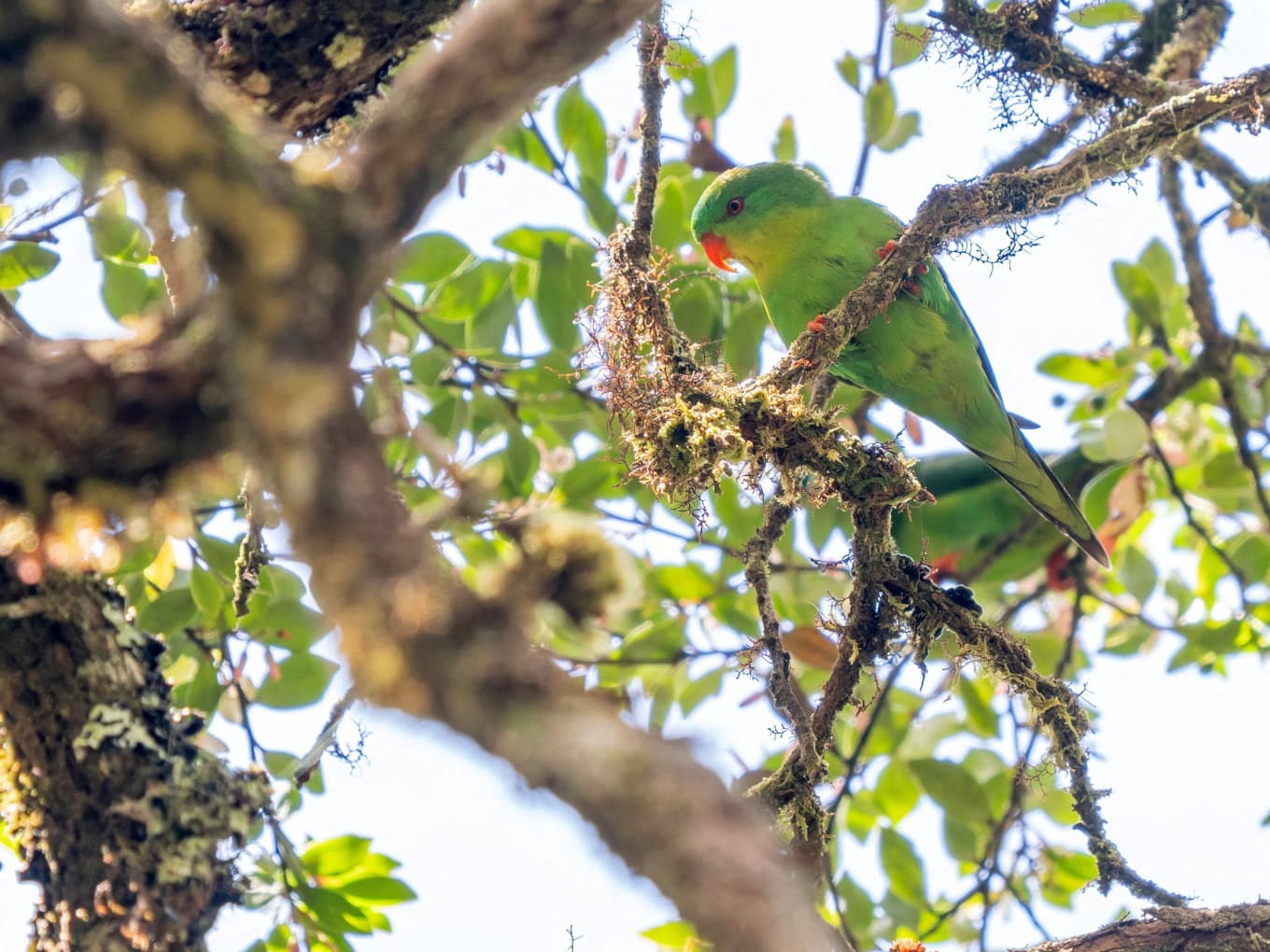
A blue-fronted lorikeet that had drifted into the category of near-myth finally showed up again on Buru Island, and the sighting came with something even rarer: the first sound recordings of its high-pitched calls in 12 years. For a small endemic parrot that had been known largely from a handful of museum specimens and a 2014 photograph, the April expedition delivered proof that the bird is still hanging on in Indonesia’s mountains.
The birds were seen during a 14-day trek in April on the remote slopes of Mount Kapalatmada, where local climbers had mapped a new route into the highlands and opened access to Buru’s highest peak. The terrain was punishing, with sharp limestone, steep slopes and limited water, but that same difficulty helps explain why the lorikeet escaped notice for so long. The team photographed the species for the first time since 2014 and recorded at least nine birds, a count that matters because each verified individual helps pin down where the species still survives.
BirdLife International says the blue-fronted lorikeet is endemic to Buru, in Maluku province, and that it was first described from seven specimens collected at 850 to 1,000 meters by L. J. Toxopeus. He was the only collector among at least 24 who visited Buru in the 20th century to find it. The species was photographed again in November 2014 at about 1,300 meters, but until this year there had been no new observations. Search for Lost Birds had already flagged it as lost in 2024, a reflection of how thin the paper trail had become.
That renewed evidence also changes the conservation conversation. BirdLife now lists the species as Data Deficient on the 2024 IUCN Red List assessment, while the earlier 2017 assessment, based on 2016 data, classified it as Critically Endangered because the bird was so rarely identified and its forest habitat was shrinking in extent and quality. BirdLife says the new records suggest it may persist in Buru’s upper montane forests, but that is still a narrow and vulnerable refuge on an island that had about 220,000 hectares of natural forest in 2020 and lost 390 hectares in 2024, according to Global Forest Watch.

For parrot people, the appeal is obvious: a small, bright green bird with an orange bill, orange legs and a pale blue forecrown is back on the map. The harder truth is that the photograph only matters if the mountain habitat survives long enough for the species to keep calling from it.
This article was produced by Prism’s automated news system from verified source data, official records, and press releases, then run through automated quality and moderation checks before publishing. The system is built and supervised by the people who set the standards it runs under. Read our full AI policy.
Know something we missed? Have a correction or additional information?
Submit a Tip