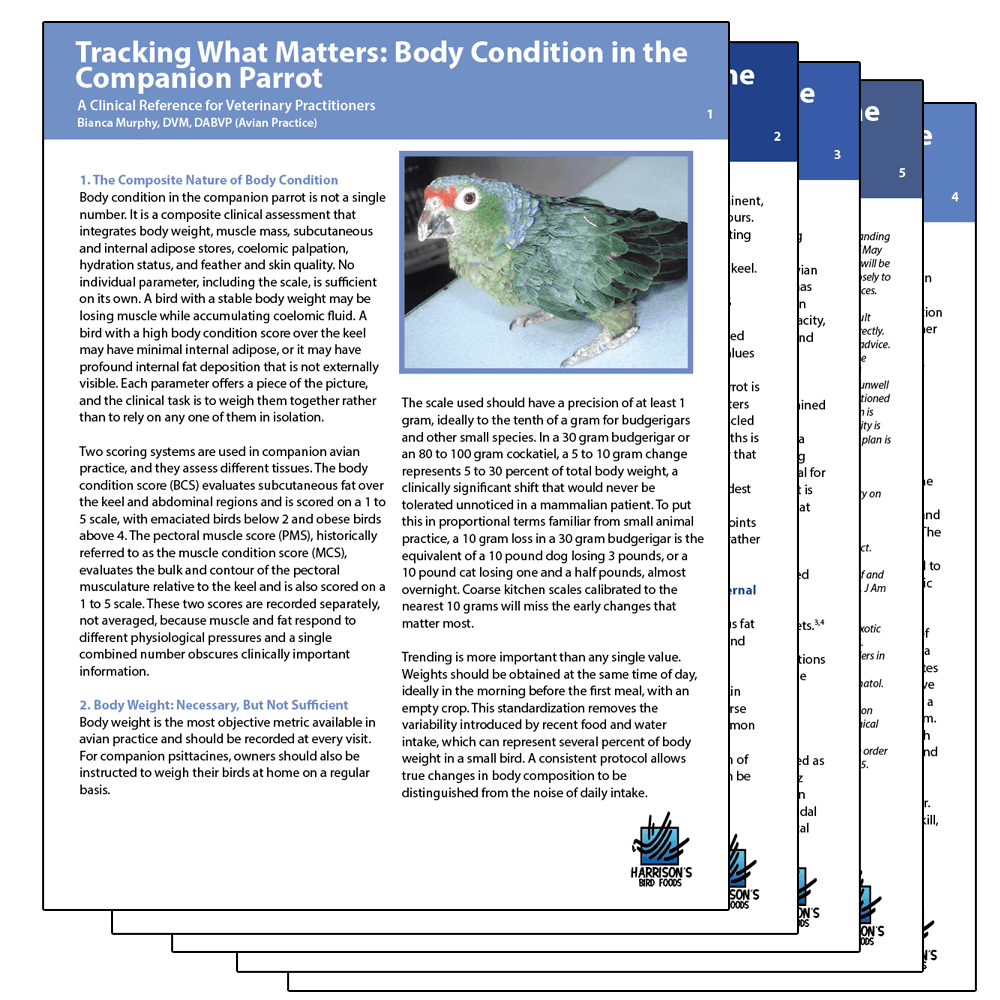
Harrison’s Bird Foods explains why parrot body condition is more than weight
A parrot can keep the same scale weight and still be getting weaker or fatter in all the wrong places. Harrison’s says the keel, pectoral muscles, and weekly trends tell the real story.
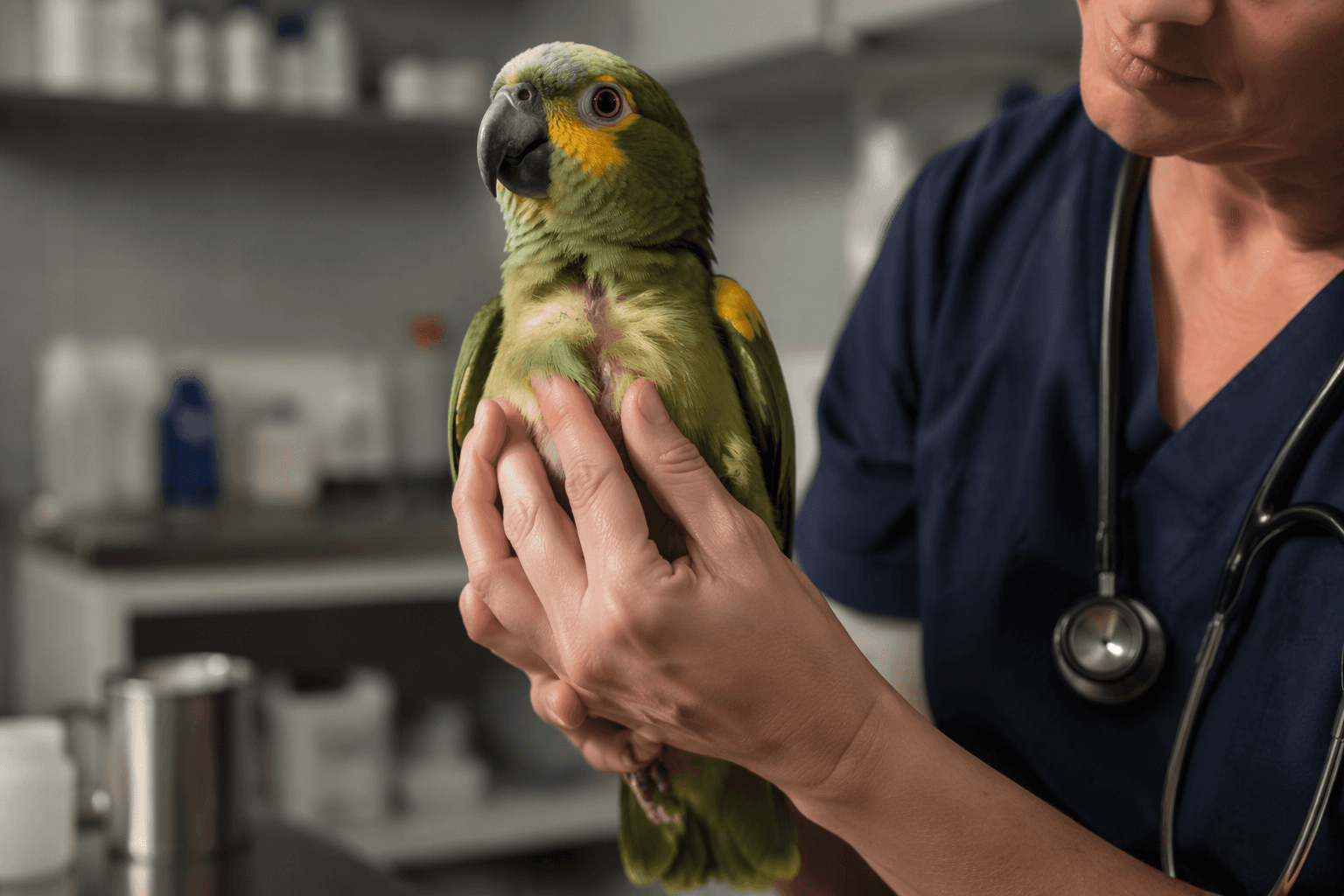
A parrot can sit on the same gram count from one weigh-in to the next while losing pectoral muscle, packing on internal fat, or shifting fluid in ways you will never catch by glancing at the scale alone. In parrots, body condition is a clinical picture, not a single number.
Why the scale only tells part of the story
Birds are built to hide weakness, and pet birds often show no obvious signs until they have already been sick for days or even weeks. That means a weight that looks “stable” can hide a lot of trouble underneath it. A bird can be holding the same number while muscle mass shrinks, fat stores shift, or hydration changes in ways that are invisible to the casual eye.
Harrison’s Bird Foods defines body condition as a composite assessment, not a one-track readout, combining body weight, muscle mass, fat stores, coelomic palpation, hydration status, and feather and skin quality.
What vets are actually checking
In the exam room, avian clinicians are not just looking at a bird and guessing. In pet birds, body condition can be determined by palpating the pectoral muscles. Merck Veterinary Manual uses a keel scoring system from 1 to 5, with 3 considered appropriate for most pet birds. That is the practical standard behind the hands-on exam: feel the bird, assess the keel, and judge whether the pectoral contour matches what a healthy bird should carry.
Harrison’s separates what gets measured into two different scores. The Body Condition Score, or BCS, evaluates subcutaneous fat over the keel and abdominal regions. The Pectoral Muscle Score, often abbreviated PMS and historically called muscle condition score or MCS, evaluates the bulk and contour of the pectoral musculature itself. On the Harrison’s scale, emaciated birds fall below 2 and obese birds rise above 4.
Fat and muscle do not react to disease, diet, age, and activity in the same way, so collapsing them into one combined score hides information that an avian vet actually needs. A bird can look acceptable in one category and still be sliding in the other. Harrison’s cites newer literature, including Martinez et al., that uses pectoral muscle score as a more precise label for what is being felt.
How to monitor a bird at home without fooling yourself
The home side of this is less glamorous, but it is where problems often show up first. The Association of Avian Veterinarians recommends weighing birds weekly with an electronic gram scale and treats a weight change of roughly 10 percent as a veterinary red flag. That kind of threshold matters because very small birds can lose or gain only a few grams before the change becomes clinically important.
Timing matters too. Harrison’s advises weighing at the same time of day and before the first meal, so the crop does not distort the trend. Feeding can make a bird’s weight bounce around enough to turn the trend line into noise, not progress. A coarse kitchen scale can miss early disease or nutritional decline entirely, especially in smaller parrots where even a tiny gram shift represents a meaningful chunk of body mass.
Focus on the pattern rather than every daily fluctuation. A bird that stays on the same number can still feel flatter over the keel, show poorer feather and skin quality, or seem less filled out through the breast.
When a “normal” weight is actually a warning sign
Obesity is where the trap gets especially ugly. In pet birds, obesity is commonly driven by high-fat diets, overfeeding, and lack of exercise. Merck Veterinary Manual defines an obese bird as one weighing 20 percent more than its ideal body weight. It also flags Galah cockatoos, macaws, Amazon parrots, and Quaker parrots as species especially likely to become obese.
VCA Animal Hospitals links that extra body fat to serious disease, including arteriosclerosis, atherosclerosis, and fatty liver disease. A bird can appear “about the same” to the eye while its health trajectory is moving in the wrong direction. The scale may not show drama, but fat distribution and tissue quality can still be shifting into a dangerous range.
The scale matters, but it is only one piece of a larger physical exam that includes pectoral feel, keel scoring, and the way the bird carries muscle and fat over time. The American Zoological Association Nutrition Advisory Group has long encouraged careful development and implementation of body condition scoring systems. These scales typically run from 1 to 5 or 1 to 9.
This article was produced by Prism’s automated news system from verified source data, official records, and press releases, then run through automated quality and moderation checks before publishing. The system is built and supervised by the people who set the standards it runs under. Read our full AI policy.
Did this article answer your question?