Heated perches offer parrots gentle warmth, and a choice to move away
A heated perch can soothe a chilly parrot, but only when it stays optional, well-placed, and part of a cage that already gives the bird real choices.
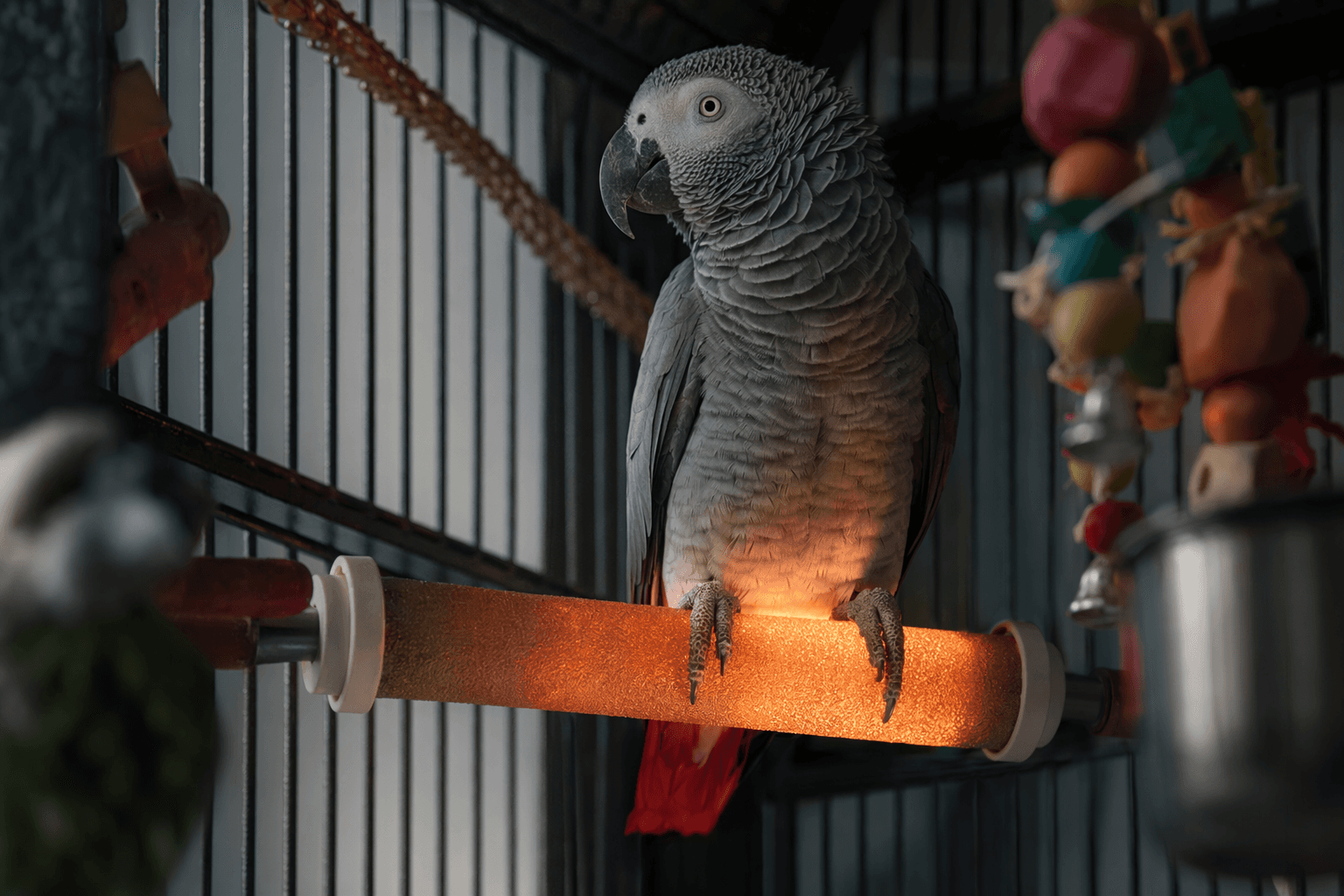
Heated perches work best when you treat them like a comfort zone, not a shortcut. The birds that benefit are usually the ones living in cool rooms, waking up to chilly mornings, or sitting in homes where the air from central heating or air conditioning has pulled the warmth and moisture out of the space.
What a heated perch actually does
A bird heated perch delivers gentle warmth through the feet, which matters because parrots do a lot of heat management through their exposed appendages. Recent avian thermoregulation research found that birds are less able to regulate heat loss through their bills than through their legs, and that leg surface temperature drops in cold conditions and rises in warm conditions. That makes the perch a localized support, not a blanket solution.
That distinction matters. A perch is useful when it gives the bird a warm place to stand, then lets the bird step off and cool down. The moment it becomes a forced condition, it stops being enrichment and starts being a problem.
How to tell whether your bird actually needs the extra warmth
The clearest sign is not drama, it is choice. If your parrot consistently heads to the heated perch in a cool room, settles there, and then moves away after it has warmed up, that is the behavior the perch is meant to support. If the bird ignores it completely, avoids it, or only touches it briefly before shifting away, that is useful information too.
Think of it as a temperature gradient, not a yes-or-no switch. Birds need room to choose privacy, rest, foraging, exercise, grooming, and a place to escape stressors, and that same logic applies to warmth. A heated perch should sit inside a cage setup that lets the bird self-regulate instead of trapping it in one temperature.
For many parrots, especially tropical species kept in houses that run cool, a heated perch can be most helpful on winter mornings or in drafty rooms. It can also be a smart support for older birds or birds with obvious comfort issues, but it should never be your only response to a bird that seems off. VCA notes that pet birds can hide illness for days to weeks before symptoms become obvious, so a sudden change in temperature preference deserves attention, not guesswork.
Which birds may benefit most
The birds most likely to appreciate a heated perch are the ones that feel the cold in the real world, not the ones people imagine as “supposed” to be hardy. A tropical parrot in a room that feels fine to you may still be working harder than you realize to hold body heat, especially if the air is dry and the cage sits near a vent or a chilly window.
That said, warmth is not a universal fix. If your bird already has a comfortable room temperature, a good cage layout, and normal behavior, a heated perch may be unnecessary. The best use case is specific: a bird that can choose warmth when it wants it, then leave it behind when it does not.
What to buy, and why the design matters
K&H Pet Products sells its Thermo-Perch in three sizes: small at 1 inch by 10.5 inches and 3.5 watts, medium at 1.25 inches by 13 inches and 5 watts, and large at 2 inches by 14.5 inches and 8 watts. The perch uses 12-volt electricity and is thermostatically controlled, which is exactly the sort of detail that separates a thoughtful product from a gimmick. K&H also says it should not be the only perch in the cage.
The shape matters too. K&H says the perch’s irregular shape is intended to reduce pressure sores and foot cramping, which is a practical point many owners overlook when they are focused only on warmth. A heated perch that is too smooth, too narrow, or too hot can create a new problem while trying to solve the old one.
When you compare products, look for these basics:
- Thermostatic control, so the perch is not running uncontrolled heat all day.
- A size that fits your bird’s foot grip and the cage setup.
- A design that does not force the bird to stand in one exact position.
- A clear statement that the perch is one part of the cage, not the entire solution.
The red flags that turn comfort into hazard
The first warning sign is placement. If the perch sits where the bird cannot move away from it easily, or if it is the only appealing perch in the cage, you have removed the choice that makes the whole idea safe. Warmth should be an option, not a trap.
The second warning sign is overheating. You are not trying to create a hot spot. You are trying to give the bird a mild, usable warm surface that helps take the edge off a cool environment. If the perch seems to encourage the bird to pant, gape, or keep shifting away, that is not comfort.
The third warning sign is avoidance behavior. A bird that refuses to use the perch may be telling you it is too warm, too awkward, or too poorly placed. Birds are excellent at voting with their feet, and this is one of the rare cases where that vote matters immediately.
The fourth is electrical complacency. K&H’s 12-volt design is part of the safety story, but any heated accessory still deserves careful inspection. The cage should not be set up so the perch becomes a chew target, and the AAV’s broader guidance on bird environments makes the larger point clearly: perches and cage elements should be checked for safety, not assumed safe because they came from a pet brand.
Why the perch is not the whole answer
A heated perch cannot replace stable room temperature, draft control, or a well-designed cage. VCA points out that indoor air from central heating and air conditioning is dry, and it recommends encouraging pet birds to bathe at least 3 to 4 times a week. That matters because dry air can make a bird feel less comfortable even when the room technically seems warm enough to you.
The Association of Avian Veterinarians says bird environments should include rest, foraging, exercise, grooming, socialization, and privacy to escape stressors. That is the standard a heated perch has to fit inside. If the cage is too sparse, too cramped, or too exposed, the perch is only papering over a husbandry problem.
Used well, a heated perch is a small, elegant tool. It gives a parrot gentle warmth through the feet, respects the bird’s ability to move away, and adds comfort without taking away control. Used badly, it becomes another overpromised gadget in a cage that still needs better basics.
This article was produced by Prism’s automated news system from verified source data, official records, and press releases, then run through automated quality and moderation checks before publishing. The system is built and supervised by the people who set the standards it runs under. Read our full AI policy.
Did this article answer your question?