New Zealand's Kākāpō Hatches Record 104 Chicks in 2026 Breeding Season
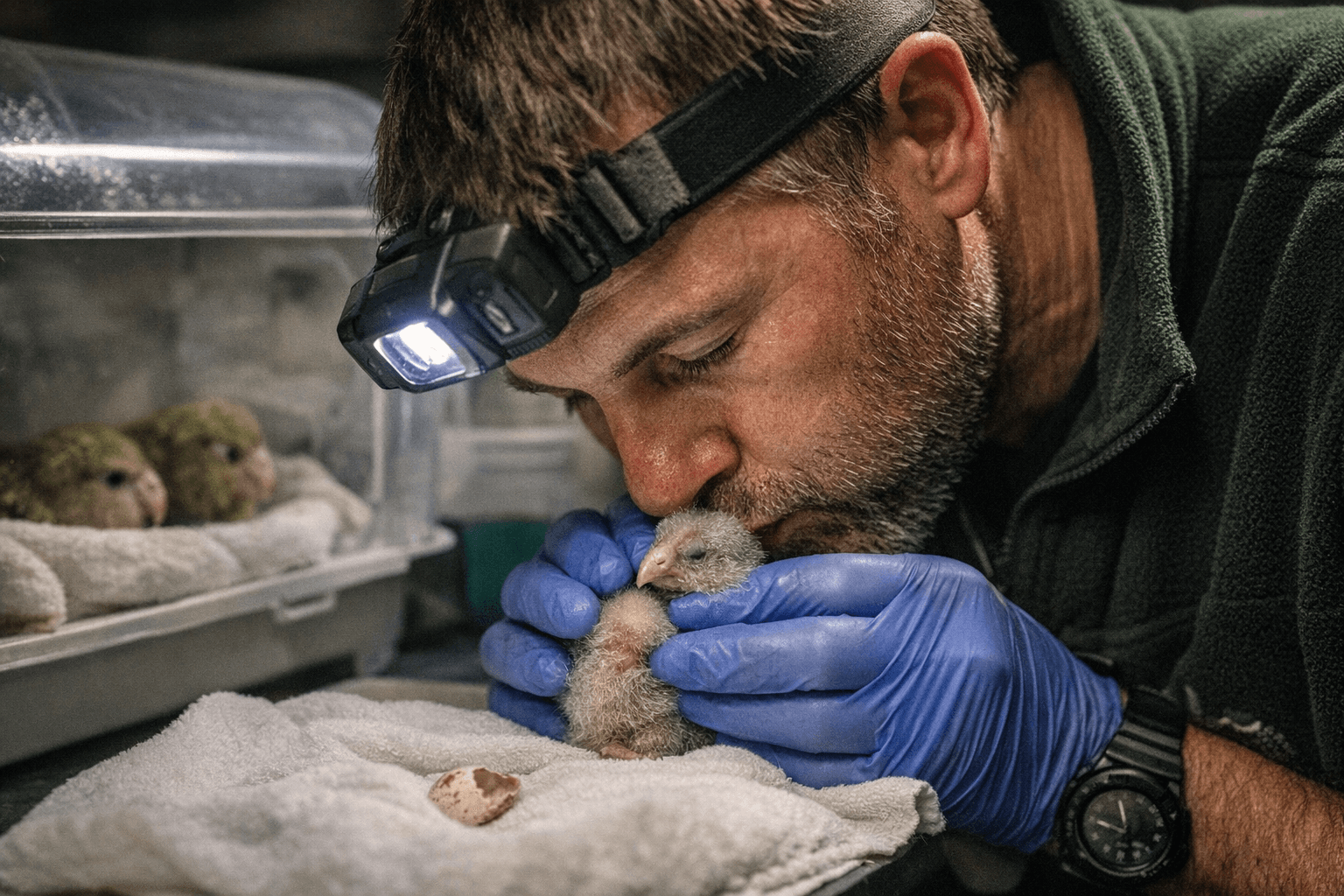
Auckland Zoo vet Adam Naylor gave mouth-to-mouth to a kākāpō chick this season. That bird is one of 104 hatched in 2026, shattering the previous record of 73.

When Auckland Zoo veterinarian Adam Naylor arrived at a nest on Whenua Hou and found a chick named Huhu-A3-2026 limp and an unhealthy shade of purple, his instincts cut through the shock. "My vet training kicked in, and I started doing some very tiny CPR," Naylor told the Kākāpō Files podcast. "I just blew gently into its mouth, to try and get some air into it and get it breathing again. And after a minute or so it suddenly took a breath." By the next day, Huhu-A3-2026 had bounced back. One chick saved at a nest on a predator-free island off the southern tip of New Zealand's South Island, as part of the most productive kākāpō breeding season ever recorded.
As of early April 2026, over 100 kākāpō chicks had hatched, touted as the biggest ever kākāpō breeding season. The count reached at least 104, shattering the previous record of 73, which was set in 2019. The adult population stands at just 235 individuals. For context, a species that numbered only 51 adults in the 1990s just added chicks at a pace it has never before managed in a single season.
Kākāpō only breed in years when the native rimu tree produces a heavy crop of fruits, which happens every two to four years. The last season before 2026 was 2022. This time, 78 females were nesting across the three predator-free kākāpō breeding islands, producing at least 140 fertile eggs before the count crossed 100.
What separated 2026 from previous rimu mast years was the density of human support layered on top of that natural trigger. DOC teams used remote monitoring technology to track nest activity around the clock, catching struggling chicks without disturbing mothers. Supplementary feeding gave breeding females the caloric reserves to sustain themselves and their clutches. Fostering and cross-rearing shuffled eggs between mothers to maximize overall survival: while the bird named Rakiura fostered another chick, Nora-A2-2026, Rakiura's own egg was being raised by various foster mothers. Beyond the nest swaps, Naylor also sutured a deep neck laceration on a separate chick during the season, the kind of precision field veterinary work that distinguishes intensive managed recovery from passive habitat protection.
Chick Rakiura-A2-2026 became a bit of a celebrity, having been the first egg members of the public watched laid live on the Kākāpō Cam feed, on January 25. Chicks are named after their mother, their clutch and egg number, and year of birth, a naming convention that reflects the program's meticulous record-keeping across every individual in the population. The data updates went public every Friday, the week's hatch tally written in marker on a Department of Conservation refrigerator and photographed.
The first chick of the season, Tīwhiri-A1-2026, hatched on Valentine's Day on Pukenui Anchor Island. The 100th chick followed in the week ending April 4. DOC Operations Manager for Kākāpō Recovery Deidre Vercoe had flagged in January that 2026 could be the biggest breeding season since the programme began 30 years ago. The chicks will not be counted as official population additions until they fledge, and post-fledging survival presents its own challenges. But for a species that spent decades hovering at the edge of extinction, 104 hatched and still counting represents something genuinely hard to manufacture in conservation: momentum built one nest visit, one tiny breath at a time.
This article was produced by Prism’s automated news system from verified source data, official records, and press releases, then run through automated quality and moderation checks before publishing. The system is built and supervised by the people who set the standards it runs under. Read our full AI policy.
Did this article answer your question?