Koreatown Pasta Bar Lapaba Earns MICHELIN Recognition for Italian-Korean Fusion
The MICHELIN Guide added Lapaba to its California selection on March 25, just 50 days after the Korean-Italian pasta bar opened in Koreatown at 6th and Western.
The MICHELIN Guide named Lapaba to its California selection on March 25, only 50 days after the Korean-Italian pasta bar opened at 6th and Western in Koreatown. The restaurant, whose name is a portmanteau of "La Pasta Bar," was one of six Los Angeles additions in a 12-restaurant California update and the one drawing the most attention from the pasta community.
The project assembled a prominent group of backers. Restaurateur Robert Kim, who also operates Koreatown neighbors Norikaya, Mama Lion and All'Antico Vinaio, owns the space, having secured the location in 2021 and spent years converting a long-abandoned building. Partners include Nancy Silverton and Joe and Tanya Bastianich.
Culinary direction falls to husband-and-wife chefs McKenna Lelah and Matthew Kim, who first crossed paths in 2014 working the line at Silverton's Osteria Mozza. Matthew Kim subsequently cooked under Grant Achatz and Dave Beran at Next in Chicago before joining Beran's acclaimed French bistro pasjoli as chef de cuisine. Lelah worked alongside Tim Hollingsworth. The two reunited to open Dialogue, which earned a MICHELIN Star, before taking on Lapaba.
The fusion approach here is more deliberate than the concept might suggest. "Korean food has an inherent sweetness to it, and that does not play well with Italian pasta," Matthew Kim noted during development, describing rounds of trial and error before landing on the right recipes. The radiatore paired with galbi jjim, for instance, went through multiple reformulations balancing soy sauce, gochujang and a beef braise before the kitchen found the right register.
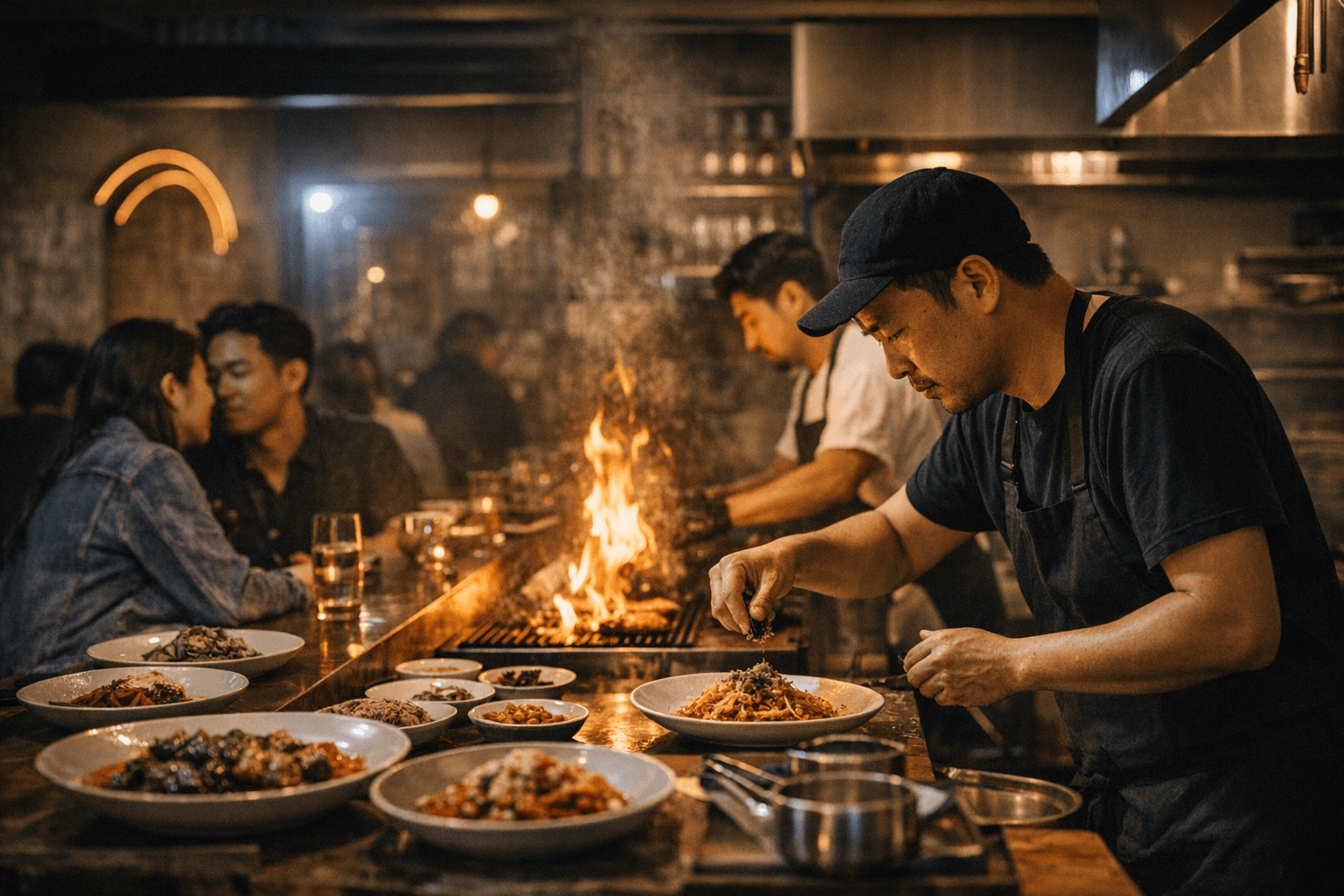
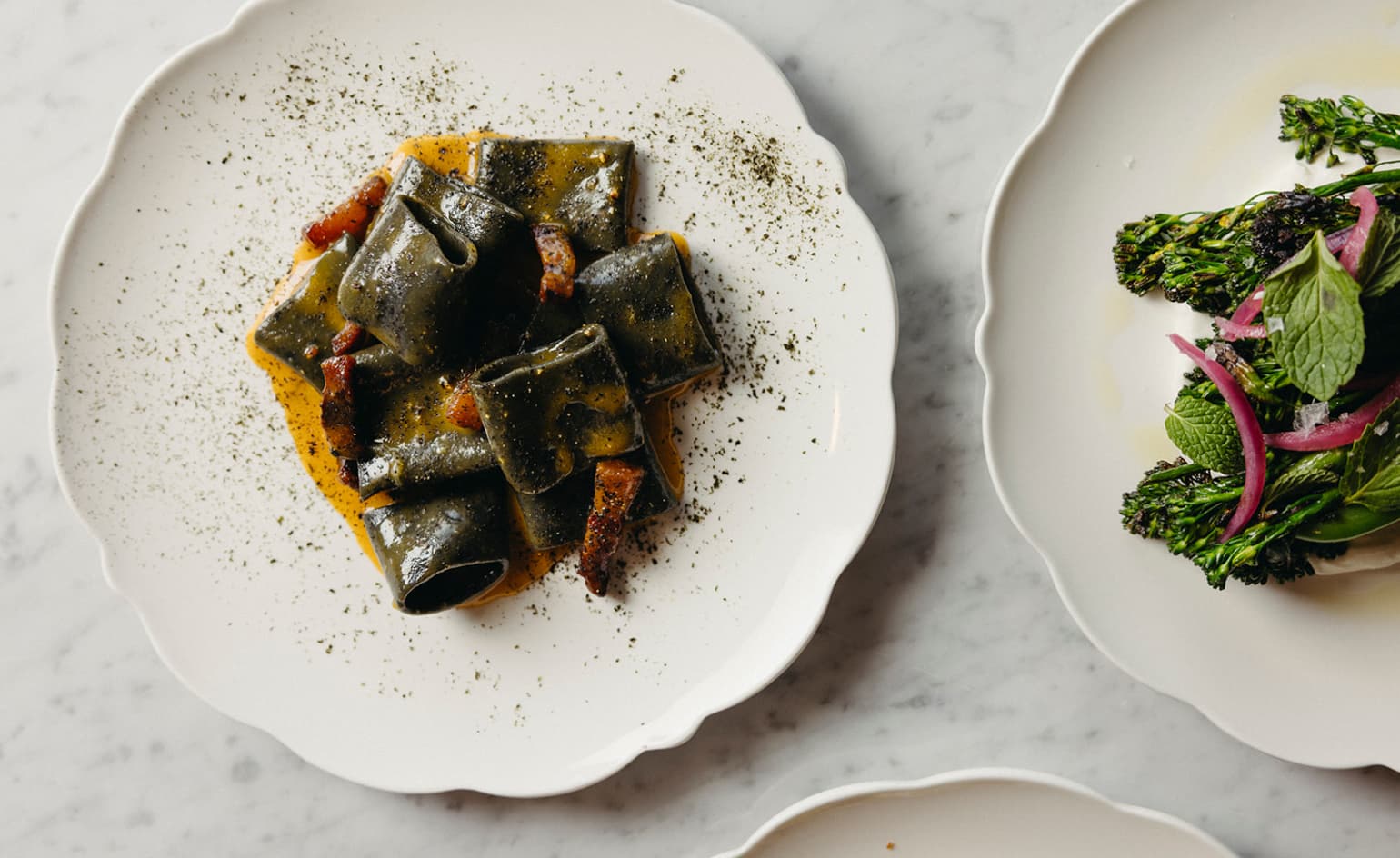
That discipline shows across the full menu. Tonnarelli arrives with clams, chorizo and braised kombu. A cacio e pepe dduk rewires the Roman staple through Korean rice cake. Bucatini amatriciana combines guanciale and jjajang with pecorino. Corn agnolotti and orecchiette with fennel pork sausage, Bloomsdale spinach and gochugaru round out the pasta lineup, with a suppli stuffed with Park's BBQ kimchi and a doenjang caesar worth ordering alongside. All pastas are made in house, production visible through an opening into the dedicated pasta room. The restaurant's room-spanning marble counter puts nearly every diner directly in front of the kitchen.
Portions run intentionally small, which is the right call for a menu this dense with decision points. Work through the cacio e pepe dduk first to calibrate how the kitchen handles heat and chew across both traditions, then move to the bulgogi meatballs in truffle tomato sauce with milk bread, where fermented sweetness and umami land together in a way that makes the Korean-Italian pairing feel inevitable rather than engineered. End with the BTS black truffle soft serve or the Tiramisu-Garu.
Lapaba joined five other LA additions in the March update: Corridor 109, Firstborn, Little Fish Melrose Hill, Lugya'h by Poncho's Tlayudas and Zira Uzbek Kitchen. For pasta specifically, a guide nod to a hybrid bar less than two months old signals that inspectors are weighing culinary identity and cross-cultural ambition alongside classical technique. When a team with Osteria Mozza and Dialogue credentials turns its attention to galbijjim radiatore, the inclusion was always a matter of when.
This article was produced by Prism’s automated news system from verified source data, official records, and press releases, then run through automated quality and moderation checks before publishing. The system is built and supervised by the people who set the standards it runs under. Read our full AI policy.
Did this article answer your question?