NYC's Seven Best Cacio e Pepe Spots, From Classic to Creative
Seven NYC spots, one Roman dish, and a neighborhood crawl that separates the cheese-clumpers from the silky emulsifiers — starting in the East Village and ending in Williamsburg.
The Cacio e Pepe Crawl: How to Score Every Bowl
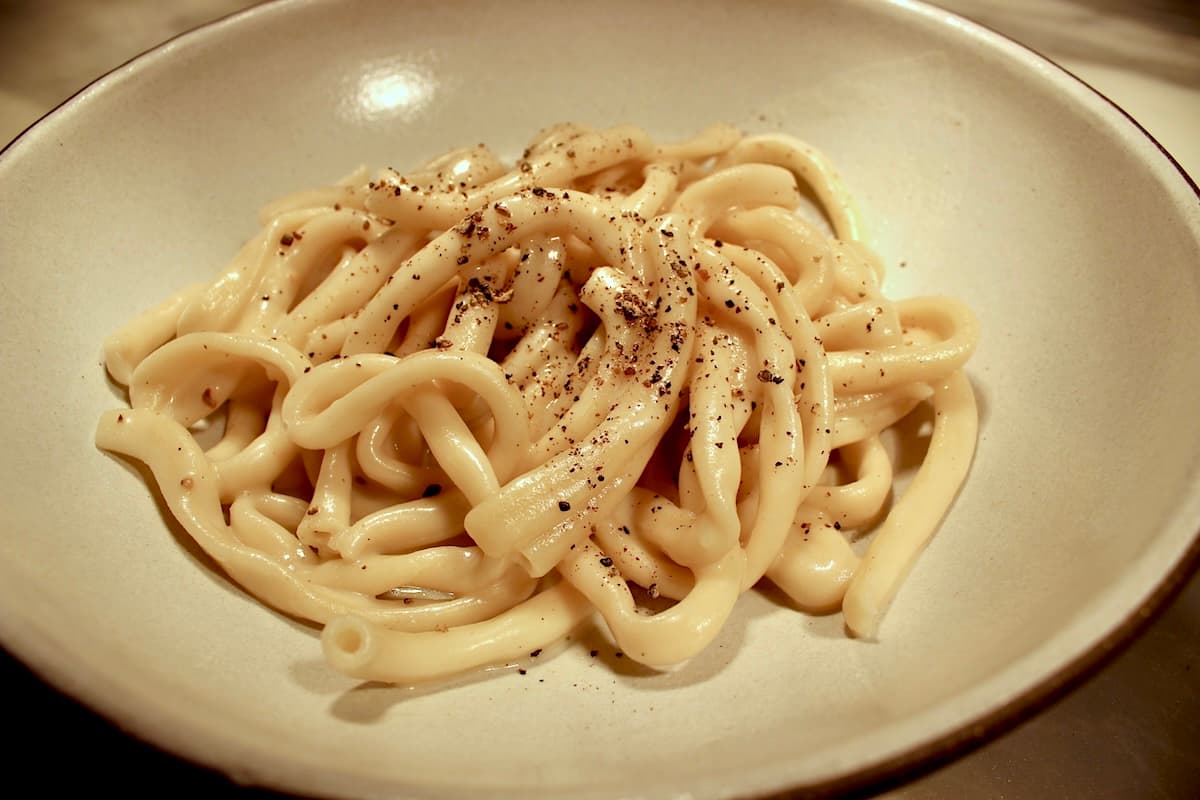
Three ingredients. Zero margin for error. Cacio e pepe is the dish that exposes every technical gap a kitchen has, and New York City's pasta scene has become the most contested arena outside Rome for who executes it best. Seven restaurants are worth your time and stomach lining, and they break cleanly across a spectrum from strict Roman orthodoxy to genuinely inventive riffs that still respect the emulsion. Before you eat, score each bowl on four criteria: pepper bloom (did the black pepper get toasted to release aroma before hitting the pasta?), cheese emulsification (silky and coating, or broken and grainy?), noodle choice (does the shape hold the sauce or fight it?), and price/value (is the portion worth the neighborhood markup?). Argue over your results. The internet demands it.
1. Cacio e Pepe, East Village (182 2nd Ave)
This is the most Roman address in the five boroughs, and it's not particularly close. Chef Salvatore Corea and partners Alessandro Peluso and Giusto Priola run the East Village institution named after the dish itself, where homemade pasta is brought to the table and finished tableside in a wheel of Pecorino Romano before a flourish of black pepper lands on top. New York Magazine called it a Critic's Pick, and it's the clearest benchmark for anyone who wants to argue "most Roman" in the group chat. For the price/value crawl, this is also one of the most accessible stops on the list: no rooftop markup, no omakase framing, just a trattoria that has been executing one dish better than almost anyone for years.
2. Via Carota, West Village
Co-chefs Jody Williams and Rita Sodi built Via Carota into one of the hardest tables to walk into in New York, and the cacio e pepe on tonarelli, a thick, squared-off egg noodle traditional to Roman home cooking, is a core reason why. The Infatuation called it "flawless" and recommended heading there early to put your name down before the line builds. The tonarelli scores near-perfect on noodle choice: enough surface texture to grip the emulsion without going heavy, and the pepper bloom here is aggressive in the best possible way. For the crawl, this is your West Village anchor and the stop most likely to generate a 45-minute wait that feels completely worth it.
3. Forsythia, Lower East Side (9 Stanton St)
Chef Jacob Siwak opened Forsythia in 2020, earned a Michelin Bib Gourmand, and built a Lower East Side Roman trattoria that has quietly become one of the most respected pasta rooms in the city. The cacio e pepe sits within a Roman Classics section priced at $39, but the dish that everyone is actually talking about is the fried cacio e pepe risotto supplì: a pillowy fried risotto ball made with buffalo mozzarella and Pecorino Romano that delivers the entire flavor profile of the pasta dish in a single crispy bite. It is the most inventive interpretation of cacio e pepe on the LES and the one stop on this crawl that earns full marks on both emulsification and creative execution simultaneously.
4. Fiaschetteria Pistoia, East Village / West Village
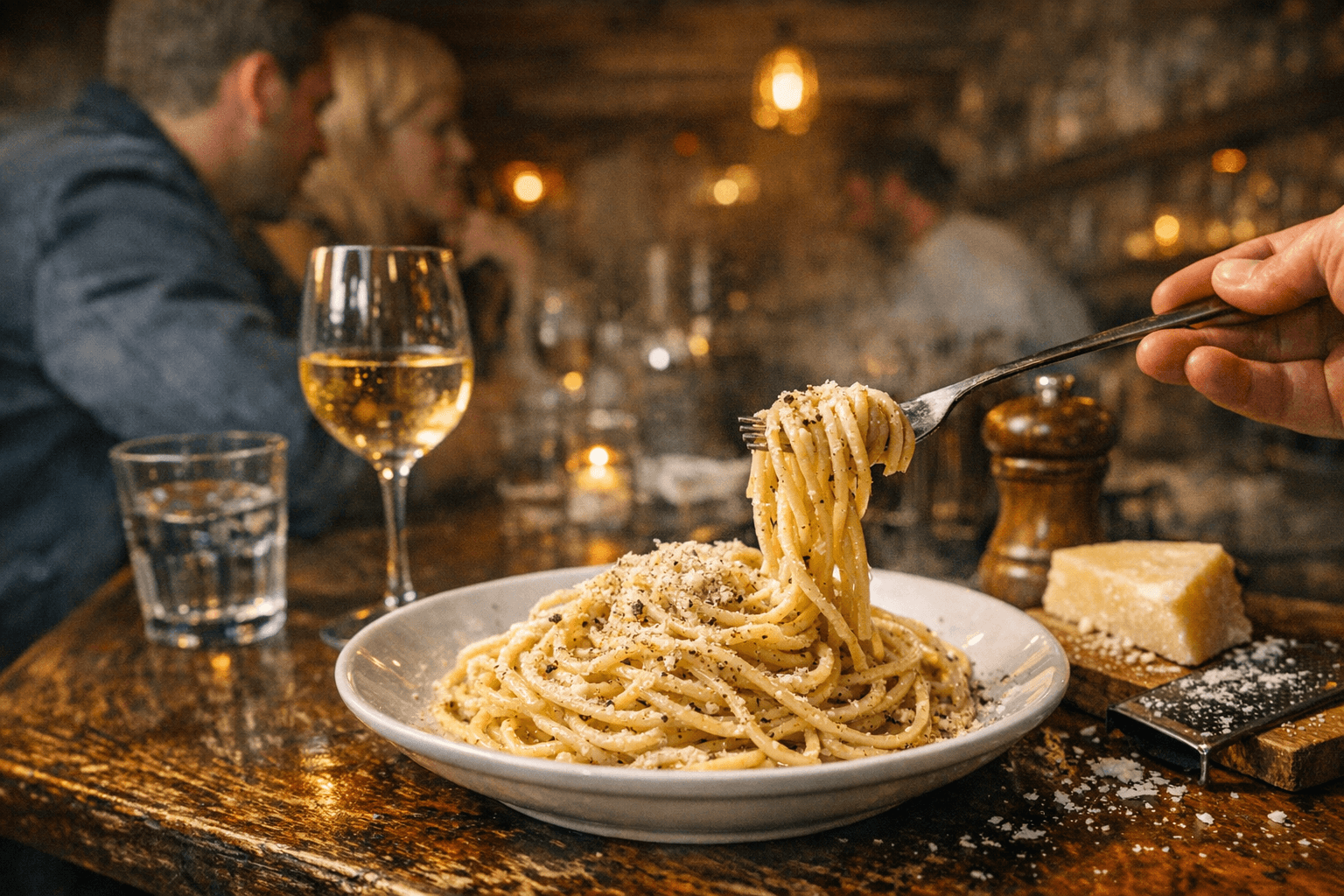
With locations on East 11th Street and Christopher Street, Fiaschetteria Pistoia runs one of the most consistent cacio e pepe programs in the city. The version here uses pici, a thick, hand-rolled Tuscan pasta with a ropelike chew that holds onto the sauce differently than spaghetti or tonnarelli, and the Infatuation's verdict was blunt: "when it comes to simple, authentic, near-perfect classics like cacio e pepe, you're gonna have a hard time finding better." The Beli app community rates it a 9.6. For the crawl, this is your best-value stop, the place to benchmark pici as a cacio e pepe vessel before arguing about it for the rest of the night.
5. Roscioli, Greenwich Village
The NYC outpost of the Rome institution brings serious credentials to Greenwich Village: Roscioli is the kind of name that pasta enthusiasts say with a certain reverence, and the New York location earns it. The dish here is the most direct pipeline to the source material, and the emulsification technique is the cleanest proof of how much pasta water temperature and starch content matter in getting the sauce to bind without breaking. If the group is debating "most Roman" as a category, Forsythia and the East Village namesake restaurant are the arguments; Roscioli is the counterpoint that says the Roman original still sets the standard.
6. L'Artusi, West Village (228 W 10th St)
L'Artusi keeps cacio e pepe on its dinner menu only, served on pici, and that deliberate scarcity is part of what makes the bowl feel like an event. The thick, chewy noodles capture the sauce in a way that rewards slow eating, and the restaurant's upscale West Village setting means the price/value score takes a hit compared to the stops earlier in the crawl, but the execution is precise enough to justify it. The dinner-only constraint also makes this the ideal final savory stop if you're routing the crawl through the West Village in the evening.
7. Lilia, Williamsburg
Chef Missy Robbins closes the crawl with the most deliberately unorthodox version on the list. Her mafaldini with pink peppercorns and Parmigiano Reggiano is the dish that launched a thousand arguments about what cacio e pepe is allowed to be: she swaps standard black pepper and Pecorino Romano for pink peppercorns and Parmigiano, adds butter, and uses mafaldini, a ruffled pasta with wavy edges that grabs the sauce differently than any other shape on this list. It scores lower on strict Roman orthodoxy and higher on everything else. Lilia is the crawl's final word: that a dish defined by three ingredients has more interpretive space than almost any other pasta in the canon, and that New York's best chefs are still finding new things to say inside it.
This article was produced by Prism’s automated news system from verified source data, official records, and press releases, then run through automated quality and moderation checks before publishing. The system is built and supervised by the people who set the standards it runs under. Read our full AI policy.
Did this article answer your question?