Stop Overcooking Pasta: Chef Techniques for Perfect Al Dente Results
Mushy pasta is almost always preventable — here's the exact chef logic that keeps every strand, tube, and shape snapping back with that perfect bite.
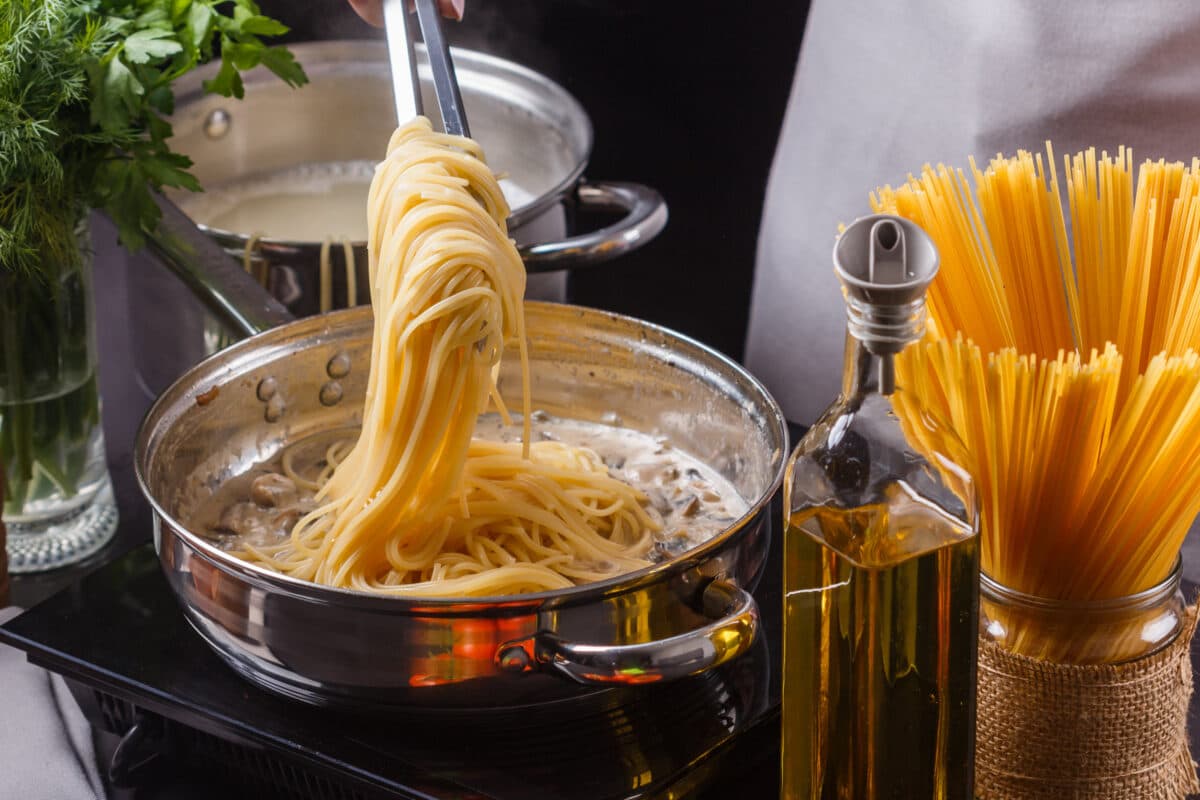
There's a specific kind of disappointment that hits when you drain a pot of pasta and realize it's gone too far. The strands have lost their resistance, the sauce won't cling properly, and no amount of finishing in the pan is going to save it. The frustrating part is that overcooking pasta is almost entirely avoidable once you understand the two or three moments in the process where things tend to go wrong.
Let's fix that.
Why pasta overcooks in the first place
Most home cooks overcook pasta for one of three reasons: they're trusting the package timing too literally, they're not accounting for carryover cooking, or they're not tasting as they go. Package instructions are written for a median result — they don't account for your specific pot size, your altitude, how vigorously your water is boiling, or whether you're finishing the pasta in a hot sauce. Treat that number as a starting point, not a finish line.
Carryover cooking is the killer that doesn't get enough attention. The moment you drain pasta, residual heat keeps working on it. If you're dumping it into a warm colander, letting it sit for thirty seconds while you plate everything, and then tossing it in a hot pan with sauce, you've added easily a minute of effective cooking time past the drain point. Factor that in.
The third issue, not tasting, is the one that's hardest to defend. You have to taste pasta as it cooks. There's no workaround.
What al dente actually means
"Al dente" translates literally to "to the tooth," and it describes a texture, not a timer reading. When you bite through a properly cooked piece of pasta, there should be a slight resistance at the center, a faint firmness that gives way cleanly without feeling chalky or raw. The cross-section of a strand at al dente will show a very thin, barely-visible white core. That core is your signal.
This matters beyond texture for its own sake. Pasta cooked to al dente has a lower glycemic impact than fully soft pasta because the starch granules haven't fully gelatinized. It also holds up better when you toss it with sauce in a hot pan, which is the correct way to finish almost every pasta dish.
The water situation
Use more water than you think you need and get it to a full, aggressive boil before the pasta goes in. A rolling boil, not a simmer. When pasta hits water that isn't hot enough, it sits in the pot absorbing liquid at a slower rate, which leads to an uneven cook: soft on the outside, still starchy at the core, with a narrow window between underdone and overdone.
Salt the water aggressively. A properly salted pasta pot should taste noticeably salty, close to mild seawater. This isn't about sodium content in the final dish; most of the salt stays in the water. What it does is season the pasta from the inside out as it absorbs liquid during cooking. Pasta cooked in under-salted water tastes flat regardless of how good your sauce is.
Don't add oil to the water. It coats the pasta surface and prevents sauce from adhering later.
Timing and the pull-early rule
Here's the core technique adjustment that changes everything: pull the pasta one to two minutes before the package says it's done, and finish it in the sauce.
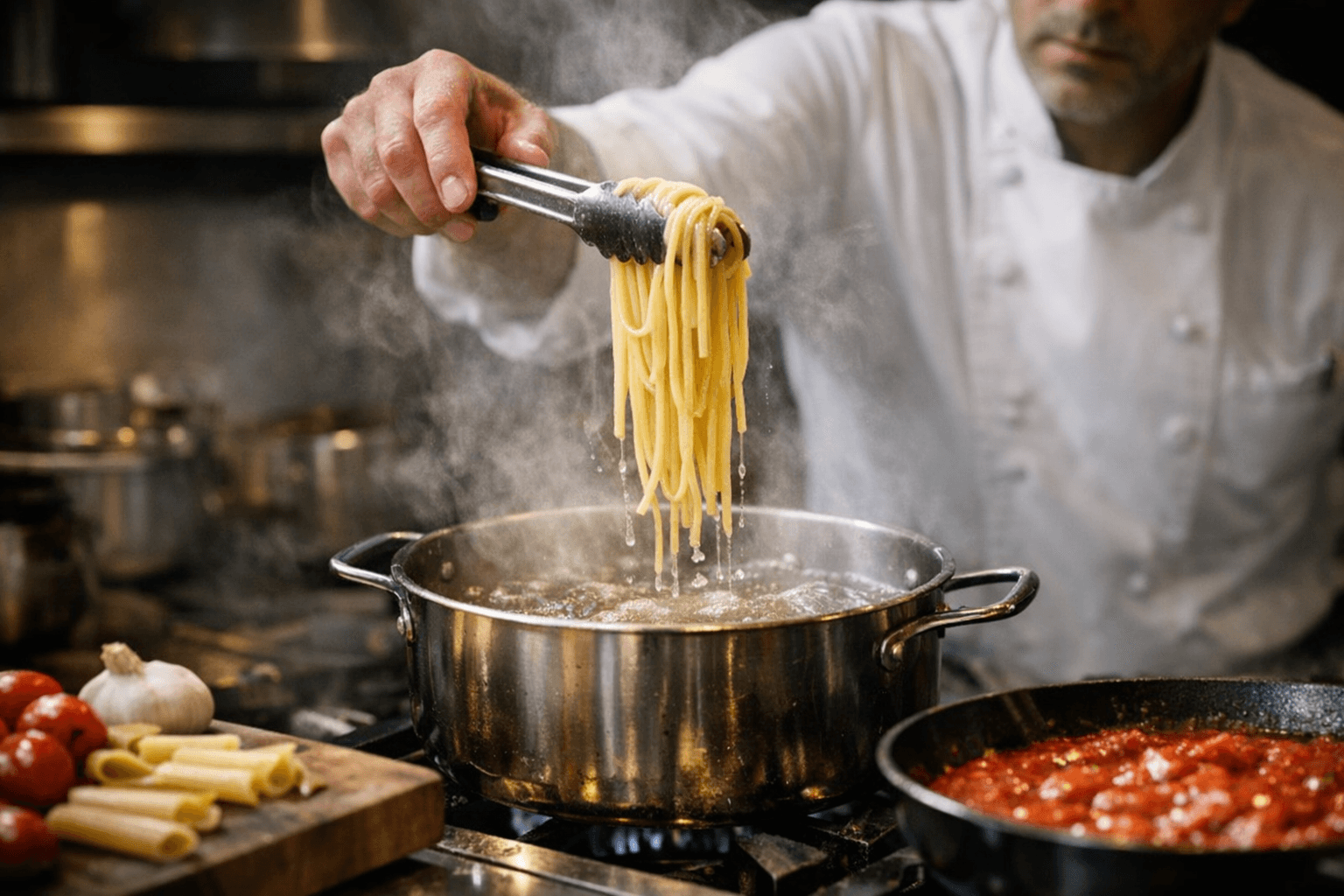
When you transfer under-cooked pasta directly into a pan with simmering sauce, it absorbs some of that sauce while completing its cook. The pasta finishes to al dente inside the sauce rather than in plain water, which means better flavor integration and a tighter bond between pasta and sauce. This is standard practice in professional kitchens and it's the single biggest upgrade most home cooks can make.
To execute this correctly:
1. Start tasting the pasta at about two-thirds of the package cook time.
2. When it's just past chalky but still has significant resistance, pull it with tongs directly into the sauce pan. Don't fully drain; bring some pasta water with it.
3. Toss over medium-high heat, adding splashes of the starchy pasta water as needed to build a loose, glossy sauce.
4. Pull off heat the moment the pasta reaches that clean, firm bite with no raw center.
Pasta water is not waste
The starchy, salty water left in your pot after cooking is one of the most useful ingredients in the dish. When you add it to a pan with pasta and sauce, the dissolved starch acts as an emulsifier, helping fat and water combine into a cohesive, silky coating. This is why restaurant pasta sauces look glossy and cling evenly while home versions often look greasy or thin.
Get in the habit of reserving at least a full cup before you drain. A ladle kept near the stove makes this automatic.
Shape-specific considerations
Not all pasta shapes behave the same way, and adjusting your technique by shape pays off. Long, thin pasta like spaghetti or linguine cooks quickly and goes from perfect to overdone in under a minute, so you need to be attentive and pull early. Thicker shapes like rigatoni or paccheri have more mass and a bit more tolerance, but they also need aggressive boiling to cook evenly all the way through.
Fresh pasta is a separate category entirely. It cooks in two to four minutes and can go from raw to soft in what feels like seconds. Taste early and often, and plan to pull it significantly earlier than you expect.
Stuffed pasta like tortellini or ravioli adds another variable: the filling needs to be hot through, which sometimes means the pasta exterior is slightly softer than ideal. The workaround is to keep the water at a gentler boil for stuffed shapes so the exterior doesn't overcook before the filling heats.
The tasting habit
If there's one thing to take from all of this, it's that perfect al dente pasta comes from repeated tasting, not from following instructions passively. Start tasting two minutes before the package says to stop. Taste every thirty seconds after that. Know what you're looking for: resistance, a clean bite, and that thin pale core that's almost gone but not quite.
The technique isn't complicated. The discipline is.
This article was produced by Prism’s automated news system from verified source data, official records, and press releases, then run through automated quality and moderation checks before publishing. The system is built and supervised by the people who set the standards it runs under. Read our full AI policy.
Did this article answer your question?