Pathfinder 2e shields need an action, not just a hand slot
A shield is not free AC in PF2e. You spend an action to Raise a Shield, then decide if Shield Block is worth eating the hit, the hardness, and the repairs.
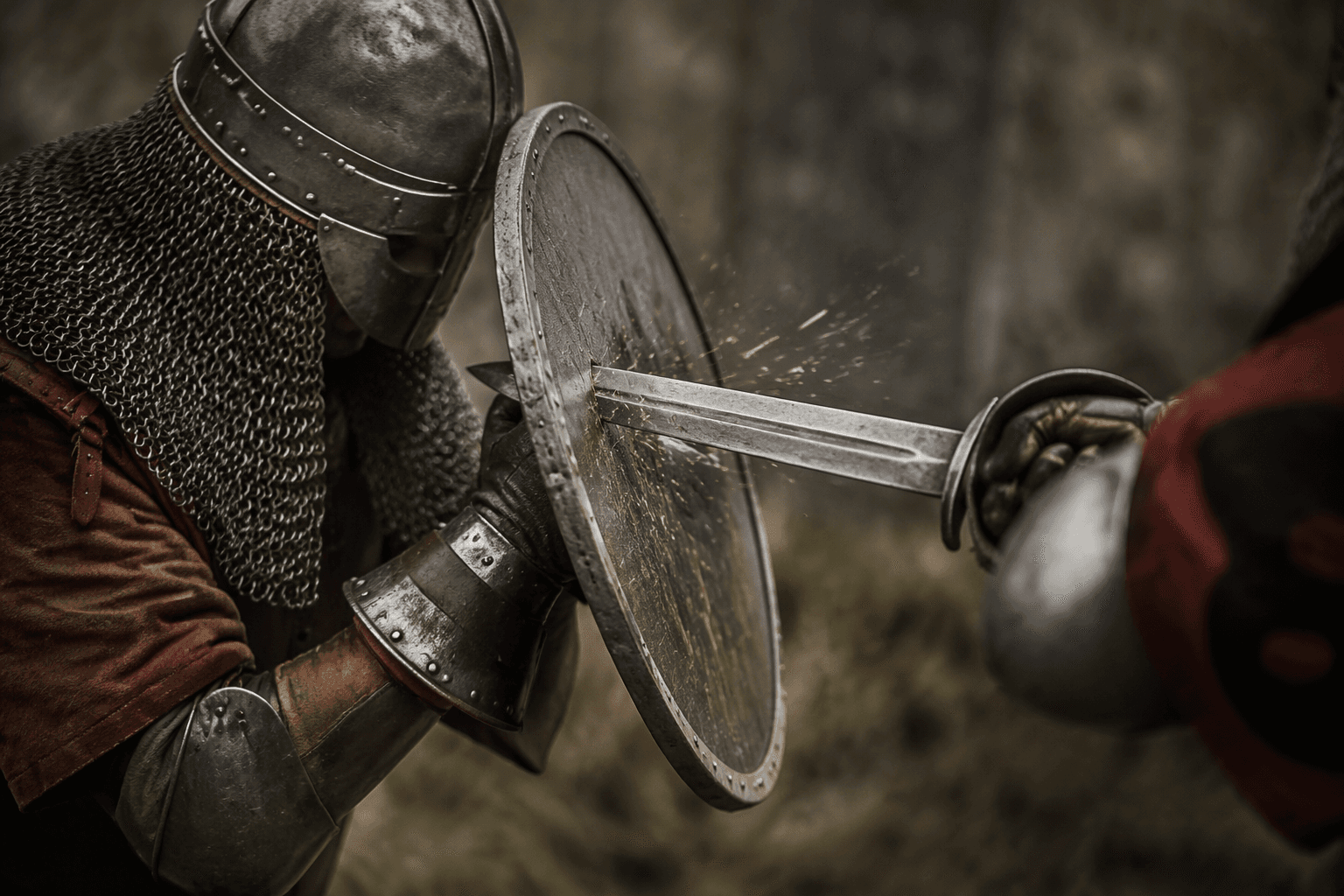
To get a shield’s AC bonus in Pathfinder 2e, you spend an action to Raise a Shield, and that bonus lasts only until the start of your next turn. A shield is not passive gear, and it is not “always on” just because you strapped it to your arm.
Raise the shield, or do not expect the bonus
Under the shield rules on Archives of Nethys, you must be wielding a shield in one hand to use it. That rule is why shields feel so different from a breastplate or a set of runes. The shield is part of your turn, which means it asks the same question every round: is this action better spent on defense, movement, a strike, a spell, or something else?
That changes the way you read the first round of combat. If you win initiative and know the ogre is about to close, Raise a Shield can be the right opener because it buys you protection before the hit lands. If you are already safe behind the fighter and want to press advantage, the action may be better spent elsewhere.
What the shield is actually made of
Pathfinder 2e shields are built around durability, not just bonuses. Their statistics are split into Hardness, Hit Points, and a Broken Threshold. Under the item-damage rules on Archives of Nethys, a shield becomes broken when its Hit Points are equal to or lower than its Broken Threshold, and it is destroyed when its Hit Points hit 0.
That is why the humble steel shield matters so much. Its Hardness 5 is a clean early-game benchmark, because it shows exactly how much punishment a shield can shave off before the damage starts going through to both you and the shield. A low-level enemy swing that would have been a real problem can become manageable if the shield soaks 5 points first. The catch is that every use pushes the shield closer to broken.
Shield Block is the real tradeoff
Shield Block is where the system becomes tactical instead of cosmetic. It is a reaction feat, usually gained through the Shield Block feat, and it only works while your shield is raised and you would take damage from a physical attack. The shield reduces that damage by its Hardness, and then you and the shield each take the remaining damage. That can break or destroy the shield.
A steel shield with Hardness 5 gives you a simple early-game example. If a hit lands for 14 damage, Shield Block can knock 5 off the top, leaving 9 to split between you and the shield. That is a very different outcome from taking the whole hit on your body, but it is not a magic erase button either. Frontliners feel this most sharply, especially champions and other characters who expect to stand in the enemy’s face for multiple rounds and need a way to turn one brutal hit into a survivable one.
The practical question is not “should I always Shield Block?” It is “is this hit worth spending my shield’s life to blunt?” If you are already near the broken threshold, the answer changes fast.
Pick the shield for the job, not the biggest number
The shield ecosystem in Pathfinder 2e is bigger than the basic steel shield, and the game expects you to think in terms of role. Bucklers suit characters who want their off-hand available, so they are a natural fit for weapon users who still want some defensive insurance. Standard shields, including steel shields, are the baseline for steady protection and the easiest way to learn how Raise a Shield and Shield Block interact.
Heavier and specialty options support more specific builds. Tower shields push hard toward defense, while shield runes, precious material shields, and shield augmentations or enhancements let the equipment scale into more specialized territory. How It’s Played published a Remastered shield guide on February 1, 2025, with segments on raising shields, Shield Block, damaging shields, the broken condition, repairing shields, bucklers, tower shields, shield runes, precious material shields, and shield augmentations and enhancements.
Broken shields are part of the system, not an edge case
Once you start using shields correctly, repair and attrition become part of the routine. Damaged shields, the broken condition, and repairing shields matter as soon as you start blocking real hits. A shield is a resource that can be worn down, broken, and eventually destroyed if you spend it carelessly.
That also explains why long-running Paizo forum threads keep circling the same questions: how shields work, whether a broken shield can still be raised, and how much defensive value a shield really provides.
This article was produced by Prism’s automated news system from verified source data, official records, and press releases, then run through automated quality and moderation checks before publishing. The system is built and supervised by the people who set the standards it runs under. Read our full AI policy.
Did this article answer your question?