Pathfinder downtime turns between adventures into work, research, and growth
Pathfinder downtime is where the real campaign work happens: earn gold, craft gear, retrain feats, and turn dead time into momentum between sessions.
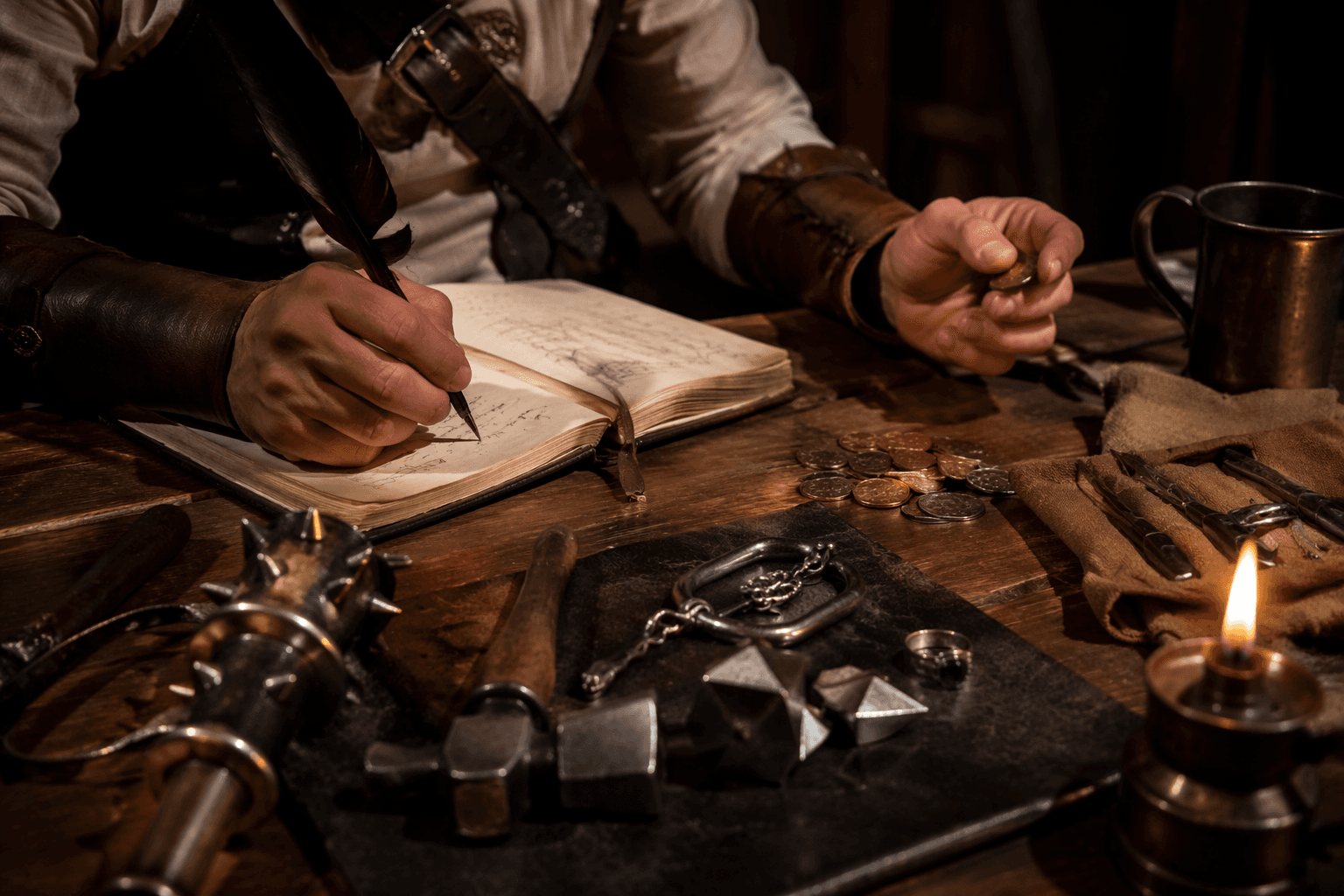
Between dungeon rooms, Pathfinder gives you something better than a handwave: a real system for work, research, training, and long-term projects. Downtime is the counterpart to adventuring, and it can represent days, weeks, months, or even years in game time without eating much of your actual table time. Used well, it keeps the party moving forward instead of leaving everyone stuck in bookkeeping.
Downtime is where the campaign breathes
The best thing about Pathfinder downtime is that it does not treat off-days as empty space. It is built for low-risk activities that still change what happens next, whether that means making money, fixing gear, digging up a formula, or reshaping a build. That matters because it turns the stretch between adventures into part of the game loop instead of a pause button.
I like downtime most when it changes the next hard choice at the table. If your fighter spent a week retraining, or your alchemist spent three days crafting ammunition in batches, or your party burned a block of free time on extra income, those decisions show up when the next dungeon opens. Pathfinder’s own framing pushes in that direction: the GM is supposed to use downtime to keep the whole group engaged, not just let one player vanish into solo optimization.
Earn Income is the safety net, but the local economy still matters
If you need money during downtime, Earn Income is the cleanest tool in the box. You use one of your skills to make money, and the GM sets the task level for the most lucrative job available. If the best paying work is out of reach, you can look for lower-level work instead, which makes the rules flexible without making them random.
The part people miss is that settlements shape the result. Villages, towns, and cities tend to support different ranges of task levels, so the place you are resting in actually changes the jobs on offer. A city can support better opportunities than a backwater village, and if you know how to dig, Diplomacy can help you Gather Information, research, or socialize your way into better work than the obvious first option.
Crafting, Lore, and Performance are the most reliable choices, and that tells you a lot about how the system wants to be used. Pathfinder expects you to think like a person in a fantasy economy, not a spreadsheet with a sword. Jobs in that world are not especially stable, so having a backup skill, a side hustle, or a way to talk your way into better contracts is part of the game.
Crafting is strongest when you have the right formula
Crafting is where downtime starts to feel like real investment. You are not just converting days into coins, you are turning materials and access into useful gear. For common items, a basic crafter’s book gets you access to the formulas, which makes the whole system far less intimidating than it first looks.
The valuable edge comes from uncommon and rare formulas. Those are harder to find, and that scarcity is the point: if you obtain a formula for an uncommon or rarer item, you gain access to craft it. That makes formulas feel like treasure in their own right, which is exactly how they should work if you want downtime to support exploration and story instead of sitting apart from them.
I also like that Pathfinder lets you reverse-engineer a formula from an item. That one rule opens the door to scavenged relics, copied inventions, and black-market blueprints, and it gives your GM a clean way to turn found loot into future projects. Once you have the formula, you can Craft a copy of it, and that is a nice little loop: find something rare, understand it, and make it part of your own toolkit.
Repair and batch crafting make the skill practical, not fussy
Crafting is not just for big-ticket gear. It also includes Repair, which restores Hit Points to damaged equipment instead of treating gear as disposable trash. That makes downtime matter even after a rough session, because broken armor, battered shields, and stressed-out gear can be brought back online without forcing the party to replace everything.
The batch rules for consumables and ammunition are another quiet win. If your group leans on arrows, alchemical items, or other expendables, batch crafting keeps the process from becoming a time sink. It is one of those details that sounds small until you actually run a campaign and realize how much table friction disappears when mundane supply work has a clean procedure.
There is one practical constraint worth respecting in organized play: only one crafting project can be started during a downtime unit. That is the kind of rule that keeps downtime from becoming a mini-industrial simulator, and it also forces players to choose what matters most instead of trying to do everything at once.
Retraining is the cleanest way to fix a build without rebuilding the character
Retraining is where Pathfinder gets very generous, but not unlimited. You can retrain feats, skills, and some selectable class features, which is enough to correct a lot of early mistakes or shift a character toward a new role. You cannot retrain your ancestry, heritage, background, class, or attribute modifiers, so this is adjustment, not identity theft.
The timing is what makes it a real campaign tool. Retraining a feat, a skill increase, or a spell in a repertoire usually takes 7 days, while a selectable class feature takes 28 days. That difference matters because it changes what kind of downtime block you are looking for, and it makes long rests between major story arcs feel like actual development instead of a blank gap.
This is also where Pathfinder Society makes the system feel especially concrete. After a Scenario, players commonly receive 8 days of downtime, while a Quest or Bounty usually gives 2 days. A feat retrain can consume almost an entire Society downtime block, and the common pattern of spending 7 days retraining while using the last day for Earn Income, Crafting, or another activity is exactly the kind of practical pressure that makes the system feel alive.
The GM makes downtime matter by making choices visible
Downtime works best when the table can see the tradeoff. If one character is earning income in a city, another is hunting down a formula, and a third is retraining a spell slot choice, those are not separate chores. They are different answers to the same question: what do we want this stretch of safety to do for the party?
That is also why the GM has so much leverage here. The rules put the decision on whether retraining needs a teacher, how long it takes, what it costs, and whether an ability can be retrained at all in GM hands. Used well, that authority keeps downtime from feeling automatic and makes mentors, markets, libraries, and guild contacts feel like part of the setting instead of decoration.
Paizo’s modern presentation of Pathfinder leans hard into customization, and downtime is one of the cleanest places that identity shows up. It is where a character becomes more than a combat stat block: they pick up skills, fix bad choices, build side income, and come back changed. That is the real value of the subsystem, and it is why the time between adventures can matter just as much as the fight at the end of them.
This article was produced by Prism’s automated news system from verified source data, official records, and press releases, then run through automated quality and moderation checks before publishing. The system is built and supervised by the people who set the standards it runs under. Read our full AI policy.
Did this article answer your question?